It is amazing to live at a time when we actually have choices as to which translation of the Bible we should read. For so long the person in the pew couldn’t have their own copy, and even if they did it would have been in a foreign language.
Now we have so many versions at our finger tips it can be hard to make a choice. Zondervan, who publishes lots of Bibles, put together a helpful chart to describe the differences and philosophies behind the more common translations. Zondervan publishes the NIV, so it gets top billing. I typically read from the English Standard Version (ESV), which is a bit more literal. I lean this direction because these sorts of translations try to stick closer to the original and refrain from making a decision on a translation that would shut out other interpretations. On the other end of the spectrum, the thought-for-thought style Bibles, those translations help communicate the text by paraphrasing the original for you. This can be helpful to present a very readable style that can even refresh some of the more familiar texts, but they may obscure or lose certain meanings in the text.
With so many tools online to read and compare versions, you don’t need to make some lifetime decision to stick with just one. Reading multiple translations can be a great way to better understand God’s Word. I bring this up in preparation for the Year in the Bible because I wanted to have a physical edition that I use for my daily readings. This Bible will serve almost like a journal to record the process–notes in the margins, underlines, and other squiggles. I look forward to the day, a year or so from now, when I can compare the way my Bible will look compared to its current “mint” condition.
You may be curious about the specifics of the Year in the Bible as its start date is steadily approaching. Let me offer some clarification in terms of the reading.
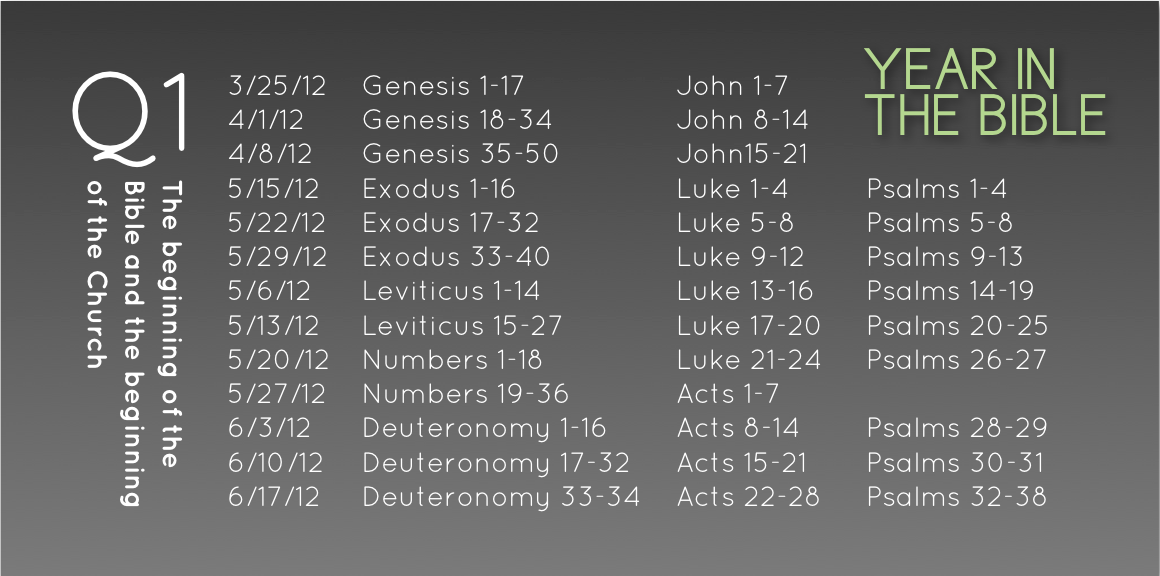
The readings are assigned on a weekly basis starting on Sundays. March 25th is the first day of the first week, so the readings would begin that day. The Reading Groups of that week would meet to talk about the readings assigned based on the most recent Sunday. For example, the Wednesday 6pm Reading Group would gather on March 28th to share from and talk about Genesis 1-17 and John 1-7.
If you are interested in a Reading Group or have questions, let me know. I’ll put up some more helpful hints later this week.
For those who have yet to see the spread sheet in the Reading List, here is the reading for Quarter 1–the beginning of the Bible and the beginning of the Church, in a more visually appealing form.
We start in just a couple of weeks, so keep your eyes peeled for this week’s bulletin.