Sent by Jesus

Our focus passage this week asks the question, “What does it mean to be sent by Jesus?” and “In what way had the Father sent him?” These questions refer to John 20:21, in which Jesus says:

Peace be with you. As the Father has sent me, even so I am sending you.

We could spend a great deal of time pondering that one verse. In John, Jesus is constantly drawing attention to the fact that he is sent from God. He says that the Father has sent him, the Father has given him words to say, and he is doing his Father’s work. His being sent is a crucial element to his being here among us. And now we’ve been sent “as the Father has sent [Jesus].”

So as you finish John, and then as we’ll next read through Luke, look for what characterizes the way in which Jesus is sent. See how Jesus puts the Father’s will first and the way his goal is to speak what the Father has spoken to him. Look elsewhere in the New Testament like Philippians 2 and see that in being sent, Jesus humbled himself–even to the point of the cross. Jesus took on flesh, faced temptation, was mocked, was hungry, and of course, in his being sent, he was to go to the cross. His sending was for a mission of love in which he put the needs of others and the will of the Father first. Jesus died on this mission, and after he was raised, knowing full well all that being sent entails, speaks a word of peace to the disciples, and charges them to go into the world. If we head his words, how much do we need his peace to face the fears we will encounter, and how thankful are we that he has breathed upon us his Holy Spirit to strengthen us and comfort us along the way?

Revised Quarter One Readings

If it comes down to a choice between what you see on something I produce and your common sense, I’d say you should often go with your common sense. Such is the case if you have done one of three things: looked for our readings on a bulletin insert, a poster in the hallways, or in an older post on this website. Somehow the month of April switched to become the fifth month of the year without telling anyone but me. So I went ahead and made the change and you’ll see it reflected here. Sorry for any inconvenience.

How I Read the Lord of the Rings in One Summer

I was never an avid reader when I was in high school. That was the role of my oldest brother, who on vacation to the Outer Banks would sit in the bedroom and read. That wasn’t me, but I’m sure he is the better for it.

I think the biggest hangup for me was seeing reading as a chore. No ones likes chores, as far as I know. Chores are imposed upon us from on high and can even feel, to a high schooler at least, like punishment. Unfortunately for me, homework assignments looked a lot like chores. So reading didn’t have an appeal to me, rather it was what I was supposed to do for class.

When I had a summer of little to no assigned reading for school that was the summer in which I read the most. I didn’t put off reading as though it were homework that was trying to rudely creep into my summer vacation. I saw it as a worthwhile activity. So I picked up the Fellowship of the Ring and soon after was putting down The Return of the King, having finished the whole Lord of the Rings trilogy.

Don’t get me wrong, this isn’t school’s fault. No one to blame here but myself. But at least now, in knowing myself and my quirks and shortcomings, I can better adjust to accomplish what I want to in life. Being aware of how my mind works I can try to compensate or stop myself from some of my learned bad habits.

This avoidance of “chore” still haunts me now. How many of you like to have a clean house, you have a great feeling when you take the little bit of extra time to put something away, and you get a sense of satisfaction from dishes being done? Me, too. But even though I get the sense that such work is worthwhile, each time before that work is to be done, my will rebels against me for it thinks I am enslaving it to do some foul chore.

I want it to be done. I like it when it is finished. I feel good about doing it in the process. But to begin is so difficult. Certainly sin is at work in me. This same mental hump is hard to get over in our readings, as well.

I know the weekly readings may seem long. But fight the mentality of it as a chore. God has gifted us with this book to learn about him and grow in his ways. We are privileged where we stand in history in having the access we do to read the Bible. Just because reading the Bible is a “should” don’t lose the joy of reading and meditating on God’s Word.

See it as a joy. Look ahead to the goal of having read it all. Keep that picture in your mind. For the joy that was set before him, Christ endured the cross for us (Heb 12:2). Reading the Bible is in no way like the suffering of the cross. But if for the joy set before him, Jesus could bear that immeasurable suffering, what will we be able to do for him if we fix our eyes on Christ, make him our goal and our hope, and find our joy in him? We need to set his joy before us.

Do what you need to in order to see time with God in his Word for what it is. Make it the best part of your day as you put aside the other demands of life and sit quietly before our Maker. Don’t worry about the state of the house or the emails that wait for you. If only for that reason, you’ll desire to read more because it allows you to ignore those other calls on your time. Make it a sacred space and time during which everything else fades away. Find a cozy spot, make yourself a cup of coffee, and enjoy.


Look Out for Joseph

We finish Genesis reading about Joseph and we learn that he was more than just a stylish dresser. Pay close attention to him and how he differs from previous characters of the book. Whereas Abraham, Isaac, and Jacob/Israel were blessed in many ways, but continued to mix their faithfulness with sin, Joseph’s situation is very different. He is hated by his brothers, thrown into a pit, sold to slavery, and labors in a foreign land, and how does he respond?

Others couple God’s explicit blessings with their own mistakes. Abraham is concerned for his safety so he lies about Sarah, multiple times. Jacob is characterized by his trickery in order to receive further blessings. But, Joseph in the midst of trials and difficulties exhibits strong character.

He brings in a different pattern, so pay attention to him and how he acts, regardless of the circumstances, as we finish Genesis.

Words of Warning and Promise

We take a step back in John this week returning to chapters that are before the crucifixion and before the resurrection. But I think this will be of great value to us. If you are like me, Lent has flown by and Holy Week was even faster. We don’t always have enough time, or make enough time, to meditate on what Jesus went through on his way to the cross.

But even though he knows the cross is before him, Jesus shows great concern for his disciples in these last days. Jesus keeps telling them about what will happen, warning them of hardship and persecution, but assuring them that they will not be left alone. He promises tribulation for those who follow Jesus (16:33). And Jesus also promises the Holy Spirit. He says, “you will weep and lament, but the world will rejoice. You will be sorrowful, but your sorrow will turn to joy.

These are expectations that we must remember in full. The life of the Christian is not to be without struggle. The disciples who remained faithful had, by the worlds standards, harder lives after they were called by Jesus, not easier ones. But we have more reason than any others for joy. The world will bring trouble, but we know that Christ–our Risen Lord–has overcome the world.

We read these words or warning and promise for the same reason Jesus told them to his followers.

But I have said these things to you, that when their hour comes you may remember that I told them to you.

John 16:4

We read, meditate on, memorize, and love God’s Word for we need his guidance. We need God’s wisdom and support. They contain all the words we need to support our faith and when hard times fall on us, as they will, we can rely on his words to sustain us. For these words point us to the one God, who in Jesus Christ, has provided all we could ever need. In our weakness, we rest in his strength.

Week Three Begins

We finish our first books this weeks as both Genesis and John come to a close. They are some of the longer books of their respective testaments, so I hope that can be an encouragement to you and will build some momentum for your reading.

Today is Easter and John will give you additional time to review the events that led to Christ’s death and to rejoice at his resurrection. The story of Genesis will closely follow Joseph and will end with his death.

This is a perfect time to try out a reading group, as well. If you’ve had questions about either of these books, bring those questions along with you before we press on ahead to Luke and Exodus.

Happy Easter-He is risen!

See What a Morning

This is a few hours early, so maybe just wait until morning to watch this. I think this song captures a great tone of triumph and joy, which should characterize Easter Sunday.

The Story So Far, Week 2

We are almost at the end of another week of reading and it has been another week packed full of stories from Genesis. We talked during our reading group about the continuing journey of Abraham and focused a good deal about Jacob/Israel.

One thing that struck me that connects Genesis and John was the hard truth Jesus speaks about how many events in life are there to bring glory to God. What makes this hard is that these events may not be what we find enjoyable.

Jesus heals a blind man in John 9, and people wondered who sinned to bring about this man’s blindness. Jesus’ response is that he did not sin, nor his parents, rather he was born blind so that the works of God might be displayed in him. Surely this man rejoiced at being healed by Jesus, but it must be difficult to look back on years of blindness that were in service of bringing glory to God.

Jesus’ friend Lazarus is sick and his sisters urge Jesus to come quickly to help. Jesus does not hurry and instead stays two additional days before setting out. He says to his disciples, “This illness does not lead to death. It is for the glory of God, so that the Son of God may be glorified through it.” The illness does lead to death, but that death is not final as Lazarus is raised from the dead. Again a seemingly tragic event turned around to bring glory to God.

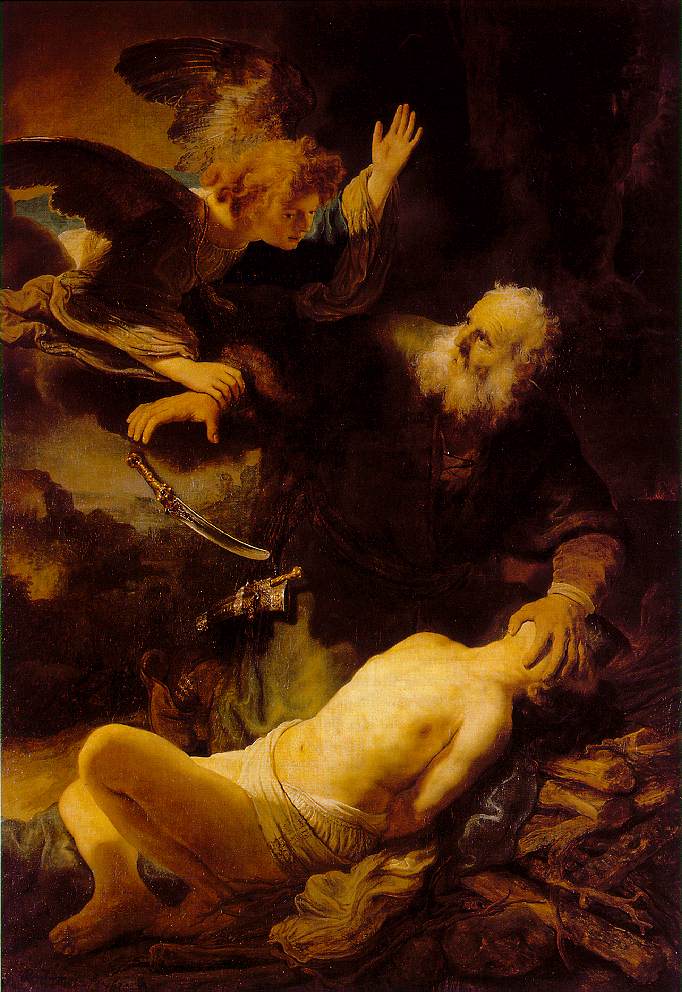
Back in Genesis, Abraham is tested by God as God asks Abraham to sacrifice his son, Isaac. It is a devastating task set before Abraham. But as he is faithful and obedient to God, Abraham learns more clearly just how perfect God’s provision is and God receives glory in providing a ram.

Difficult conditions and tests of life are still difficult for us, even if they do ultimately give glory to God. But this is one of the hard truths of faith that we are always trying to better accept and understand. We are not our own and our lives are to be like living sacrifices, pleasing to God (Rom 12).

It helps me to remember that what God doesn’t require from Abraham, God has done himself. God has given us his only Son. God has endured the greatest sacrifice for our sake. Therefore if my life can in some way bring glory to the one who has brought life for me, I hope and pray that I can do so joyfully.