
Give TV the Night Off

Last night my wife and I didn’t turn the TV on. It wasn’t some deliberate act on our part, it just happened that way. But it doesn’t happen all that often. We enjoy sitting together on the couch relaxing in the evening watching shows that we both like. The problem with TV, though, is that it is habit forming and it is sneaky in how it causes time to fly by.

More days go by when the tv goes on than when it doesn’t–and we don’t even have cable. It came on all the more when we did, especially since you may feel like you need to watch more in order to justify the high price of cable.

I don’t mention this primarily as some inquisition of television, but to compare its place in our lives compared to reading. Do days go by that you don’t pick up a book? When they do, does it stand out the same way the absence of TV does? Why isn’t reading the go-to activity for more people? For me?

This week, if you don’t already, spend a night away from the TV. Make more room for family, for quiet, for games, for crafts, and for reading. If you’re having a hard time keeping up with the readings, maybe television can be dialed down a bit. It should give us pause If we have a hard time keeping up with the readings but we are able to keep up with all our favorite shows.

I like TV. But I don’t like how much time of my life it takes. At least one night a week, take your time back.
Unlikely Sermon Title: Please, Stop Giving an Offering

Throughout the latter half of Exodus, God is describing for Moses and the people what is required for the tabernacle. There needs to be fine cloth, gold and silver, jewels, and other materials for the craftsmen to assemble this dwelling place of God among the Israelites.

In chapter 35 Moses says to all the congregations of the people of Israel, “This is the thing that the Lord has commanded. Take from among you a contribution to the Lord. Whoever is of a generous heart, let him bring the Lord’s contribution: gold, silver, and bonze; blue and purple and scarlet yarns…”

Moses goes on listing valuable items that were surely precious to the people. The people hear this message and Scripture says they came back to Moses, “everyone whose heart stirred him, and everyone whose spirit moved him,” and they brought a contribution for God’s tabernacle and for its service. These items came in the form of brooches and armlets, and other personal possessions. It was not as though the people went out to the bank and withdrew some spare gold bullion. They took what was being used in one way for themselves and sacrificed it to God, to be used for his purposes. They also gave of their time, such as the women who spun fine yarns and linens. The people brought their treasure, and in doing so revealed what truly should be our treasure–God.

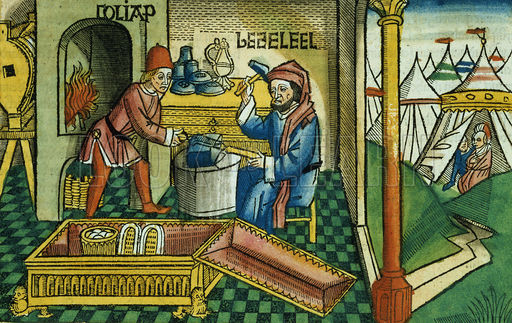
What really amazed me in reading is in chapter 36. Bezalel and Oholiab, along with the other craftsmen God had gifted skill and artistry to, all had to stop their work and come to Moses with a message. The people had continued to bring contributions for God, a free will offering, every morning to such an extent that the workers had far too much. So they tell Moses, “Let no man or woman do anything more for the contribution of the sanctuary.” People gave their treasures over to God to such an extent that it says they had to be restrained from bringing more. They gave what was sufficient and then some.

What a wonderful problem for the craftsmen to have, and what a wonderful testimony to God of how the Israelites were here being joyful givers, gladly treasuring God and his will above whatever earthly treasures they had previously cherished.