A Review of the First Half of 1 Corinthians

Now halfway through 1 Corinthians, let’s get nostalgic and take a walk down memory lane.

(Quick editorial note: This is not exhaustive. But that’s why we read the Bible, not just summaries!)

Week 1 – 1 Corinthians 1:1-17

Memory Verse 1 Cor 1.1-3

Here we are introduced Paul, who writes with the authority of one who is sent by God, and to Paul’s letter to the church in Corinth and the saints every where who call upon Jesus Christ as Lord. It will be a letter tailored for Corinth, but in no way limited to this one group.

In this section we also find out one of the problems arising in this church, that is there is quarreling and divisions among the body as people are aligning themselves to certain teachers. Paul comes down clearly against this.

Week 2 – 1 Corinthians 1:18-31

Memory Verse 1 Cor 1.22-23

The response to the issues of Corinth is the cross of Jesus Christ. The cross is a message that is not always attractive, indeed it appears foolish to the world. But the “foolishness” of God is wiser than men. Therefore, we shouldn’t boast in any associations with a certain teacher, nor in ourselves. If we are to boast, we should only boast in the Lord.

Week 3 – 1 Corinthians 2:1-16

Memory Verse 1 Cor 2.12

The cross is the wisdom of God and in chapter two Paul writes how we receive this wisdom from God by his Holy Spirit. The natural person doesn’t understand the things of the Spirit, but we can have judgment and discernment because God has gifted it to us.

Week 4 – 1 Corinthians 3:1-23
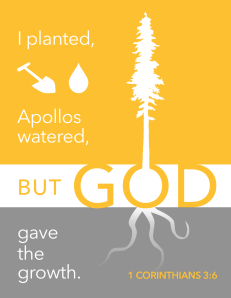
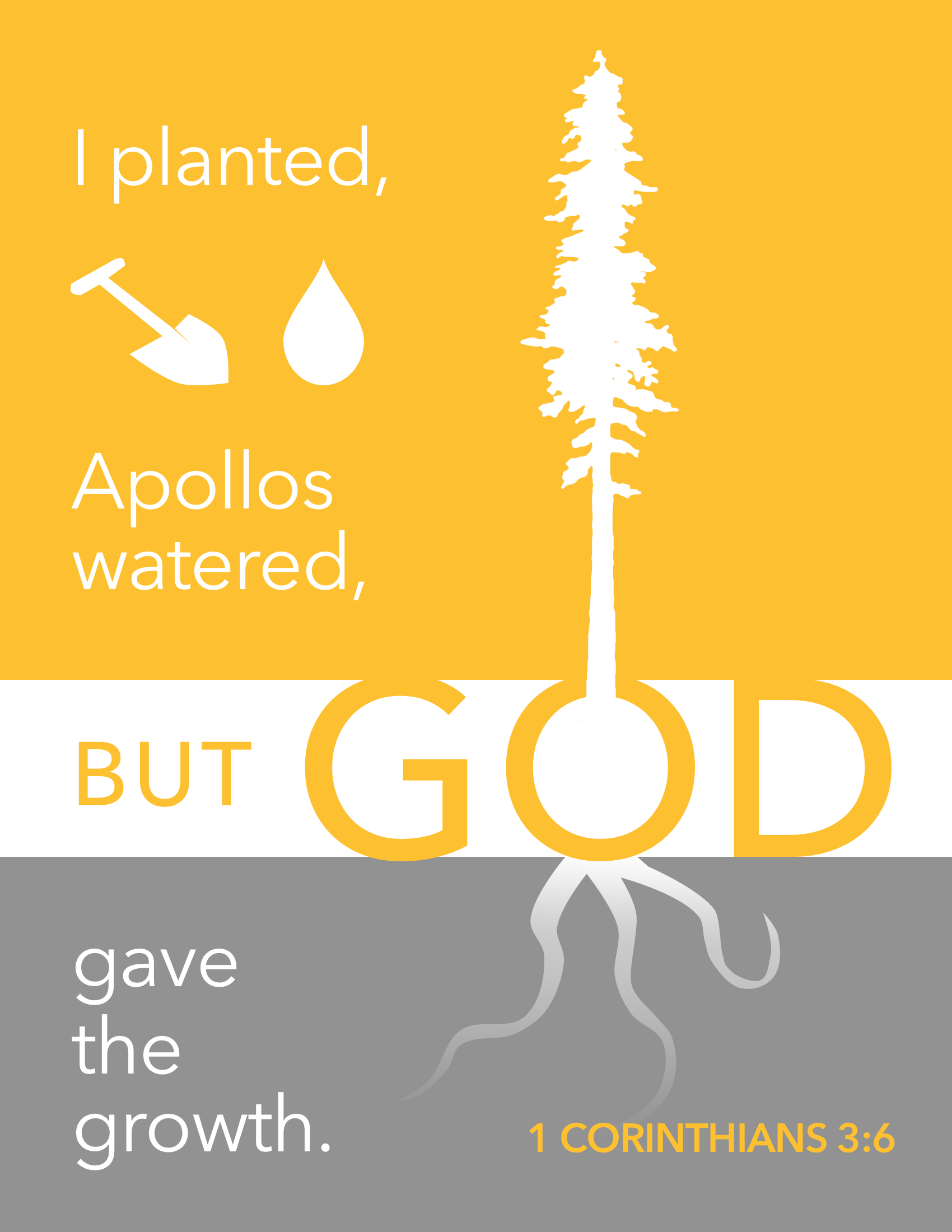
Memory Verse 1 Cor 3.6

Having taught on the wisdom of God in the cross and from the Spirit, Paul returns to the issue of divisions in the church and seeks to correct Corinth’s view of Paul, and other teachers. Paul is just a worker, given a certain assignment, just like Apollos, but through it all it is God who truly is at work. They work together with a common goal, always building upon the one foundation of Jesus Christ.

Week 5 – 1 Corinthians 4:1-21

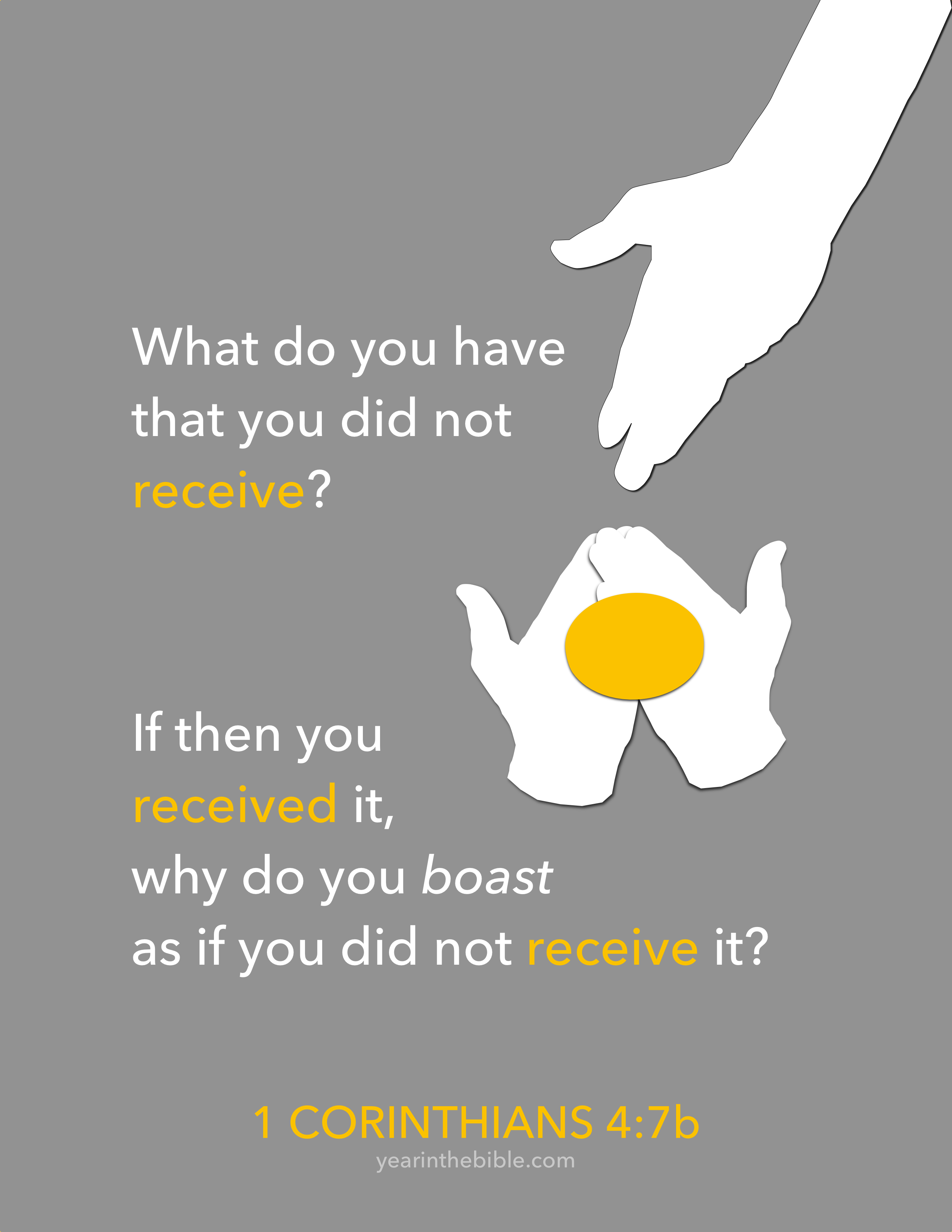
Memory Verse 1 Cor 4.7b

Paul continues on the topic of how the church should view its teachers, like Paul or Apollos. Their incorrect view has led to boasting and being puffed up. Instead Paul wants them to follow his example and make sure they do not go beyond what is written–which is an especially troublesome territory that lends to speculation and arrogance.

He doesn’t want them to think that they can continue in the way that they have gone without any oversight. Paul has some stern words about the manner in which he’d return with rebuke.

Week 6 – 1 Corinthians 5:1-13
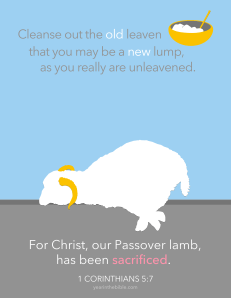
Memory Verse 1 Cor 5.7

Corinth has had issues with divisions and quarreling and now Paul mentions the sexual immorality that has made its way into the church, like a leaven that is affecting the whole dough. To make matters worse, some think that their tolerance of sexual sin is to their credit and they boast (see a pattern?) in their behavior. Paul points them again to the cross, arguing that Christ sacrificed himself as our Passover lamb to remove the leaven–the sin–from our lives. He says the church shouldn’t embrace the sin, the very thing Christ died to remove. In fact, Paul says to cast the man who has committed the sin out of the church.

Week 7 – 1 Corinthians 6:1-20
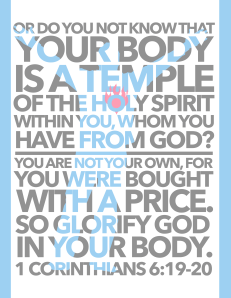
Memory Verse 1 Cor 6.19-20

The wisdom the church ought to have received from the Spirit is not being manifested in the body as they are neglecting their call and responsibility and instead are taking their issues and submitting them to secular courts. This is a poor witness to the world about the call of God’s church to be judges of all things, and it is shameful that the world sees the sinful practices that should not be part of the kingdom of God.

Perhaps quoting the Corinthians’ argument, Paul confronts the notion that freedom in Christ makes all things permissible now. It is true that we have freedom in Christ, but we are freed from sin, not for sin. Some practices may be allowed, but that does not mean it is good for the person or for the body. After all, our body is not our own, rather we have been bought with a price. The believer is now, miraculously, a temple of the Holy Spirit, so we should glorify God with our bodies.

Week 8 – 1 Corinthians 7:1-40

Memory Verse 1 Cor 7.22

Having discussed sins, and specifically sexual sins, that are not in line with the kingdom of God, Paul turns toward some questions the Corinthians had and teaches about what sort of sexual relationships are appropriate. He relates these questions to the broader issue of our calling in Jesus Christ. Whether married or single, and Paul then goes on to include Jew or Greek and slave or free, we all have callings. Paul may encourage singleness, but to him it comes down to our ability to serve God wholeheartedly.

Week 9 – 1 Corinthians 8:1-13

Memory Verse 1 Cor 8.6

The topic of freedom in Christ comes up again and this time in relation to the eating of food offered to idols. Here Paul urges people to consider sacrificing their “right” to do what is greater: to love their brothers and sisters. If they use their knowledge to disregard the needs of others, they are puffed up and sinning not only against their fellow believer, but against Christ as well, since we are all members of his body.


So there you have it. Eight chapters down, eight more to go. If I missed something that stood out to you, don’t let me get away with it!

Paul now in chapter nine continues the discussion of our freedoms and rights, and how we at times ought to sacrifice our rights for a greater purpose.


Take the Time to Review What You’ve Read in 1 Corinthians

Having now finished eight chapters of 1 Corinthians we are right in the middle of Paul’s letter and it is a great time to look back at the first half.

I was going to give a bit of a review in this post, but it’ll have to wait for tomorrow. But perhaps that’s serendipitous. It’ll give you time to see what you can remember on your own. See if you can remember something from the beginning, the next couple chapters, and then the most recent ones. Do certain themes stand out? Can you especially remember a certain passage? Did God bless you by your reading and study in some way?

In terms of the memory verses, do you have any of those stored away? As you review the verses from each week, which you could do visually here, does that help you recall more from the chapters that the verses are in?

As you take the time to do this, I’d absolutely love to hear how it goes. What has helped the most, what has stuck with you, what more can we do or what can we do differently? Let me know in the comments or via email or if you’re in the neighborhood, stop on by the office.

I hope that in reviewing, you get excited at what God has been teaching you and you can get a dose of excitement as we look ahead to the last eight chapters. (Maybe, if you’re so excited, you’d want to share this with a friend and invite them to read with you.)

The Evolution of the Way We Read the Bible

Book Greenbackground

When I was putting together some graphics to go along with this second iteration of Year in the Bible, I came up with a simple image of a book with a bookmark pulled down through the middle. Year in the Bible is a guided reading plan, so I thought a book with a bookmark fit that pretty well. The logo for Year in the Bible looks like a square and a triangle and is supposed to evoke the shape of an open book, too. I also have made bookmarks for this 1 Corinthians plan to tuck in your Bible. This all makes sense because books and reading go and in hand.

Except that is now changing.

When we kicked this off in June, I remember another pastor here mentioning the bookmarks and how you might need to take it and tape it to the back of your phone, if that’s where you read. What was meant as a joke had a lot of truth in it. For more and more people, reading the Bible doesn’t mean opening a book, but instead pulling out a phone.

What does it mean if reading the Bible now looks more like this?

So, I’ve been mulling that over for a while. Are there any implications for the way we engage with God’s word when we do so via a screen instead of a page? Do we lose something? Do we gain something? I certainly don’t have any conclusive remarks on this, especially since we’re just in the middle of what seems to be this great change in the way we read.

One worry for me is that I lose a bit of the uniqueness of the Bible when it is just another item for me to read on my phone. It doesn’t stand apart. I don’t have to make the deliberate choice I once did to carry a Bible with me. There is no sacrifice of space in my bag or the added weight to my shoulders. Also, if I went away to rid myself of distractions and to-do lists and emails and sat with my Bible, nothing else competed for my attention. With a phone or tablet, it is very easy to stop reading to quickly do something else. The temptation to multitask is great. For these reasons, and a few more, I’m not ready yet to part with my dead-tree Bibles.

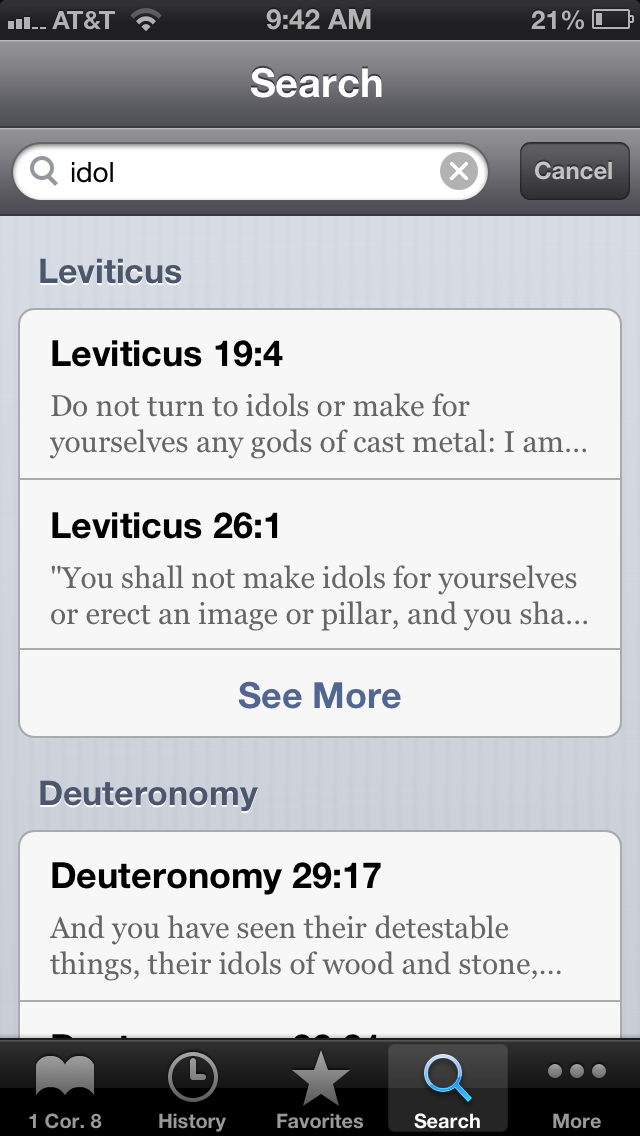
Searching the Bible has never been easier. (Pictured is the ESV Bible App)

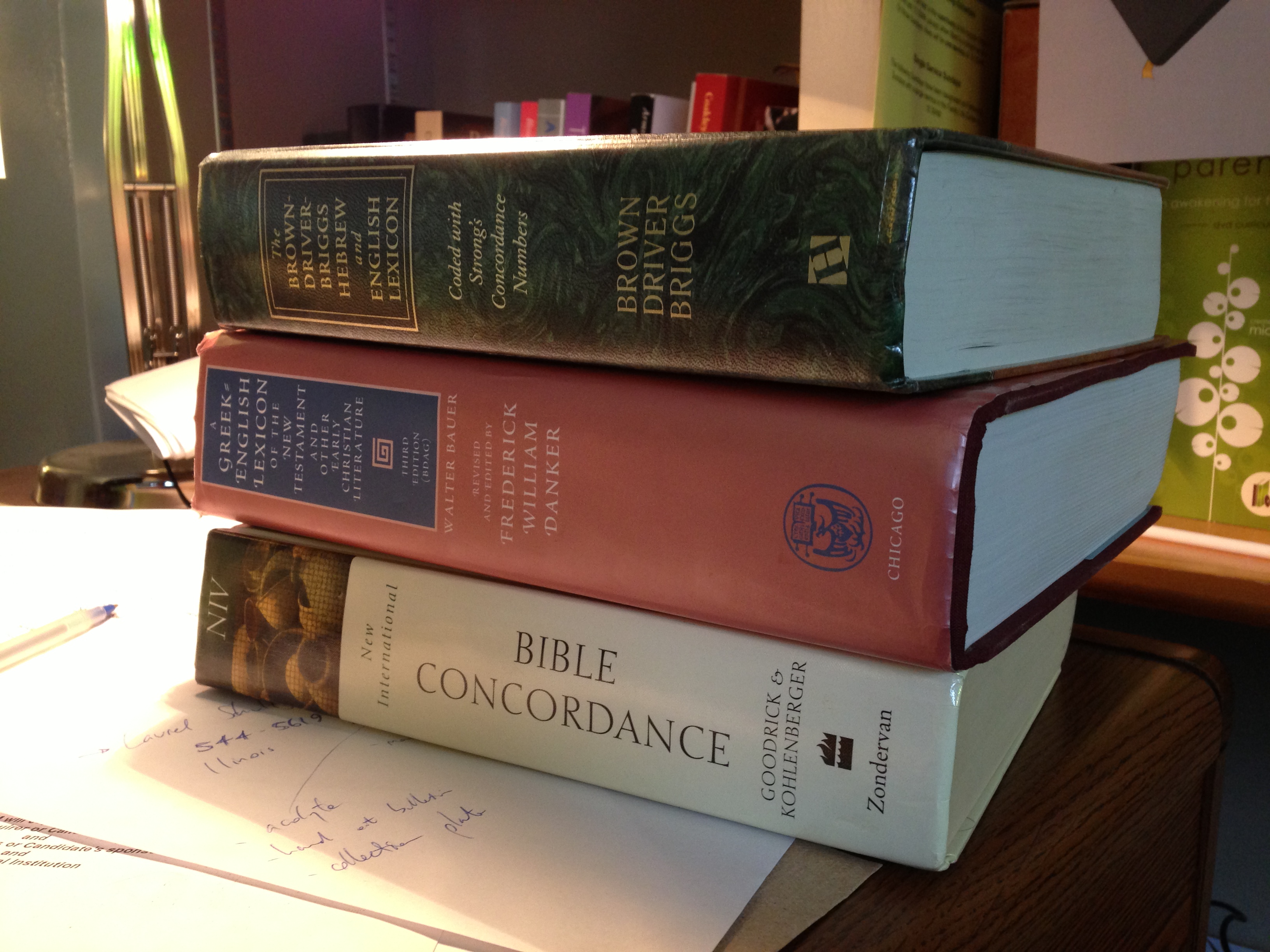
But on the other hand, I now always have the Bible with me. And not only one translation, but many. My paper Bibles have nice concordances, but with the technology we have now, I can search through the entire Bible in a moment. I can follow cross-references all around Scripture, and do so with ease. Reading like this on a phone or a website has really encouraged not only the reading, but study. I am no expert scholar in Biblical languages, but I’ve got tools that help me with Greek and Hebrew that fit in my pocket. With that sort of ability it is not an usual feeling for me to think that I am living in the future.

Imagine carrying these books in your bag, let alone your pocket.

There are sites and apps that can bring a communal aspect into your personal readings. You can tap on a verse and find out what comments others had contributed in regards to it. Have questions about what Paul meant in a certain passage? Maybe someone had the same question, too, and maybe someone else has a pretty good answer. There’s another program that provides fantastic illustrations and interactive graphics to help you feel like you’re in ancient Jerusalem, so as you read through the gospels you can see what it was like. As I’ve mentioned before, we can listen to the audio of the Bible and there can be real value in hearing and listening, as well as reading. Who knows what else may be offered in five or ten years?

Community notes in the Youversion Bible app

About five hundred years ago the Bible was a book that resided in the hands of a select few. It wasn’t for the masses. But things change. Perhaps some of the reverence was lost when the Bible slowly became common. Would you feel the same way about the Bible if you only saw it richly ornamented and embellished in a church instead of in every hotel room drawer? Probably not. Yet the gain outweighed what was lost. God’s word is for the people of God, and when the printing press started a revolution and the texts were being translated into the vernacular, it had a great impact.

Illuminated manuscript of the Bible

I don’t know all the implications of the technology many are now using to read the Bible, but we can at least rejoice as more people are given access to God’s word around the world. The tools are being spread and men and women are engaging with the Bible in new ways and the more we can draw attention–not to the technology–but to the content, the better it will be, for our focus can then be drawn to the Word of God, Jesus Christ.

On Triggers that Cause Us to Stumble

This morning in a Bible study with some men someone spoke a bit about “triggers.” We’ve all got them, some sort of stimulus that can bring about a memory, an action, a feeling, etc. Sometimes they are good triggers, sometimes they are not. We can see this food that has been offered to idols in 1 Corinthians 8 as a sort of trigger. For those still struggling against their old ways and old life in which they worshipped false gods and took part not only in the feasting, but in all the activities of the temple, just seeing that meat may have triggered a whole wave of associations. NT Wright puts it like this in his commentary, “Paul for Everyone”:

They knew what went on there – the dark sense of mystery and fear, the sense that in feasting at the god’s table you were really eating and drinking the god himself, taking his life to be your own life; and then the drink, the sense of casting off moral restraint, the girls and boys waiting round the back to do whatever you wanted in return for a little extra payment to the god … And once you had shared in that dark but powerful world on a regular basis, perhaps for many years, it would be difficult, in your memory and imagination, to separate part of it from the whole thing. Now that you had become a Christian you would feel you had been rescued from the world of darkness and brought out into the light. True worship wasn’t like that; truly human living wasn’t like that. You had escaped. You were free.

Paul wants those who have the knowledge that leads them to be secure in whatever they eat to, in love, think first about their Christian brother or sister. If by eating meat sacrificed to idols or going to those temples to have a meal you cause you fellow believer to conjure up all these past experiences, is it really worth it? Of course not.

It’s important for us to know our own triggers, as well. It isn’t so that we can impose new rules and restrictions, setting up our own laws. It is so that we can protect ourselves and by setting up boundaries prevent falling back into sin. When we know our triggers we can prepare ourselves against temptation. The trigger can be even mundane things like, as I mentioned in this morning’s study, someone cutting you off on your way home from work. Let’s say you notice that when this happens you’re more likely to be rude and impatient to your spouse or roommate when you get home. If you are aware of this trigger and how it makes you anxious and a bit on the grumpy side, that will help you prepare yourself and cause you to say an extra prayer before you walk in the door for the help of the Spirit to give you the strength you need.

And when we are aware of our own triggers we can be much more understanding of others around us. Something that may have no affect on you may have a huge affect on someone else. If our goal is to build one another up that may mean that we forgo our rights and freedoms and instead seek to remove the stumbling blocks from our brother or sister’s path.

Memory Verse for 1 Corinthians 8

This week’s memory verse, 1 Corinthians 8:6 is:

yet for us there is one God, the Father, from whom are all things and for whom we exist, and one Lord, Jesus Christ, through whom are all things and through whom we exist.

In putting together a visualization, it didn’t come out as the most readable, but I think the flow of the text can help us remember the meaning. You can read the graphic left to right, as the verse is in the Bible, or you can follow the arrows and get a different ordering. If you do that you’d read something like, “All things are from the Father and through our Lord, Jesus Christ. We exist through through the Lord, Jesus Christ for the Father.”

1 Corinthians 8:6
1 Corinthians 8:6

I hope this helps. And as you work on memorizing this, think of how startling this would be for people to hear of Jesus Christ as one through whom are all things. Jesus didn’t just enter the scene on Christmas. He is one with the Father, co-eternal and who is before creation.

Memory Verse for 1 Corinthians 8 for iPhone

NT Wright with Some Helpful Background on the Ancient World in 1 Corinthians 8

Ancient Temple at Corinth Engraving by William Miller

As you read chapter eight of 1 Corinthians, keep this short passage in mind. It is the opening two paragraphs from NT Wright’s commentary, Paul for Everyone: 1 Corinthians. As usual, Wright opens with a short anecdote that relates to the passage, in this case about food that is sacrificed to idols and just how prevalent this practice would have been. It provides background on the ancient world that will be helpful for this week’s Bible reading:

There is a restaurant in Rome which is built around the ruins of an old temple. Two of the pillars are still visible. The restaurant makes a feature of them, and is proud of the ancient origins of the building where they now serve excellent pasta, great local cuisine, and fine Italian wines.

But what people don’t normally realize is that in the ancient world the temples normally were the restaurants. Each town or city had plenty of shrines to local gods and goddesses, to the great divinities like Apollo or Venus, and, in Paul’s day, more and more to the Roman emperor and members of his family. And what people mostly did there was to come with animals for sacrifice. When the animal was killed, it would be cooked, and the family (depending on what sort of ritual it was) might have a meal with the meat as the centrepiece. But there was usually more meat than the worshippers could eat, and so other people would come to the temple and share in the food which had been offered to the god.”

Coming Up on the Halfway Point of 1 Corinthians

Moving into chapter eight we are going from a chapter with 40 verses to one with only thirteen. So again, this reading plan takes a bit of self-direction. How do I best use my time throughout this week to not just check off reading 1 Corinthians, but how do I read it well? How do I study it? How do I pray through it? How do I open myself up to hear what God has to say to me? It’s short so you get creative.

I had the opportunity, due to a bit of a road trip today, to listen to 1 Corinthians in the car. I listened starting in the beginning and then went through chapter eight. Then I listened to chapter eight again. (Either to gain more emphasis for our current chapter, or maybe because it is easy to let my mind drift as I try to pay attention to driving.) This is a great way to spend some extra time this week. As I listened I could better detect the themes coming up again and again–words like puffed up and calling jumped out more than they have before. Also, as I went through the chapters I paid close attention to the memory verses, verses that now I can (almost) recite along with the reader of the audio Bible. It was great to be reminded of the context in which these verses fall.

If you need help in doing something like this, ie. listening to the Bible, let me know. There are websites for it such as biblegateway as well as phone apps like the youversion Bible.

So, with the shorter chapter, try rereading old chapters, or even listening to them. Also work on memory verses, either as a refresher or for the first time. It’s never too late to start.

And if those ideas aren’t enough, you could try writing me (or posting in the comments) some really hard questions about this chapter. I always like a challenge. Maybe your question will work its way into Sunday’s sermon!