In Defense of Learning Our History

Perhaps I’m biased given that I was a history major, but I think there’s something to it. There is something about history that makes it important for us to know. So much of our Scripture is our history, the history of God’s chosen people. There is a reason that God has it in his word. I think it is valuable for us.

There may be times when genealogies are taxing on our attention. It is hard to press through the seemingly endless battles and changes of leadership. But take a step back and look at what God has done and is doing. David sings a song of thanks in 1 Chronicles 16 because of what God has done. Read his words and think how much of that is history.
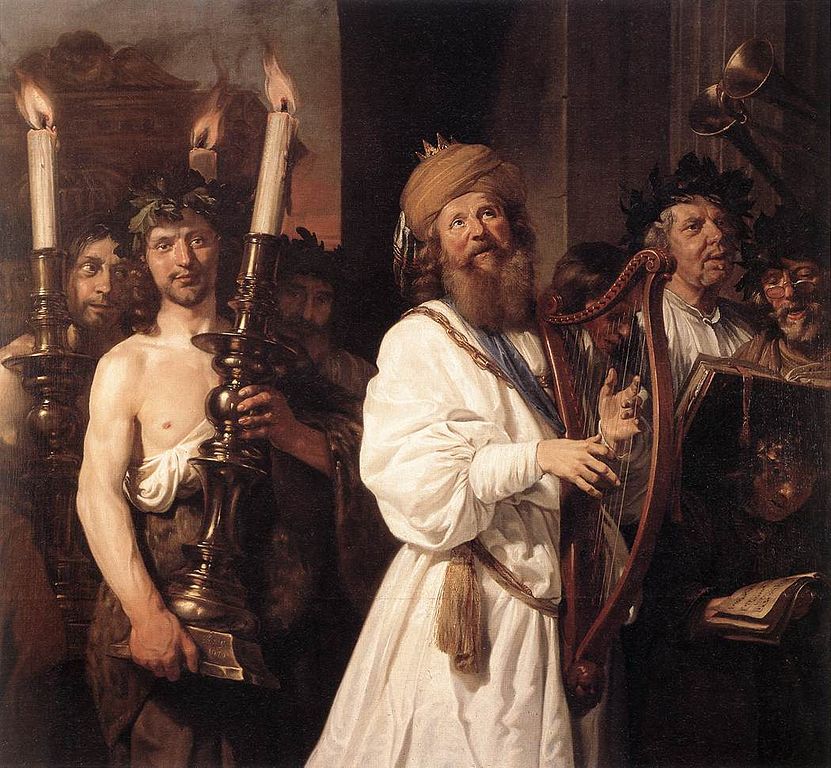
David Playing the Harp, Jan de Bray, 1670

If David did not know his own past and the story of God’s faithfulness, what would his songs and psalms look like? What would become of his trust in God continued provision for the people? I’m sure he was supported in his belief because he could look back into past generations and see the faithfulness God has toward his people and the long-suffering that God displays as his people turn from him.

Knowing our history also gives us perspective about our place in this world. We’re not the only ones to have struggled or question, nor are we the first to have great victories for God. We are very much like God’s people throughout time, and thankfully God is the same, too.

Our God is always faithful and always deserving of songs of praise. We ought to reflect on our individual histories and recognize God’s work in our lives. But don’t forget the way in which you fit into God’s greater history and offer him thanks and praise for his goodness that extends backward beyond our own entry into life.

Oh give thanks to the LORD, for he is good; for his steadfast love endures forever!
1 Chronicles 16:24

How can we hear God’s voice?

Here’s an overdue post that didn’t fit in last week–hope that’s OK.

There he came to a cave and lodged in it. And behold, the word of the Lord came to him, and he said to him, “What are you doing here, Elijah?” 10 He said, “I have been very jealous for the Lord, the God of hosts. For the people of Israel have forsaken your covenant, thrown down your altars, and killed your prophets with the sword, and I, even I only, am left, and they seek my life, to take it away.” 11 And he said, “Go out and stand on the mount before the Lord.” And behold, the Lord passed by, and a great and strong wind tore the mountains and broke in pieces the rocks before the Lord, but the Lord was not in the wind. And after the wind an earthquake, but the Lord was not in the earthquake. 12 And after the earthquake a fire, but the Lord was not in the fire. And after the fire the sound of a low whisper. 13 And when Elijah heard it, he wrapped his face in his cloak and went out and stood at the entrance of the cave. And behold, there came a voice to him and said, “What are you doing here, Elijah?”

1 Kings 19

Simple thought: If God doesn’t come to Elijah in a quake, a fire, or a rushing wind, but rather in a whisper, how can we expect to hear him now? If we are constantly surrounded by noise–a constant stream of hurry, tasks, to-dos, and other things–would we even notice a whisper? Would it even register on our radar?

If God speaks in whispers we have to be attentive to his voice, seeking it out among the noise.

Deja Vu in 1 & 2 Chronicles

So we’re now into week eight, which means that we’re going through 1 & 2 Chronicles. Don’t worry if a) you’ve not quite finished everything from 1 & 2 Kings. As I said, the schedule has built in make up time next week and the week after. Also, don’t worry if b) you start to think much of Chronicles is oddly familiar. It is. Chronicles will take us back to the time of Saul and David, and really it takes us back in chapter one to Adam. 2 Chronicles then lines up quite a bit with Kings.

Saul and David

Ask yourself what differences you see between book like Samuel and Kings as they tell the same event with different emphases. What is the intent? What purpose do these books share in their writing, and what is unique?

With so many chapters to read, don’t waste your time this week. But don’t rush. I’d rather we all fall behind a bit than to pretend to read and understand these books. Next week is less than 20 chapters and after that is 5. Plan ahead and seek to find joy in reading God’s word.

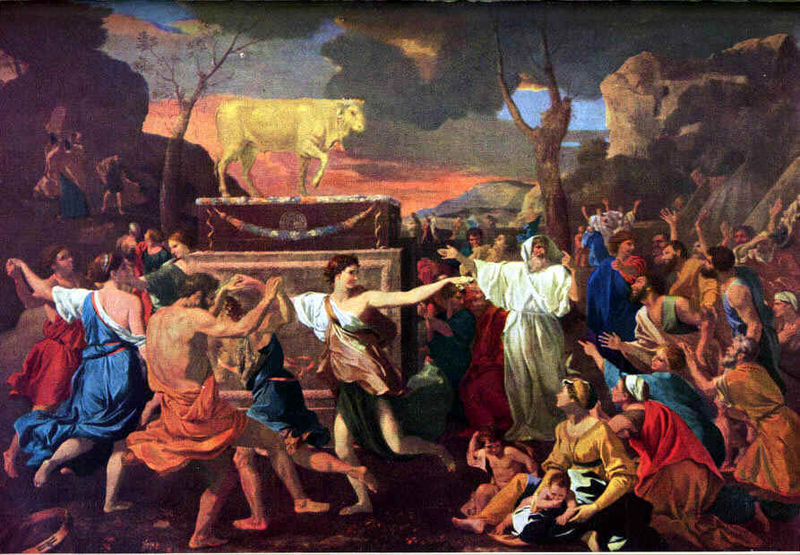
Golden Calves of Jeroboam, 1 Kings 12

One of the sins that stood out to me among the rest was when Jeroboam made the two idols to replace the worship of God in 1 Kings 12. He cast two golden calves and if that wasn’t enough, the way he introduces them to the people is a great offense to the name of God.

If you’ve noticed through reading the Old Testament there are a couple of ways that God is frequently named. One is the God of Abraham, Isaac, and Jacob and the other is a reference to one of the defining moments in the history of God’s people. God is the one who delivered his people out of Egypt.

Setting up one golden calf worked so well for Aaron that Jeroboam thought he’d double the number of idols for even better results.

Jeroboam is fearful that if the people worship the true God at Jerusalem that they will turn from him and that he will lose his power. He cares more for his own security than the honor of God and he will do anything to keep it that way, even offending God with some divine identity theft.

And Jeroboam said in his heart, “Now the kingdom will turn back to the house of David. If this people go up to offer sacrifices in the temple of the Lord at Jerusalem, then the heart of this people will turn again to their lord, to Rehoboam king of Judah, and they will kill me and return to Rehoboam king of Judah.” So the king took counsel and made two calves of gold. And he said to the people, “You have gone up to Jerusalem long enough. Behold your gods, O Israel, who brought you up out of the land of Egypt.” And he set one in Bethel, and the other he put in Dan.

1 Kings 12:26-29

Jeroboam makes dead idols to build up his power, to steal Israel’s worship from God, and he then takes the truth of God and projects it onto two calves of gold.* The truth is that their God, Yahweh, is the one who with his mighty hand delivered the people from Egypt. If not for God’s choosing of Israel there would be no land for Jeroboam to rule. God is the one who has won for his people the victory and built them up into a nation to rival any in the land. But in a selfish play for power Jeroboam will turn from truth and instead ascribe God’s work to idols, and seek to bring Israel to worship them.

He is not only sinning against God by turning away from him, he is offending God’s name by saying these idols are the redeemers of Israel, and then he leads his nation into this sin. Those who have such influence are held accountable and this sin does not go unnoticed.

*Taking a page out of Aaron’s playbook in Exodus 32.

Battling Against Idolatry, 1 Kings 18

We talked about 1 Kings 18 this week in our focus passage and in it we see a bold challenge of the prophet Elijah against all the false prophets of Baal. It is good to remember, as our discussion led us to, that not all idols are cast in gold or silver. We all have idols that are far more sneaky that find places to take root in our lives. We give too much time and attention to certain activities, we place our trust and hope in things or people that do not deserve it, or we find our worth outside of the love of God. Whenever we do so we are making something into an idol–and this can even happen to good things.

Whatever draws us from God needs to be examined and we must be ruthless in removing all that hinders our relationship with him.

Let us take 1 Kings 18 as warning as well as these words from the Psalmist:

The idols of the nations are silver and gold,
the work of human hands.
They have mouths, but do not speak;
they have eyes, but do not see;
they have ears, but do not hear,
nor is there any breath in their mouths.
Those who make them become like them,
so do all who trust in them.

Psalm 135:15-18

Solomon’s Temple

Solomon’s Temple is given great attention in our readings this week. As I write that it looks a bit wrong to call it Solomon’s Temple. It’s not his. He had it built, but we don’t always name a building after its architect or patron. It was for God.
Anyway–that’s what it is known as and I thought y’all might like to see some artist’s renditions to get a sense of what it may have looked like.

Enjoy. (My favorite is the second one. Be sure to click on it and read all the extra info!)

Interestingly, an Isaac Newton sketch of the temple
Click to see enlarged version (ESV Study Bible Illustration – another good example of why study Bible’s are great!)

And here is a video that is another interpretation (and the only one I found with such a tall front to the building–not sure how they did that math… but still interesting 3D look into things).

Solomon built resentment along with the his other building projects

The Brick Testament’s rendition of Solomon’s Palace (click for source)

Since we have so much to read this week I want to make sure to at least give some helpful, short posts as I’m reading through 1 & 2 Kings.

In 1 Kings 5:13 we see forced labor being drafted by King Solomon for his building projects, which I believe are more than just the temple. It is an interesting thing to read of in regards to a man who has just been described as exceedingly wise and just. Even though these laborers produce some fine work for Israel, when we continue on in our reading you’ll see another result. Just read chapter 12 to find out how Israel felt about the burden that was placed upon them. They end up rebelling because their next king, rather than giving them relief, increases their burden.

Solomon’s extensive building and harsh demands on the people primed them for rebellion.

Short Intro to 1 Kings

Welcome to a week of hanging out with the kings of Israel, and then the kings over a divided kingdom of Israel and Judah. We come to 1 Kings to hear more about David and Solomon, who we last read of in 2 Samuel. So while we have followed the story of God’s people through the prophets, we return to see how things progress from Solomon in a more narrative style.

It is a story with lots of kings, the building of a temple, and more prophets taking a stand. It reaches from the end of David to the Babylonian exile we’ve recently read about. Keep in mind something I’ve mentioned before–just because it occurs in the Bible it doesn’t mean it is right. The kings that we’ll read of aren’t all great leaders and followers of God. But that should come as no surprise because again, we’ve already read most of the prophets.

For further introduction: 1 Kings – Bible.org