Not For Us To Know

If you ever get a chance to do a book review for a new book that claims to know the date of Christ’s return (note that old books on this topic have a hard time remaining in publication after having been wrong), do so. I think it’ll be an easy job. They’re wrong.

We see Christ speak about knowing the future in chapter one in Acts, and it comes up elsewhere, too. There may be general signs and indications that the end is nearing, but no one knows when that will be. It is not just that we’re ignorant, it is a willful ignorance willed by the Father. When people ask Jesus before he ascends in Acts 1, “Lord, will you at this time restore the kingdom of Israel?”, Jesus makes it clear we’re not supposed to know. He says, “It’s not for you to know times or seasons that the Father has fixed by his own authority.” This is not to be our concern, but I do find it comforting that Jesus next statement regards the Holy Spirit. We can be an anxious and curious people, and to help us in our frustrations of knowing what to do and what comes next, Christ promises his Spirit.

We know how the story ends. We know the last chapter. But there is a lot left unknown to us, and it is not our place to speculate. We trust the future God has in store for us, doing so by the power of the Spirit, and we certainly welcome the day, whenever it is, of Christ’s return when he will restore his kingdom and make all things new. And I’m pretty sure that it won’t be December 21, 2012.

Week 10 – Numbers and Acts

Balaam, the Angel and the Ass; Woodcut from the Nuremberg Chronicle (from Wikipedia)

Welcome to Week 10.

We’re back to just reading two books this week as the Psalms are taking a week off. But in its place we have another hearty week of Numbers and seven chapters of Acts.

In Numbers we have some well known stories like when Moses brought forth water from a rock, a bronze snake that heals the Israelite people, and a donkey that talks. We finish this week as the Israelites come to the end of their wandering and are readying themselves to enter the promised land (again).

Acts is a continuation of Luke, written by the same author, continuing the story of what happens once Jesus is raised. It is often described as Acts of the Holy Spirit, and that is what it is. You’ll see the way that God’s Spirit empowers the early church and the disciples to spread the gospel of Jesus Christ. We’ll read about Pentecost, healings, opposition from the Jewish establishment, and Stephen’s wonderful testimony before the Sanhedrin and subsequent stoning. Stephen is considered the first Christian martyr.

Hope you enjoy this week. If you have questions or comments, send them this way and I’ll do my best to respond and share with everyone else. I’d love to have you join me this summer at either reading groups, which you can find more information about at the above link. Some things take breaks as school is out in the summer, but you can always find yourself welcome at a reading group.

Story So Far, Week 9

Christ of Saint John of the Cross by Salvador Dalí, 1951.

God has a special claim among his people of the first born. Then in Numbers 3 he makes an arrangement that I’m sure the tribes were happy about. Instead of having to give over their own firstborns, all the tribes will be represented by the Levites. They will consecrated to the Lord in the place of the children of the rest of Israel.

But this is not the only stand in we see in God’s story. Jesus is arrested and accused of crimes he did not commit. He alone in history is the true innocent one. Yet, in Luke 23, when the people call for someone to be pardoned they cry out for Barabbas. They cry out, “Crucify” to the innocent, and demand release for the guilty.

We can see ourselves in this story, taking the place of Barabbas. We are the guilty ones who deserve the punishment standing beside the innocent Jesus. But we receive the pardon because of Christ’s sacrifice. It is as though God says, “Take my own firstborn instead of these people who deserve the consequences of their sin.” Christ suffers the punishment that we deserve and stands in on behalf of God’s people. Because of this substitution sinners are forgiven and are reconciled to God.

Having completed such a work in Christ, we now press on to read in Acts, and we will see what God will do to care for and grow his church once Jesus has left the people. It is a church made possible only because of the life, death, and resurrection of Christ, who stands in on our behalf.

Road to Emmaus

And beginning with Moses and all the Prophets, he interpreted to them in all the Scriptures the things concerning himself.

Luke 24:27

An approach that I take when reading Scripture rests on verses like this one. Yes, there is an Old and New Testament, but there is one Bible. One Bible that reveals to us who God is, and that revelation is seen most clearly in Jesus Christ. It is not only permissible for us to read sections of the Bible that are not explicitly about Jesus and to see him there, but it is necessary to fully understanding Scripture.

In Luke 24, Jesus is on the road with two men who do not understand that Jesus had to die to fulfill God’s Word. They say, “We had hoped that he was the one to redeem Israel.” They had hoped. But because they did not understand Scripture they in turn do not understand Jesus and what he came to do. Jesus says they are foolish and are slow to believe all the prophets spoke because the prophets spoke of himself.

Jesus Christ is the center of our faith and he is revealed throughout all of Scripture.

A Closer Look at the Israelite Camp and How it Looks Ahead to the Work of Christ

Here is a video that both describes and shows what the encampment of Israel may have looked like. It continues on into more detail about the tabernacle and the inner rooms. Then it jumps ahead to Jesus day and the temple. We read this week in Luke 23 that at the death of Jesus the great curtain that divides the holy of holies from the rest of the temple was torn in two, exposing that sacred space. This signifies the work of Jesus on the cross as removing such a barrier. We now have access because our sin has been paid for by Christ and we all can enter the presence of God’s holiness.

Deferred-Promise Land

In Numbers the people rebel against God’s plan to lead them into the promised land because of the report brought back to them by the twelve spies. On the one hand it is a land said to be flowing with milk and honey, but it is also a land whose occupants make the Israelites fearful. They say that they were like grasshoppers compared to the inhabitants.

What follows is not unusual for God’s people when facing adversity: grumbling and rosy descriptions of slavery in Egypt. They are angered that their God–who has done great and marvelous things for them–has led them to such a great and marvelous land. Well, that’s not how they said it. They’re upset that God’s plan doesn’t appear easy. The people are afraid of the inhabitants and do not trust that God will continue to lead them, be with them, and deliver them.

They have a new plan, “Let us choose a leader and go back to Egypt.” After all, they had fish in Egypt. (Num 11:5).

When Caleb and Joshua, two of the twelve spies, try to dissuade them the people are so angered that they intend to stone them. They won’t hear any challenge to their cowardice. Not until God comes to speak to them. Because of their disobedience God pronounces judgment. The promised land is still promised for the people of God, but it is not to be seen by the current generation. None of the men but Caleb and Joshua may enter. Instead of God delivering this land to his people, the people will die wandering in the wilderness, spending one year for each day the spies were in the land, until the next generation is ready to enter.

I wonder what blessings of God we miss out on because of our disobedience. I wonder what God wants to give to his people that he might reserve for another generation. This is not just a selfish consideration, but look at how Caleb and Joshua, who acted righteously, still felt some of the consequences. How might our sins bring collateral damage on those around us or how might our sins limit other’s reception of God’s blessing?

God is never through with his people, not here in Numbers and not ever. But there still is discipline for his children. I hope our trust can overcome our fear when God calls us to follow him.

Spending “One Pomodoro” in the Word

There are so many productivity methods and time management techniques out there and somehow they are all the key to unlocking a better you. I am more of the camp that you may work differently than I work, so for each technique, results may vary.

I came across one recently called the Pomodoro Technique, which takes its name from the Italian for tomato and is centered on using a little tomato kitchen timer. I am not about to turn this site into a guide on how to “get things done” so I won’t go into great detail, but this technique got me thinking about our time spent reading God’s Word.

In this system a pomodoro is a unit of time, 25 minutes. Simply put, you break down tasks in measures of pomodoros, and you take breaks between each one. You have a task, you set your timer, and you work on it for 25 minutes.

In our culture of non-stop multitasking, how often do we focus on one task for 25 minutes without interruption? Can you watch a half hour TV show without doing something else at the same time? Even just in writing this, I hear the dings of an email that I want to turn my attention toward. I trick myself into thinking everything must be done in the immediate, all at once, but the truth is: it can wait.

Is that your experience as you sit down to read, study, and pray? How often do you begin reading the Word and something interrupts? How long does it take? Ten minutes? Five? Does even one minute go by before something else seeks to take your attention? Our attention is one of the most valuable things we have, and who or what we give it to is a very important decision. And sometimes that decision isn’t only to what do we give attention, but what do we ignore? We can’t give our attention to everything all the time.

Try at least once this week to carve out 25 minutes, if only just to show that you can. I think we’ll be amazed at what we can do with “one pomodoro” of uninterrupted time spent before God, reading the Bible.

Sweet Potato Review with Pictures

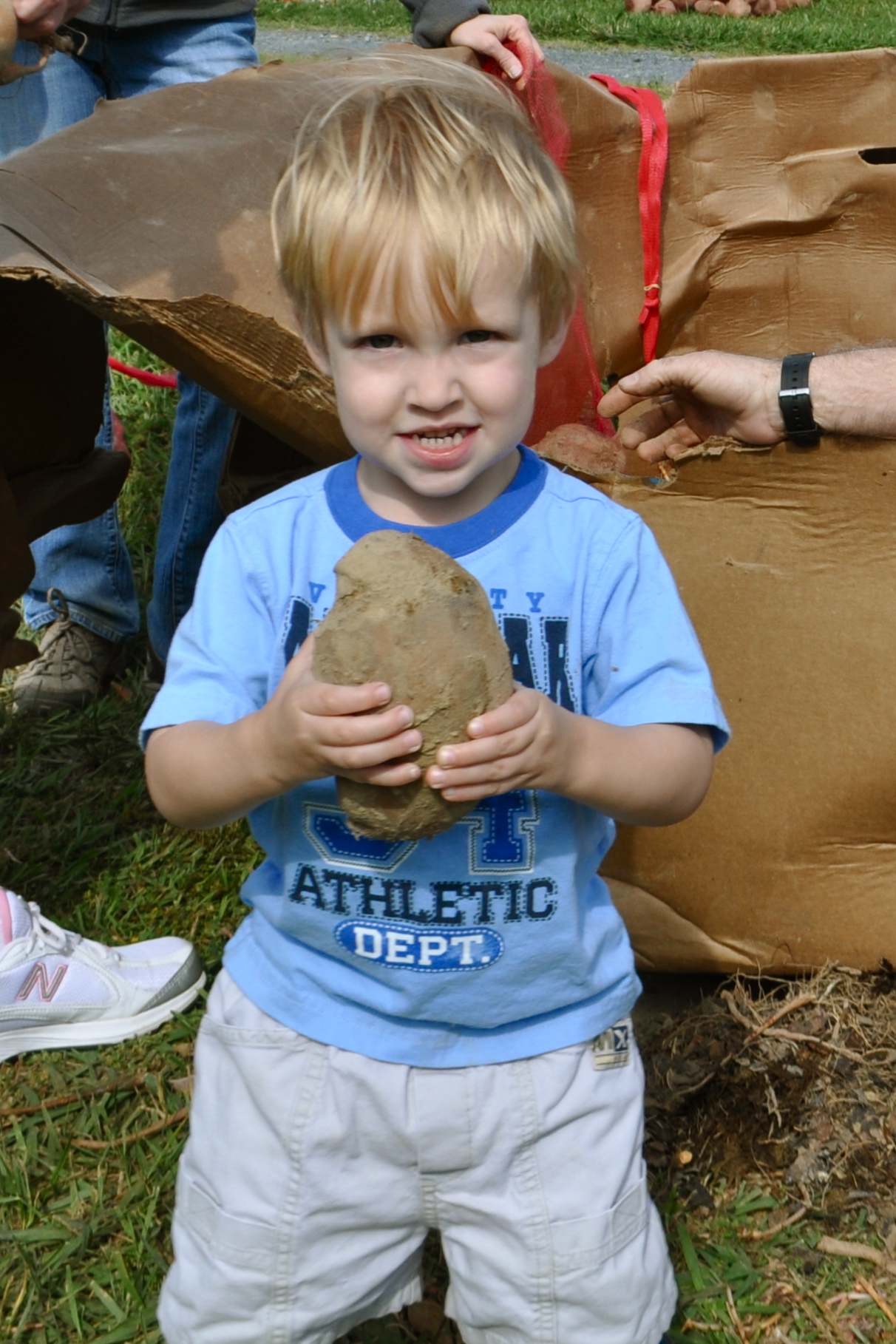
Everyone joined in on the fun

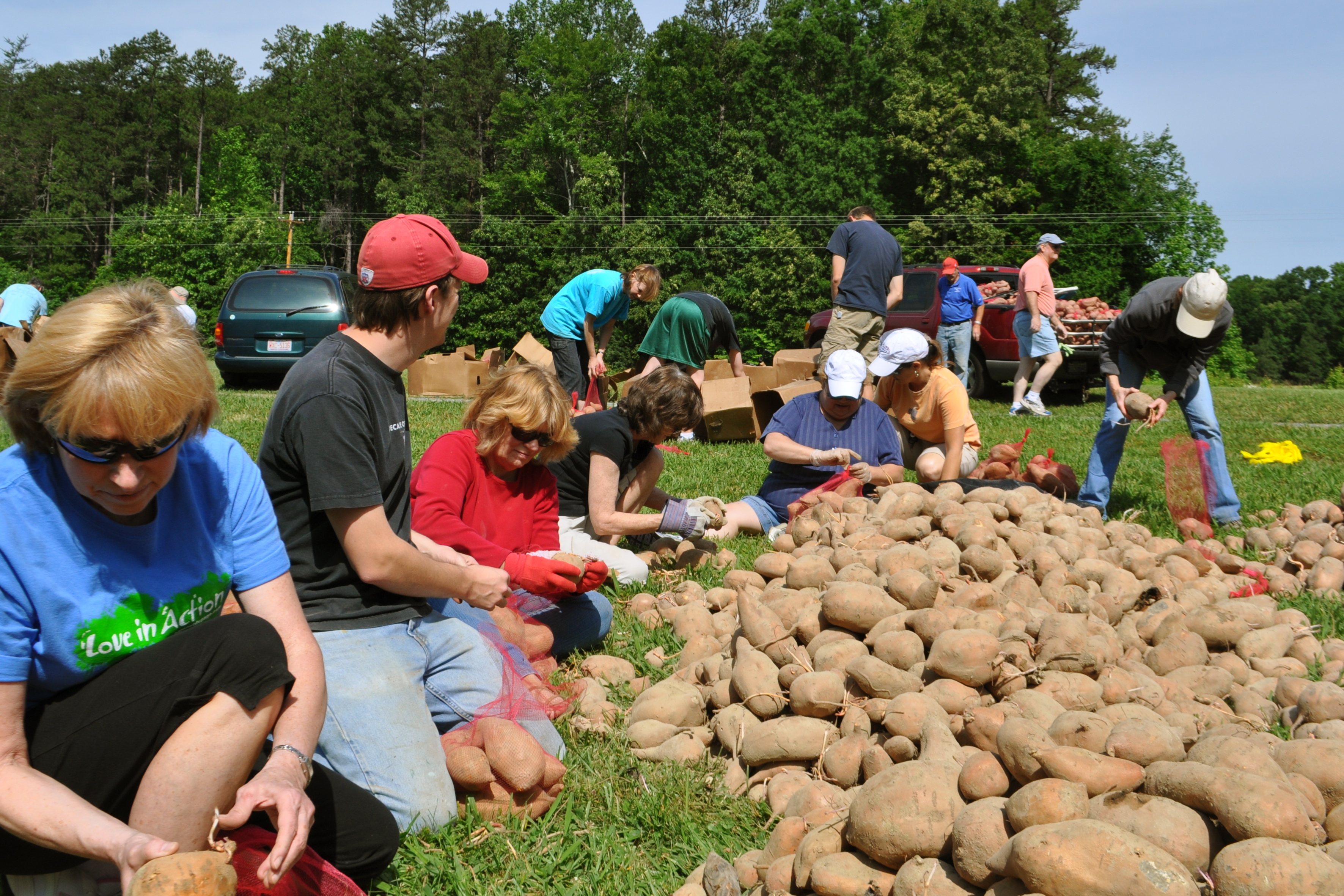
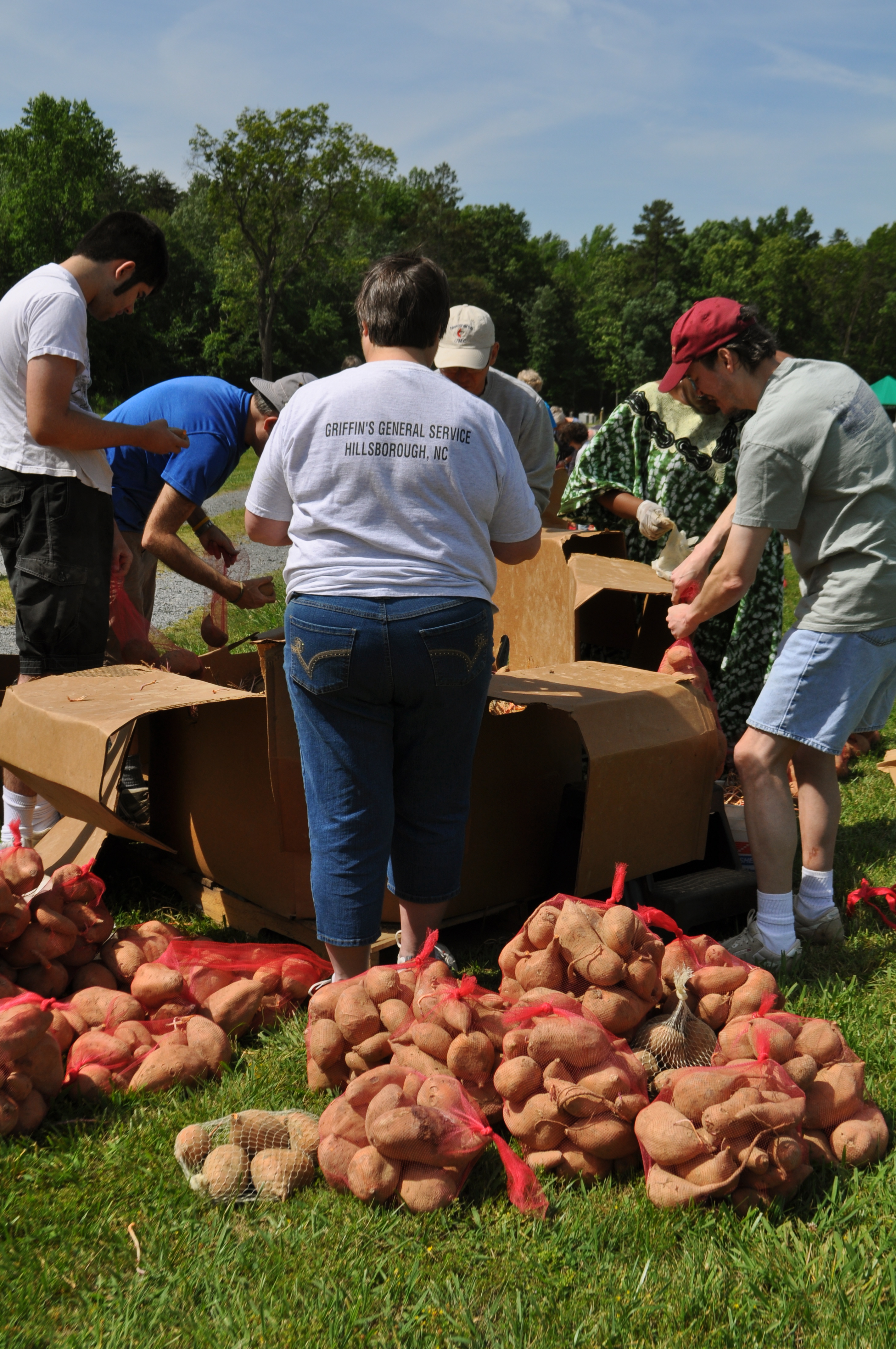
Last Saturday a good number of folks went out to help bag sweet potatoes in Hillsborough. A produce company had a distribution deal fall through so they donated the sweet potatoes to a number of organizations, including the Society of St. Andrew.

I found out about it from their website and it was just perfect timing for Year in the Bible as we had been going over Leviticus, which talks about gleaning and leaving food for the poor and the sojourner (and Exodus, too, talks about such practices). It was wonderful to get out on a beautiful Saturday morning and discover what 80,000 lbs. of sweet potatoes look like.

Personally, I do not fear where my next meal will come from as my family is well fed, often to excess in the area of baked goods. But that is not the experience everyone in our country has, and because of this donation, many will have good food to eat. Our church has worked with Durham Rescue Mission before and it was a blessing to see men from that organization arrive and take 350 lbs. of potatoes that I know will be well prepared for people in need.

And to think, the work we did to help in the distribution was fun. It is great to see the fellowship that develops as people get together with a common purpose to serve others, as encouraged by God’s Word. I hope this is something that continues throughout this year. So, if you see an opportunity or have an idea of what we can do to connect what we read with what we do, please let me know. Maybe we can work out a way to make it happen.

Here are some pictures from Saturday to understand a bit more of what happened: