
Pharaohโ€™s Hardened Heart

In this first half of Exodus, there are many (at least 19!) references to Pharaoh and his hardened heart. What is that about?

First of all, I want to point out the importance of reading this part carefully and in order. We want to see the progress of the story as a whole. If we just single out one occurrence like โ€œthe Lord hardened Pharaohโ€™s heartโ€ (10:27), and then try to understand the meaning of this verse apart from the whole, we will miss the bigger story and meaning.

What have you noticed about Pharaoh from these first 10 chapters? Heโ€™s pretty terrible, isnโ€™t he? I think we are supposed to be able to see that Pharaoh is an evil character. He epitomizes the turning away from God that had been the problem of humanity throughout the book of Genesis. Pharaoh is a powerful figure that wants his own way and will do anything to keep the power and control he desires. Before his confrontation with Moses, we already see that Pharaohโ€™s actions are oppressive and in defiance of the Lord of the universe.

Now to the references to the hardening of Pharaohโ€™s heart… While reading about the first five plagues, youโ€™ll notice that the text says that either Pharaoh hardened his own heart or that his heart โ€œgrew hard.โ€ In these instances, the responsibility for the hardness of heart is attributed to Pharaoh himself. And, in each of these plagues, the Lord give him a chance to humble himself, to change his ways, to soften his heart. And yet, Pharaoh chooses his own way, and hardens his heart. It seems that this hardness of heart is what happens when people choose their own way and reject Godโ€™s way.

In the span of the next five plagues, there are instances of God hardening Pharaohs heart, Pharaohโ€™s heart growing hard, and Pharaoh hardening his own heart. What we are meant to see in these chapters is that God is going to use Pharaohโ€™s evil for his own purposes. The Lordโ€™s plan to deliver Israel from their bondage will not be thwarted. Even Pharaohโ€™s ruthlessness, his unwillingness to bend, his hardness of heart will not stop God from doing his redemptive work.

What do we learn from these references to Pharaoh and his hard heart?

  1. Pharaoh is responsible for his actions. He has hardened his own heart and chosen his own way.
  2. Pharaohโ€™s actions lead to his own destruction. During the final plague, he loses his own son, and finally allows the people of Israel to depart. But it is a short time before he changes his mind (yet again!) and pursues the Israelites with his armies and chariots. His continued hardness of heart draws him and his army into the middle of the Red Sea where they are destroyed. God allows Pharaohโ€™s evil to lead him to his own destruction, and to the Israelites freedom from the pursuing army.
  3. God wants to save us from our own destructive tendencies. This is why he shows us mercy, he gives us chance after chance to repent (how many chances did he give Pharaoh?!). God is patient with us. He warns and encourages us to soften our hearts. He is both merciful and just, and we see these characteristics throughout the Exodus narrative.
What are the Nephilim and how much does it matter?

In many ways, Genesis is a book that is easy to read because itโ€™s a narrative. It tells about people and places, and though those names and locations may be a bit foreign to us, we have heard many of the stories throughout at various times in our lives. Thereโ€™s a certain familiarity about it. However, Genesis is also a tough read because we may not know what exactly we are supposed to get out of it. Reading through Genesis can make us uncomfortable as we come across sections like chapter 6, where the โ€œNephilimโ€ are introduced and thereโ€™s something about the โ€œsons of Godโ€ and the โ€œdaughters of man.โ€ These terms are  confusing, and perhaps weโ€™ve not encountered this part of the narrative very often in a sermon or Sunday school lesson. 

A question came in this week about what we make of this section of chapter 6 (v. 1-4). Who are the โ€œsons of Godโ€? Are they angels? Are they people? Who are the โ€œdaughters of menโ€? Why werenโ€™t these two groups supposed to intermarry? 

First, let it be said that these questions have baffled readers and scholars (both Jewish and Christian) for centuries. So, if youโ€™ve asked these questions, youโ€™re in excellent company! It helps to know that these are tough questions that many others have sought to answer, but donโ€™t let the fact that itโ€™s difficult stop us from seeking to at least understand it better (even if we canโ€™t understand completely). 

Scholars, as you may imagine, are not all in agreement as to the meaning of the term โ€œsons of God.โ€ The fact is, those who wrote it and were the original readers almost certainly understood what it meant, but the full meaning has been lost to us. So, the most honest answer is that we donโ€™t know. 

What Iโ€™ll do is offer a few suggestions offered by people who know much more than I do! 

One view is that โ€œsons of Godโ€ refers to angels that were having relationships with human women. While the term โ€œson of Godโ€ is used in other books (Job, for example) to refer to an angelic being, itโ€™s not the only way to understand the term. Furthermore, the Genesis narrative at this point is focused on the continuing rebellion of humans and their advancement in sin. This being the case, it is much more likely that โ€œsons of Godโ€ refer to some human creatures, and this is an example of humanityโ€™s continuing spiral downward in sin. 

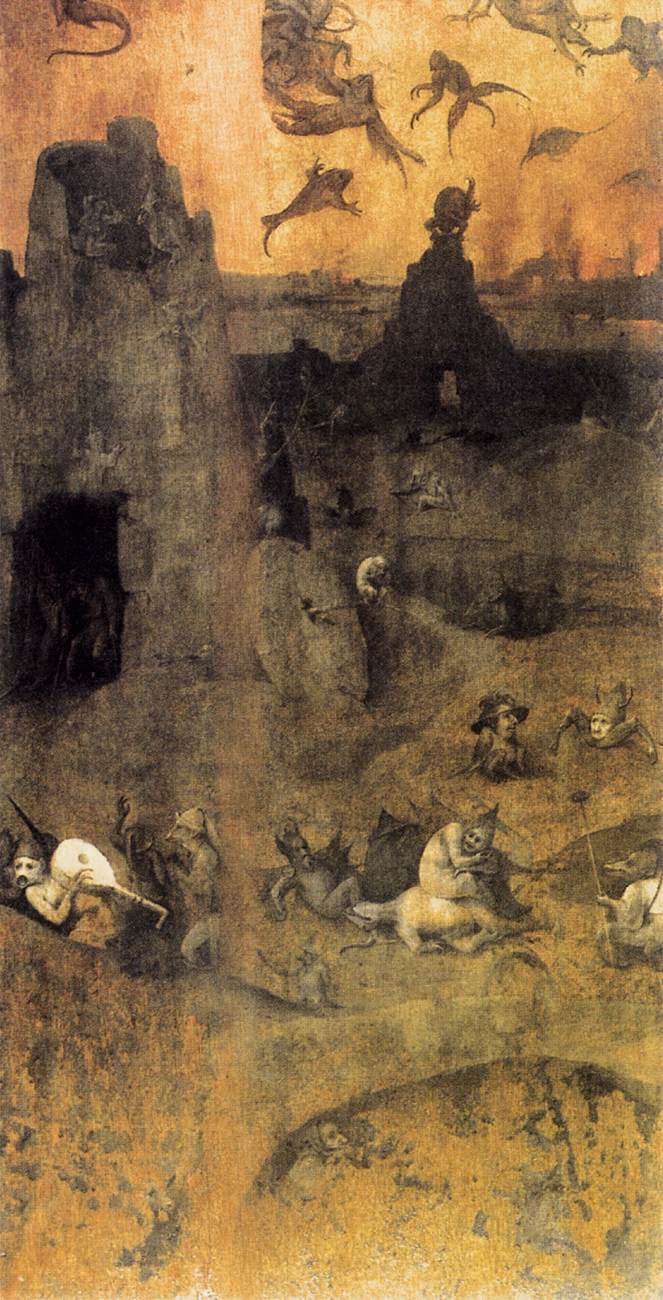
Hieronymus Bosch - The Fall of the Rebel Angels, c. 1510
Hieronymus Bosch – The Fall of the Rebel Angels, c. 1510

So, what are some other possibilities? John Walton, an Old Testament professor at Wheaton College, suggests that the term (โ€œsons of Godโ€) refers to the kings of the Ancient Near East. These rulers, often regarded as sons of God by the people they rule, may have been not just intermarrying, but involved in some sort of sexual perversion with the โ€œdaughters of men.โ€ In this interpretation, the daughters of men would have been Godโ€™s people. Interestingly, these Ancient Near East rulers were very concerned with immortality and long life, so the limiting of their days to 120 years would be an appropriate consequence.  

A third possibility is that the lines of Seth and Cain are represented by โ€œsons of Godโ€ and โ€œdaughters of men.โ€ Remember, Cain was the firstborn son of Adam and Eve- the one who murdered his brother, Abel. Later on, Eve has another son whom she called Seth. Because of what he had done, Cain was driven away from the Lordโ€™s presence. Seth was considered the โ€œchild of promise,โ€ and it was his family line that โ€œbegan to call upon the name of the Lordโ€ (Genesis 4:26). So, in this interpretation, the sons of God are the line of Seth (the line of promise) and the daughters of men are the descendants of Cain. The children of the promise were intermixing with those who had been cursed. Those who worshipped God were not to live like the rest of humankind, marrying whomever they wanted; rather they were to live as a distinct people. 

Given that this section of Genesis is fixed on the theme of humanityโ€™s plunge into disorder, it seems much more likely that the term โ€œsons of Godโ€ refers to a group of human beings. Saint Augustine and John Calvin are two examples from history who believed the โ€œsons of Godโ€ to be human creatures. 

Both the second and third possibilities have their interesting points of support, and of course there are other variations out there. Even without knowing with certainty the identity of the groups of people in this text, we can understand the point of the text is to show us that human beings were choosing their own way. What had begun in the garden, when Adam and Eve ate of the Tree of the Knowledge of Good and Evil is continuing to have its impact. Human beings want to be the determiners of good and evil, and are trying to usurp God from his rightful place. And itโ€™s not going well. 

Hope this helps, and please bring us more of your questions, because itโ€™s very likely that others are asking the same ones!


Also: Hereโ€™s a short video on the identity of the โ€œnephilimโ€ and how much weight we should give any particular interpretation of that term.