Fireside Chat with Nebuchadnezzar

Shadrach, Meshach, and Abednego refused to worship the golden idol that King Nebuchadnezzar set up. (Try coming up with a sentence with four crazier names.) The consequence of this was that they were to be thrown into a furnace, one that was burning so hot it killed the men who were to carry out this deed. But on the way to their almost-certain death, these three men talk to Nebuchadnezzar as he presses them to worship false gods.

King Nebuchadnezzar, we do not need to defend ourselves before you in this matter. If we are thrown into the blazing furnace, the God we serve is able to deliver us from it, and he will deliver us from Your Majesty’s hand. But even if he does not, we want you to know, Your Majesty, that we will not serve your gods or worship the image of gold you have set up. (Daniel 3, NIV)

It is amazing to me that these three have such confidence before a furious king. And their confidence is not in their comfort or safety. Whether they live, because God delivers them, or they die they still have confidence that God is the one God, and nothing else is deserving of worship. They do not worship God because he blesses them, they worship him because he is God. He deserves it. Shadrach, Meshach, and Abednego won’t dishonor God in such a way, and they want the king to be aware of their devotion. They serve God and they do so even if he won’t deliver them.

That is a difficult prayer for us to make as we always want God to see things our way and help us out in a bind. But we need to seek to honor him no matter how situations turn out for us. We need to finish our prayer with our own version of “even if he does not”, and a good one is taken from Jesus who prayed just before his great suffering, “not my will but yours be done.”


Daniel’s Diet

How could I give this up?

First off-apologies for my absence from posting. I usually post during the week, but I have been ill since Monday afternoon. I may still be a carrier, but such things do not transmit via the internet. You should be safe.

In reading the first chapter I was reminded of something I had heard of a while back that some churches were doing (and there is even a book associated with it), that is the “Daniel Diet.” I’ve seen it also called the Daniel Plan, the Daniel Fast, etc. Upon reading this passage folks thought, “why not?” So churches and other groups have tried it.

While I cannot attest to its health benefits I like the idea of seeing something in Scripture–something simple–and trying to do it. We sometimes can see something simple, turn it into something complicated, change it in all sorts of ways as we try to translate it from centuries ago to today’s culture, and in the end it is something altogether different.

We do at times need to do such translations. For example, not many of us are tempted to set up wooden totems devoted to foreign gods within our homes, but we are just as susceptible to idolatry today as God’s people were in the past. On the other hand we sometimes make things over complicated like when Jesus tells us to love our neighbor. Surely we learn from that story that we can’t exclude people. Neighbor can be applied to anyone. Yet neighbor still does mean those people who live right next to you. In all of our attempts to understand “love your neighbor” we sometimes neglect our next door neighbor.

So I like the simple approach to the Daniel diet. I may not agree with all of its tenets*, although there probably is variety among the different types, but they’re trying it. They see something do-able and do it.

This may not be the thing for you, but what else does Daniel do that we could imitate? Prayer three times a day? I think that is simple, do-able, beneficial. How about a Daniel Diet of Prayer? Three square meals of time talking with God? I bet that’ll do our body good.

*In just a brief reading I saw one sight equating the mind to emotion, which I don’t think is right.

Daniel and Friends in a Foreign Land

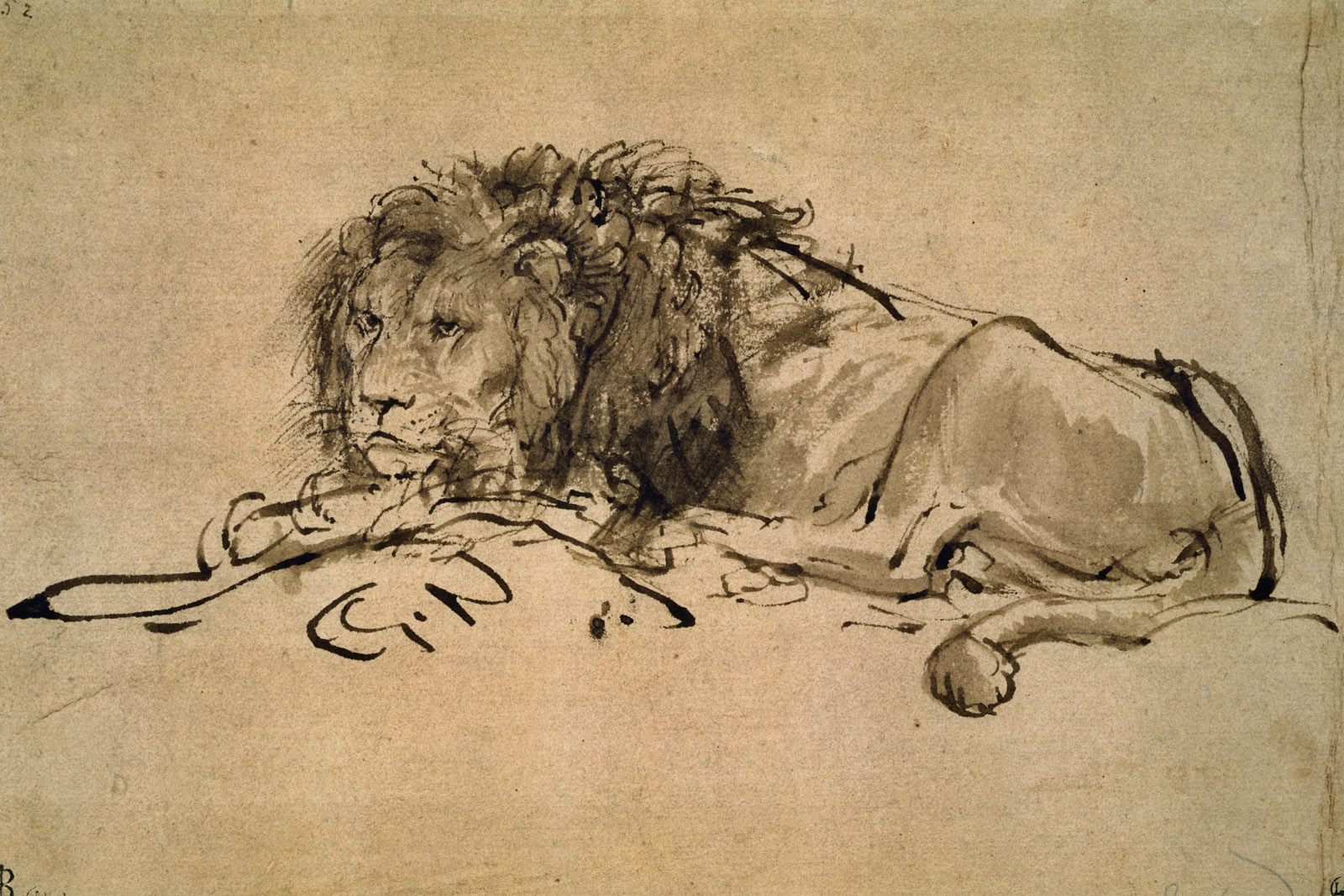
rembrandt lion
These friendly felines are in his future.

When you open Daniel you may think you’ve gone back to our history blitz since 2 Chronicles finishes in a similar way to how Daniel begins. Not only has Judah been attacked, but they have been brought into exile. Daniel is among some of the elite that are chosen to train in the king’s palace. But don’t let the sound of that invitation fool you since only eight verses in we see a problem. Daniel does not want to defile himself with the food he is offered and has his guard give him and his three fellow exiles vegetables and water.

The end of this is that God softened the guard to be permissable and blessed Daniel and company. But it is just the tip of the iceberg in relation to how exiles are to maintain their worship and their faith in a hostile, foreign environment.

So much of worship in the Old Testament is very localized and geographically bound. Without the temple or the priests doing their jobs, how are they to offer up praise or sacrifice to their God? How can they keep themselves from being overwhelmed by this opposing culture of the Babylonians?

Think of the difficulties you might have trying to celebrate Thanksgiving in a country that doesn’t do the same? Or how about Christmas? You could do something, but it wouldn’t be the same. The Fourth of July that we kick off with grand fireworks and big bands would be hard to muster if you are an alien living abroad all alone. But these examples would be nothing compared to what is on the line for the people of God taken in to exile. They must look at their history and their relationship to God and figure out ways in which they can carry on. God’s promise was for a promised land, so what does it mean if they are taken away? God had them make for himself a temple, but that was left behind. Now what?

One thing they turn to and we see in Daniel is prayer, but even that will eventually get him into trouble with his new land.

Our Stunning Ability for Self-Deception

Our focus passage this week was a shorter selection with only a handful of verses from the end of chapter one. But in those few verses we see what I believe is a progression of deceit.

In the context of our sinfulness and subsequent confession, John looks at three lies and their implications.

Verse 6
If we say we have fellowship with him while we walk in darkness, we lie and do not practice the truth.

Verse 8
If we say we have no sin, we deceive ourselves, and the truth is not in us.

Verse 10
If we say we have not sinned, we make him a liar, and his word is not in us.

The first is an example of someone who is sinning yet claiming such sinful behavior is good. They walk in the darkness, but call the darkness light. In a somewhat similar vein the second example is an equally foolish position, claiming to have no sin. Since all of us have sinned and no one is righteous, the only way to claim to have no sin is to again call good what is truly evil. The third example again claims that we have no sin, and this gets to the implication that if we have no sin, we need to savior. If we have no need for Christ then we have made him and God out to be liars.

I don’t think John is going through an abstract hypothetical here. I think he brings these points up because he has come up against similar claims. So he lays it out plainly, showing the reader the ability sinful humanity has for deception. In verse six “we lie”, verse eight “we deceive ourselves”, and in verse ten we go so far as to “make him a liar.” We lie to others, lie to ourselves, and portray God as a liar.

The second one really struck me when I studied this before. Our lies will carry us to the point of even lying to ourselves. One translation renders it that “we fool ourselves” and another that “we lead ourselves astray.” We repeat a lie so often that we begin to take it as truth. What an indication of the effects of sin in our own lives and our inability to judge what is right. We can fooled with no one to thank but ourself. It is one thing for someone else to try to deceive us, but we easily go along with our own lies.

Really think about that phrase: deceive ourselves. What is key to being able to deceive someone else? You know something that they do not. You are aware of the lie, but they are ignorant. If the other person knows the lie, your chance to deceive vanishes. So how in the world could we play both parts? How can we taken in by deceit in such a way!? How can I both know the lie and believe it? But again, I think this is revealing of our fallen nature and how we are in such dire straits thanks to sin. We are enticed to believe just what we want to believe and in pursuit of that, we’ll swallow just about anything.

Perhaps this could get too detached from reality, but John gives us great examples. If not self-deception what is it when we claim to be in the light or to love God yet we hate our brother? (1 John 2:9 and 1 John 4:20) To love God is to love our neighbor and follow his commands, so how can we claim to be loving him and following him while at the same time hating the ones he came to save?

Let’s not let that last question be rhetorical. How? Because we feed ourselves lies. We deceive ourselves into thinking we can do whatever it is we’d like to do. We believe all that we do is good, and even the sin we commit is thought of as walking in the light.

We need to be reminded by books like 1 John of what is true. We need to be reminded of what is in the light and not to do so by following some inner light found within me. To seek truth and not some knock-off, second rate, unsatisfying counterfeit, we need to steep ourselves in the Bible, surround ourselves with wise sisters and brothers, and desperately and humbly seek God in prayer. If we acknowledge that we, like anyone else, can fall victim to such self-destructive self-deception, then we know we need others. I can’t do this on my own, and left to my own devices I’ll be so much more likely to weave my own truth. I need and we all need to submit ourselves to God’s Word, and seek to test ourselves according to it.


What Kind of Love the Father has Lavished Upon Us

1 John is a book that hits on a number of topics, but love sure is one of them. It could be tempting by the time you reach chapter three to just gloss over all this love talk. But if you do you’d miss a beautiful line of Scripture. I actually like the sound of the NIV so I’ll quote from there:

See what great love the Father has lavished on us, that we should be called children of God! And that is what we are!

Our understanding of love is defined in many ways through passages in this book as we’re told what love has done, who has loved first, what love should look like now, and so on. But this line has such simplicity and profundity. God’s love for us is visible in the fact that he would call us his very own children. The Christian understanding of how we relate to God is amazing in that fact. There is not some distant God who cares little for the affairs of this tiny world. We do not have a God who tolerates us because of what we do for it. Our God loved us before we ever could and calls us his children. We are no long slaves to sin and bound to death, rather we are rescued from that peril and are God’s sons and daughters.

We are not merely saved from sin then left in a position always needing to please a capricious God who could easily reverse his judgment. No we are saved from sin and saved for God himself. He is faithful to his promises and has adopted us as his children, an action that cannot then be undone. What love God has truly lavished upon us that we are his own, and how overwhelming it is when we fix our mind upon the fact that we are his beloved.

The Reception of What Should Be Good News

In 2 Chronicle 30 Hezekiah delivers a word to all of Judah and Israel, calling the people to celebrate Passover in Jerusalem. Right worship has fallen by the wayside and when he begins his rule he makes it first order to restore the temple. But what we see in the chapter is another reminder about the way that those who follow God are received. I mentioned this earlier in a post on 1 Corinthians, but I think we should be reminded and then prepare ourselves for how people will see us.

Hezekiah sends out a message and in verse 10 it says the people laughed, scorn, and mock the messengers. They do not disagree or disregard. No simple “no thank you.” Instead mockery. How do you handle condescension? Do you react well when someone thinks so little of your belief that they do not deem it worthy of reply, but just laugh you off? Hezekiah was in the right and was doing what was good and he faces scorn. Are we ready for such a reaction?

There is great blessing for those who follow Christ, but we ought to build up resolve and find courage and conviction because Christ told us that in this world there will be suffering. But the one we serve also tells us that he has overcome the world.

We Know Someone Greater Than Solomon

I am appreciative that someone today brought to my attention an interesting reference to Solomon found in the New Testament.

When the crowds were increasing, he began to say, “This generation is an evil generation. It seeks for a sign, but no sign will be given to it except the sign of Jonah. For as Jonah became a sign to the people of Nineveh, so will the Son of Man be to this generation. The queen of the South will rise up at the judgment with the men of this generation and condemn them, for she came from the ends of the earth to hear the wisdom of Solomon, and behold, something greater than Solomon is here. The men of Nineveh will rise up at the judgment with this generation and condemn it, for they repented at the preaching of Jonah, and behold, something greater than Jonah is here.

Luke 11:29-32

For all the talk of Solomon’s great wisdom, we know something greater than Solomon. Just as with folks like Moses and Abraham, here is another who fails in comparison to Jesus Christ and receives the “greater than” treatment.


In Luke Jesus is shown as greater than Jonah, whose preaching caused a wicked, enemy city of Israel to repent. He is greater than Solomon whose wisdom, wealth, and power were so great that the Queen of Sheba travelled to Jerusalem to marvel at him.

If a city repented in ashes and sackcloth at the words of Jonah and if the world gathered to Solomon to hear his words, how much more will Jesus impact our world. His preaching and his wisdom are matchless. Jesus came to gather all the world and to call all people, Jew and Gentiles, to himself. Even though we’ve read these weeks in Kings and Chronicles of Solomon’s wisdom, a wisdom he sought in order to rule as king, the wisdom of Jesus, our King, is new and greater. As we read elsewhere that even the foolishness of God is wiser than the best of humanity. And in God’s wisdom Christ did not amass great power or wealth as king. As king he suffered and served, sacrificed himself for us, and now reigns on high interceding for us every day.

We ought to be thankful for his wisdom–a wisdom that saves us, and we ought to ask for his type of wisdom as we seek to follow him.

In Defense of Learning Our History

Perhaps I’m biased given that I was a history major, but I think there’s something to it. There is something about history that makes it important for us to know. So much of our Scripture is our history, the history of God’s chosen people. There is a reason that God has it in his word. I think it is valuable for us.

There may be times when genealogies are taxing on our attention. It is hard to press through the seemingly endless battles and changes of leadership. But take a step back and look at what God has done and is doing. David sings a song of thanks in 1 Chronicles 16 because of what God has done. Read his words and think how much of that is history.

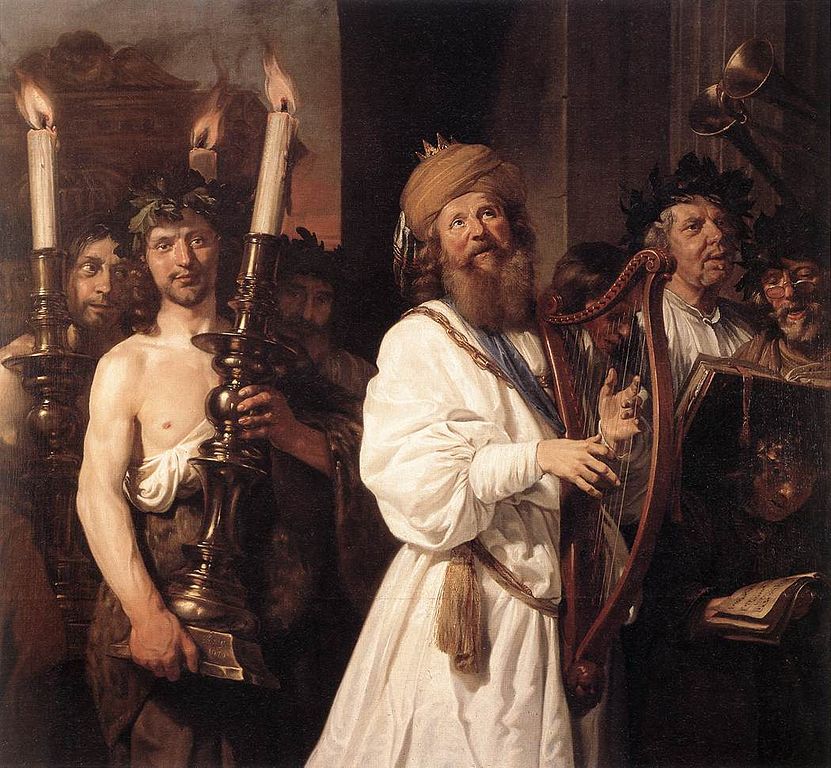
David Playing the Harp, Jan de Bray, 1670

If David did not know his own past and the story of God’s faithfulness, what would his songs and psalms look like? What would become of his trust in God continued provision for the people? I’m sure he was supported in his belief because he could look back into past generations and see the faithfulness God has toward his people and the long-suffering that God displays as his people turn from him.

Knowing our history also gives us perspective about our place in this world. We’re not the only ones to have struggled or question, nor are we the first to have great victories for God. We are very much like God’s people throughout time, and thankfully God is the same, too.

Our God is always faithful and always deserving of songs of praise. We ought to reflect on our individual histories and recognize God’s work in our lives. But don’t forget the way in which you fit into God’s greater history and offer him thanks and praise for his goodness that extends backward beyond our own entry into life.

Oh give thanks to the LORD, for he is good; for his steadfast love endures forever!
1 Chronicles 16:24