
Visualizing Colossians 1: Hope


Guided reading plans to help you read and understand the Bible.
In chapter 10 Paul writes “our hope is that as your faith increases, our area of influence among you may be greatly enlarged…” Here I believe he is talking about the spread and increase of the gospel in the area surrounding Corinth, hoping that the church there can help push the gospel further. But these words got my minding going off on a tangent, something that is not uncommon for me.
Perhaps it happened because of what I was reading previously in the chapter. Given that our struggles are not against the flesh, Paul writes that we should take captive every thought so that our mind will be obedient to Christ. We must not let our minds succumb to temptation, instead we need to place our minds, and by extension, our whole selves under Christ’s control.
So with this on the mind when I came to the passage about influence increasing with faith, I jumped to the fact that as our faith increases so does our understanding of the implications of the gospel in our life. The stronger the faith the more we give over to the Lordship of Jesus Christ. If in faith we take captive our thoughts to give over to obedience to Christ, surely his influence will spread throughout us.
What maybe began as a small understanding of Jesus grows and creeps into every single area of life as Christ grows in our eyes. We cannot keep relationships from his authority, we cannot go about with a belief that our job is a separate area apart from his watch, and we must understand that even our bodies are not our own. The influence of the gospel of Jesus Christ grows as our faith grows. Not that Christ is made to be Lord, but our eyes open wider to see the truth that is there, that he is already Lord, and we make our life correspond to the reality that is in him.
So while the passage may not directly be addressing Christ’s control in a person of faith, certainly if the church of Corinth is increasing in faith, so too will Paul’s ability to influence that geographic area grow, as well, for they will be giving themselves over in obedience to the rule of Jesus Christ.
Part of 2 Corinthians is a defense that Paul makes about his ministry and actions, including a discussion on the church giving financial aid to those in need.
Paul wants them to be cheerful givers and does not want to use his authority to coerce them. Instead he tells them about what Christ has done for us.
2 Corinthians 8:9
For you know the grace of our Lord Jesus Christ, that though he was rich, yet for your sake he became poor, so that you by his poverty might become rich.
Rather than command the church in Corinth, he tells the gospel again in the language of money. If they understand the gospel and accept it, Paul believes they will act according to it. He writes in chapter nine about a “submission that comes from your confession of the gospel of Christ.”
Tim Keller in Counterfeit Gods describes 2 Corinthians 8:9 like this:
Jesus, the God-Man, had infinite wealth, but if he had held on to it, we would have died in our spiritual poverty. That was the choice–if he stayed rich, we would die poor. If he died poor, we could become rich. Our sins would be forgiven, and we would be admitted into the family of God. Paul was not giving this church a mere ethical precept, exhorting them to stop loving money so much and become more generous. Rather, he recapitulated the gospel. (Keller, Counterfeit Gods, 67)
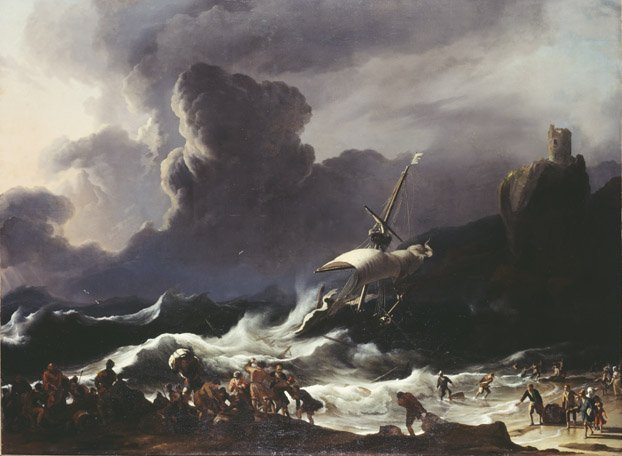
In 2 Corinthians we see a long list of Paul’s sufferings that have come his way during his time as a minister of the gospel. Starting in 2 Corinthians 11:24, Paul writes:
Five times I received at the hands of the Jews the forty lashes less one. Three times I was beaten with rods. Once I was stoned. Three times I was shipwrecked; a night and a day I was adrift at sea; on frequent journeys, in danger from rivers, danger from robbers, danger from my own people, danger from Gentiles, danger in the city, danger in the wilderness, danger at sea, danger from false brothers; in toil and hardship, through many a sleepless night, in hunger and thirst, often without food, in cold and exposure. And, apart from other things, there is the daily pressure on me of my anxiety for all the churches.
Paul was so committed to the call God had placed upon him that he continued the work even as he faced such pains. Knowing the cost did not deter him. Christ was more precious to him than anything else.
This passage about Paul reminds me of the quote that Henry Varley spoke to D.L. Moody, “the world has yet to see what God will do with a man fully consecrated to him.” That certainly was Paul’s desire–to live his life for someone else, no matter the cost. As he pursued this goal, being used by God, Paul helped to change the world. And that is just what will happen when one gives themselves fully to God.
We’ve already gone through our first week of the third quarter, and with each week we’re distancing ourselves more from that midway point. So I guess we can classify ourselves as over the hill and we’ll just gather momentum from here on out.
We finish out Corinthians and continue into Jeremiah this week, with a brief break from the Psalms.
Before we completely cut ourselves off from last week, here’s a short paragraph I wrote back in school about 2 Corinthians 4, which is a bit of a strange passage about carrying around death in our lives. I share this partly because whenever I can use what I did in school after graduation, I feel like all that money was well spent. I hope my one paragraph is a tiny bit helpful, rather than more confusing. If it is the latter, I’ll use the excuse that I wrote it years ago.
2 Corinthians 4:5-6, 10
For we do not preach ourselves, but Jesus Christ as Lord, and ourselves as your servants for Jesus’ sake. For God, who said, “Let light shine out of darkness,” made his light shine in our hearts to give us the light of the knowledge of the glory of God in the face of Christ.
We always carry around in our body the death of Jesus, so that the life of Jesus may also be revealed in our body.
The Church is not as some would see it as a holy body, a diamond amongst the rest of the rough world. It is not the pinnacle of humanity, instead from it is the best of human possibility. It is to be the pulpit from which the living Word of God is proclaimed. It is both pit and pinnacle; pit because it is human, pinnacle because it is a place of recognition of our guilt and of God’s mercy. The Church carries death, so that Christ’s life may be revealed.
–Me, thesis for some theology class discussion
For the sons of Judah have done evil in my sight, declares the Lord. They have set their detestable things in the house that is called by my name, to defile it. And they have built the high places of Topheth, which is in the Valley of the Son of Hinnom, to burn their sons and their daughters in the fire, which I did not command, nor did it come into my mind. (Jeremiah 7:30-31)
Reading through the prophets you come across a long list of the sins of God’s people, a people who are called to be set apart from their neighbors, who are supposed to be a holy nation. To me, this one stands out among the rest. They have not only been guilty of evil, but they have done their evil in the house of God. They have built up Topheth for a horrifying practice, sacrificing their sons and daughters. These “sons of Judah” have sacrificed their own flesh in pagan practices by throwing their children into the flames.

How much sorrow must this cause our God? He has many times seen his people turn away from him, which causes him grief. But here the sin of the parents is to destroy their own children. Judah is taking the lives of God’s people and in so doing, upending the promises of God. They are no longer cherishing the promise of God to Abraham and his descendants. Instead they cast the promised children into this Valley of Slaughter.
God promised Abraham offspring so numerous they’d be impossible to count and Abraham longed for a child. Children were an honor and a blessing. But here in Jeremiah as descendants of Abraham receive this promise, they mock God and his promises. It is evil in God’s sight as they slaughter their own kin–something so far from God’s mind.
This is a clear reason why Jeremiah comes to preach judgment, and good reason that he is known as the weeping prophet (Jer 9).

We immediately get into a passage in Jeremiah 1 that is well known, at least relative to other texts from Jeremiah. In verse five we read:
Before I formed you in the womb I knew you…
In it we see God’s sovereignty over creation and time. We find comfort being known by God, and that he knows us before we ever have a chance to seek him. Before we even have the ability to turn to him, he knows us.
But it is great to look beyond this one line to see how this truth plays out. God wants his prophet Jeremiah to rely on God to fulfill his call. Jeremiah worries that he is only a youth, so how is he to be a prophet to the nations? But doesn’t he realize that God already knew that when he called him–he knew all things about Jeremiah before Jeremiah was even born. God says do not worry that you are young, for I will give you the words. Just follow my command. I will be with you. Verse nine even says that God will put the words in Jeremiah’s mouth. What then will he lack?
If he is worried that he’ll have to go it alone, all Jeremiah should do is look back–God knew him before he was formed. And he can look ahead–God will continue to be with him. God has not left his side and will remain with him making him capable of the great work that is prepared for him. There is no time Jeremiah can think of or imagine in which God is absent from the picture.
In a similar way that Jesus talks of Abraham in John 8, God could say here that before Jeremiah was, I am. God was by his side before he even had a side, before he had a body. Therefore Jeremiah can rely on this God who holds these plans securely in his own hands. He need not worry about what he may lack and instead focus on all that is perfectly provided by God.
I bet if you’re married, there is a very good chance that a certain passage from this week’s readings were a part of your wedding ceremony. 1 Corinthians 13 is a favorite passage for couples to use at their nuptials.
Of course, I hope love is part of a marriage, so I don’t think it is out of place to use this passage. But given that this passage on love is so linked for many to weddings, we need to make sure we remember this scripture applies for all. Love is patient is not only for couples. You don’t have to be married for your love to rejoice with truth, bear all things, and not seek its own way. This chapter is lifted up as a goal for how we should love, but just don’t think it is the goal only in marriage. All Christians are called to follow the self-giving love of Jesus Christ, who even loved his enemies.
It would be much easier if I only was called to love my spouse. Even still, I’d fail. But it’d be easier. But it is the more challenging way of disciples of Christ to hear this as a call for all of us to love our neighbors in a way that pushes us and requires great reliance on God’s Spirit. For we can do many amazing things, but if we have not love, we are nothing.
 Year in the Bible