Deferred-Promise Land

In Numbers the people rebel against God’s plan to lead them into the promised land because of the report brought back to them by the twelve spies. On the one hand it is a land said to be flowing with milk and honey, but it is also a land whose occupants make the Israelites fearful. They say that they were like grasshoppers compared to the inhabitants.

What follows is not unusual for God’s people when facing adversity: grumbling and rosy descriptions of slavery in Egypt. They are angered that their God–who has done great and marvelous things for them–has led them to such a great and marvelous land. Well, that’s not how they said it. They’re upset that God’s plan doesn’t appear easy. The people are afraid of the inhabitants and do not trust that God will continue to lead them, be with them, and deliver them.

They have a new plan, “Let us choose a leader and go back to Egypt.” After all, they had fish in Egypt. (Num 11:5).

When Caleb and Joshua, two of the twelve spies, try to dissuade them the people are so angered that they intend to stone them. They won’t hear any challenge to their cowardice. Not until God comes to speak to them. Because of their disobedience God pronounces judgment. The promised land is still promised for the people of God, but it is not to be seen by the current generation. None of the men but Caleb and Joshua may enter. Instead of God delivering this land to his people, the people will die wandering in the wilderness, spending one year for each day the spies were in the land, until the next generation is ready to enter.

I wonder what blessings of God we miss out on because of our disobedience. I wonder what God wants to give to his people that he might reserve for another generation. This is not just a selfish consideration, but look at how Caleb and Joshua, who acted righteously, still felt some of the consequences. How might our sins bring collateral damage on those around us or how might our sins limit other’s reception of God’s blessing?

God is never through with his people, not here in Numbers and not ever. But there still is discipline for his children. I hope our trust can overcome our fear when God calls us to follow him.

Week 9

A Plague Inflicted on Israel While Eating the Quails; as in Numbers 11:31-34; illustration from the 1728 Figures de la Bible; image courtesy Bizzell Bible Collection, University of Oklahoma Libraries (from Wikipedia)

The Old Testament begins with book names that can sometimes obscure what they’re about. But it is pretty simple so far. Genesis was the beginning. It was the beginning of creation, of God’s story of dealing with that creation, and the beginning of his very own people. Exodus was Israel leaving slavery in Egypt. Leviticus is the law for the levites, continuing the law given to the people in Exodus. Now we come to Numbers. What’s that about? Want a hint?

Numbers 1:2, “Take a census of all the congregation of the people of Israel…”

That’s right there in the beginning of the book as God commands Moses to take a census, to number the people. It is a continuation of the story from Exodus, which began with their delivery from slavery, as God now numbers his people and prepares them to journey into the promised land.

Meanwhile in the New Testament…

Luke finishes this week and offers another opportunity, after already having read through John, to contemplate the surprising ending to the gospel story. It may not surprise us now, as we have heard it and read it before. But the people surrounding Jesus did not expect him to go to the cross. Who would expect a messiah, God incarnate, one who had such power, to be crucified like a criminal? Read it slowly with a renewed appreciation for the great humility of God to submit himself to such punishment to save the very people who deny him and yell, “crucify him!”

Also, keep in mind that what follows next week is the book of Acts, written by the same person. Try to keep Luke in mind once we begin Acts to see how they connect.

Story So Far, Week 8

If you go back and read through Leviticus 14 you’ll see the lengths the priests had to go to make clean those afflicted with leprosy. The priest required the sacrifice of birds, hyssop, scarlet yarn, and cedarwood, and the process involved sprinkling of blood, shaving off hair, and washing. And that was only the beginning.

Compare that to the power and authority that Jesus has in Luke 17. Jesus meets not one, but ten lepers on his travels. They cry out to him, “Jesus, Master, have mercy on us.” He tells them to do what seems to follow the order of Leviticus, “Go and show yourself to the priests.” But what should amaze the reader is that they are not cleansed after the priest heal them. Luke says, “as they went they were cleansed.” Their faith in Jesus’ words and their obedience was enough and they were clean. They did not need a week of sacrifices and ritual. Christ has greater power.

Sadly only one of the ten, upon finding out he was healed, turned right around to fall at Jesus’ feet and give thanks. If this Samaritan did not fully understand it before, Jesus then makes it explicit, “Rise and go your way; your faith has made you well.”

In Jesus Christ, God has done so much to make us well, and because Christ has lived the righteous life for us, we need only to place our trust in him to be clean.

Having now finished Leviticus, and knowing that Christ has come to fulfill the whole law (Matt 5), not abolish it, isn’t it amazing that he could do so? All of Leviticus deals with the laws for the priests and much of Exodus directs people how to live in accord with God’s law. Jesus Christ came and perfectly fulfilled it. All that the law could not do, Christ did for us. What the law could never be for us, Christ is. He has fulfilled it and he has made us clean before God.

I hope by reading through these books of law you gain greater appreciation for the perfect work of Christ that he accomplished for us. He fulfilled the law and went beyond what it could ever offer us. “For if righteousness were through the law, then Christ died for no purpose” (Gal 2:21b). By his death we are saved and made righteous, and we can take no credit for such a gracious act.

Spring Cleaning

Mr. Clean, a levite?

There is a great concern in Leviticus for cleanliness and purity. There are sacrifices in order to be cleansed from sin and long lists of actions that are clean or unclean. An important role of the levitical priests is to help the people determine clean from unclean. Their job starts to sound like that of a doctor with all the descriptions of examining skin and sores and making appointments for follow up visits. I for one am glad my job description as pastor does not include diagnosing leprosy.

What is fascinating is that there is no great divide between physical cleanliness and what could be called moral cleanliness. God’s law for the priests is concerned with his people being clean in every way. This is not the way we tend to think today. If you were to go to church and hear a sermon about being clean, you might expect it to be entirely about spiritual things, things like prayer and confession, attitudes and motives, sin and morals. But you might be caught off guard if the preacher then spoke about toilet bowl cleaner, vacuuming, drinking enough water, and exercising. That stuff is physical, not spiritual, right? Why would the church care about whether my body or house is in order?

But it is a modern notion to completely cut off the physical from the spiritual. And it is foolishness to think that what we do with the body has no bearing on the spirit. We see in Leviticus that God cares about the wellness of his people in every area of life. And God does the same now. He doesn’t care about just a bit of our life. God cares about all of us, more than we can imagine.

I’m not saying God cares more that you eat wheat grass and work out two hours a day than he does that you love him and love your neighbor. But there is not one inch of our lives, as seemingly insignificant as they may seem in the grand scheme of human history, that our God isn’t concerned about. His love and care extend beyond Sunday mornings and beyond church doors. He follows you into the workplace and in the home, morning, noon, and night.

To be clean is a whole life commitment. This perspective demands more and is difficult, but be comforted knowing that God has always provided ways for forgiveness and cleansing. Ultimately it is only God who can make us clean. By the blood of Jesus Christ are our sins washed way.

More Than Thou Shall Nots

Too often we reduce the moral imperatives of our faith into “thou shall NOT” statements. We shall not steal, kill, nor covet. And that list could go on and on. It is easy to think about what we are not supposed to do, but if we stop there we are left with a very shallow understanding. If we’re only called to not do certain things, then we are left with little idea of what we’re actually supposed to do. But the Christian life is not summed up by sitting on our hands. We are called to act.

We could look throughout Luke to see what Jesus calls us to in obedience to him. This obedience is a response of love, it is how we show love to him. But instead of quoting from Luke, read this example from Leviticus:

“‘If anyone sins because they do not speak up when they hear a public charge to testify regarding something they have seen or learned about, they will be held responsible.” (Leviticus 5:1 NIV)

The law was not concerned only with not bearing false witness, but in the people standing up to testify. It may seem mundane to you, and maybe it is because I watch too many crime shows, but this sounds bold to me. We don’t always want to speak up and stand out. Sometimes it is for our personal benefit to keep our mouths closed. But we have a responsibility to speak truth. Again, we can’t be content to understand the expectation of us to cease just at not bearing false witness. It goes beyond. Just as the golden rule isn’t: Do not do to others what you don’t want them to do to you. Rather we have the difficult, challenging call to do for others as we want done to us.

No More Sacrifices?

You see a lot about the sacrifices as we read Leviticus. It’s practically a manual for how to perform them. But you may ask yourself, do Jews still sacrifice today? Christians see a radical change when God came to earth in Jesus Christ. That event changed the world. But for the Jews who don’t accept him, should they continue in Old Testament practice? If they don’t sacrifice, why not?

I found this article to be helpful. It’s written from a Jewish perspective and is a bit technical, but if you stick with it, it may shed some light on the situation. I have a different perspective on some issues, like the Old Testament system being a precursor to Christ, but that’s to be expected.

Here is sample:

The last place appointed by G-d for this purpose was the Temple in Jerusalem, but the Temple has been destroyed and a mosque has been erected in the place where it stood. Until G-d provides us with another place, we cannot offer sacrifices. There was at one time an opinion that in the absence of an assigned place, we could offer sacrifices anywhere. Based on that opinion, certain communities made their own sacrificial places. However, the majority ultimately ruled against this practice, and all sacrifice ceased.

Thoughts on Old Testament Sacrifices

NT Wrights offers some thoughts about the sacrificial system of the Old Testament. He doesn’t give a definitive answer to a question, but leaves more questions to answer. But it is interesting.

Sights and Smells of Sacrifice


As I’ve been reading the beginning if Leviticus the last few days what has stood out to me is how big of a deal sin is. Contemporary culture doesn’t talk about sin much, or any sort of weakness or evil in us. Instead we all are good, everyone is right, I’m OK you’re OK.

But you can’t understand sin as no big deal and make sense of Leviticus. Sin is a very big deal and God’s people went through a lot to deal with it.

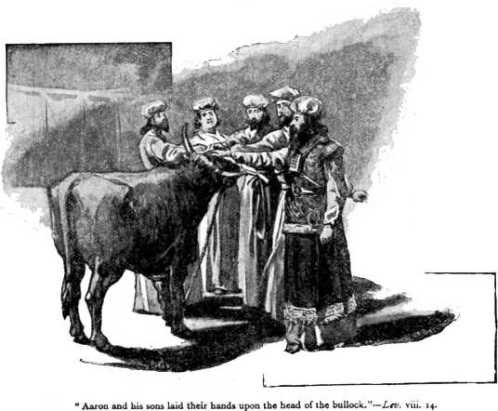
With all these regulations and sacrifices, sin was an unavoidable topic. Think about the constant reminder in the sights, sounds, and smells of the tabernacle. Seeing smoke rise up as a sacrifice for your sin, smelling the burnt fat, seeing others giving over first fruits and goats without blemish.

But as often as you’d be reminded of sin, you’d be reminded of the confidence the people had in knowing those sins were forgiven. The smoke rises up to heaven and it vanishes in the winds just as our sins when confessed are raised to God, forgiven, and then cast far from us, as far as the east is from the west.

Sin is not a fashionable subject, but it was a big deal then and it is a big deal now. It was so big that to save us from our sin God sent his Son to set us free. It makes no sense to speak at length on salvation and forgiveness and neglect what we are forgiven for and saved from. Sin is a problem that thankfully our God has overcome. Let’s not overlook our sin and in so doing diminish how great God’s forgiveness is.