How Can We Act Like Royalty?

From Deuteronomy 17:18-20

And when he sits on the throne of his kingdom, he shall write for himself in a book a copy of this law, approved by the Levitical priests. And it shall be with him, and he shall read in it all the days of his life, that he may learn to fear the Lord his God by keeping all the words of this law and these statutes, and doing them, that his heart may not be lifted up above his brothers, and that he may not turn aside from the commandment, either to the right hand or to the left, so that he may continue long in his kingdom, he and his children, in Israel.

It is required of Israel’s kings to write out their very own copy of the law and to then keep it with them all the days of their life. And not just to make their office bookshelf look impressive. They are to learn from it and act on it, not turning from it in the least. This is a prescription for success in the eyes of God.

We may not be writing out our own text, but make your Bible your own. As you read it, mark it up and make notes. Keep it with you all the days of your life. Let God keep you humble by it, may God also bless you as you dedicate such time and attention to his Word. We are reading all of it because the entirety of the Bible is written for us, and doing so is a kingly pursuit.

Philip Had His Sneakers On

Philip Catechizes the Ethiopian, Exeter College Chapel, Oxford

I love the story of Philip and the Ethiopian in Acts 8. In a nutshell it is a story of Philip telling this man the good news of Jesus Christ, but it is much more. There are details like how Philip runs in verse 30 when the Spirit tells him to go to the chariot. He doesn’t just walk, but he runs in obedience to the Spirit. This story is a great testament to Jesus’ fulfillment of Old Testament prophecies in that Philip teaches Isaiah as speaking about Jesus. There is great urgency from the Ethiopian at hearing and believing the good news as he wants to immediately be baptized. Then at the end Philip is carried away by the Spirit never to be seen by the other man again, and then finds himself in another town.

Like I said, a great story. And it also a great challenge to us to heed the words of 1 Peter:

…Always being prepared to make a defense to anyone who asks you for a reason for the hope that is in you.

Would we have been prepared to instruct someone reading Isaiah with such questions? Are we equipped when someone asks us to tell them about our faith? Can we do it and will we do it with such enthusiasm that we run to those opportunities?

Minimal Art for Numbers

Do you know those motivational posters folks hang up in their offices that say things like “ACHIEVEMENT” or “COURAGE”? Well, this edition of the minimal art from the Bible taken from the site, Being RKP, could have hung on the walls of the people in Numbers. What are we doing in the desert? What is all this wandering for? Then they look at this poster and buck up. It’s an Israelite motivational tool.

MILK AND HONEY, “Taste and See that the Lord is Good.”

As hokey as those posters can get, it is good to be reminded of our purpose and our goals. We should not walk aimlessly through life, but should always hold before us the hope that we have in Christ and seek to be obedient to his call upon our lives. The Israelites lose sight of goals and of their past, and in so doing are tossed about by the influences of the nations surrounding them.

Not For Us To Know

If you ever get a chance to do a book review for a new book that claims to know the date of Christ’s return (note that old books on this topic have a hard time remaining in publication after having been wrong), do so. I think it’ll be an easy job. They’re wrong.

We see Christ speak about knowing the future in chapter one in Acts, and it comes up elsewhere, too. There may be general signs and indications that the end is nearing, but no one knows when that will be. It is not just that we’re ignorant, it is a willful ignorance willed by the Father. When people ask Jesus before he ascends in Acts 1, “Lord, will you at this time restore the kingdom of Israel?”, Jesus makes it clear we’re not supposed to know. He says, “It’s not for you to know times or seasons that the Father has fixed by his own authority.” This is not to be our concern, but I do find it comforting that Jesus next statement regards the Holy Spirit. We can be an anxious and curious people, and to help us in our frustrations of knowing what to do and what comes next, Christ promises his Spirit.

We know how the story ends. We know the last chapter. But there is a lot left unknown to us, and it is not our place to speculate. We trust the future God has in store for us, doing so by the power of the Spirit, and we certainly welcome the day, whenever it is, of Christ’s return when he will restore his kingdom and make all things new. And I’m pretty sure that it won’t be December 21, 2012.

Road to Emmaus

And beginning with Moses and all the Prophets, he interpreted to them in all the Scriptures the things concerning himself.

Luke 24:27

An approach that I take when reading Scripture rests on verses like this one. Yes, there is an Old and New Testament, but there is one Bible. One Bible that reveals to us who God is, and that revelation is seen most clearly in Jesus Christ. It is not only permissible for us to read sections of the Bible that are not explicitly about Jesus and to see him there, but it is necessary to fully understanding Scripture.

In Luke 24, Jesus is on the road with two men who do not understand that Jesus had to die to fulfill God’s Word. They say, “We had hoped that he was the one to redeem Israel.” They had hoped. But because they did not understand Scripture they in turn do not understand Jesus and what he came to do. Jesus says they are foolish and are slow to believe all the prophets spoke because the prophets spoke of himself.

Jesus Christ is the center of our faith and he is revealed throughout all of Scripture.

Reinforce What You Read

So this Sweet Potato event is almost upon us. We’ve had a handful of folks who plan to get their hands dirty bagging some produce, and just so you know, it’s not too late. You can still register yourself and meet us out there.

But I bring this up as another reading tip for you. Whatever you can do to add action to reading will add depth to the reading. Whether that is a Sweet Potato Double Drop or taking notes in a journal as you read. We are to be doers of the word and if you read through the entire Bible twice, but do not allow it to move through your eyes, into your brain, and down and out your arms and legs, you’re missing out.

If you can’t come tomorrow, no worries. There are countless ways to serve that come up in our church and beyond our church. But make it a priority to ask yourself how you can live out the faith we learn of in our readings. Doing so will help us to learn and keep within us God’s Word. We have a great God worthy of love, and we should seek to be holy as he is holy and to love him by doing what he commands.

Learning the Story So Well

We’ve been teaching a class at church about learning and telling the story of Jesus in a variety of ways, connecting his life with other stories in Scripture. The goal is to better know Jesus’ story for yourself and to know it better so that you are then prepared to share it. If your child asks you about Jesus or a co-worker says, “What’s the big deal about Jesus?”, I want you to be able to answer. Learning the whole story of God’s love for us is a goal of Year in the Bible. We are seeing the big picture of history and how God remains faithful throughout and how his love is most clearly seen in Jesus Christ. Jesus Christ is the pinnacle of such love.

How better to know this story than to read the book?

From Karalee Reinke, 2012. Click image to go to source.

I found this image and its geared toward children, but I think with a bit of imagination, adults can understand the point, too. This site created the graphic based off a quote from the book, Give Them Grace: Dazzling Your Kids With The Love Of Jesus, by Elyse Fitzpatrick and Jessica Thompson.

We want to know the one good story so well that we can be reminded of it in our daily experiences, but also so that we can discern truth and lies by it. We want to know Jesus so well that we can be easily prompted to share his goodness in conversation. We want to know that story of good news so well that we won’t be so easily satisfied by what the world offers us that appears good.

If you’ve ever felt like you couldn’t quite articulate your faith or express what you believe, let’s read this Good Book together. God will reveal himself to you.

Sights and Smells of Sacrifice


As I’ve been reading the beginning if Leviticus the last few days what has stood out to me is how big of a deal sin is. Contemporary culture doesn’t talk about sin much, or any sort of weakness or evil in us. Instead we all are good, everyone is right, I’m OK you’re OK.

But you can’t understand sin as no big deal and make sense of Leviticus. Sin is a very big deal and God’s people went through a lot to deal with it.

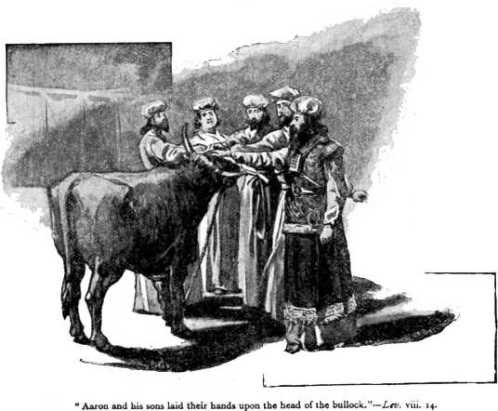
With all these regulations and sacrifices, sin was an unavoidable topic. Think about the constant reminder in the sights, sounds, and smells of the tabernacle. Seeing smoke rise up as a sacrifice for your sin, smelling the burnt fat, seeing others giving over first fruits and goats without blemish.

But as often as you’d be reminded of sin, you’d be reminded of the confidence the people had in knowing those sins were forgiven. The smoke rises up to heaven and it vanishes in the winds just as our sins when confessed are raised to God, forgiven, and then cast far from us, as far as the east is from the west.

Sin is not a fashionable subject, but it was a big deal then and it is a big deal now. It was so big that to save us from our sin God sent his Son to set us free. It makes no sense to speak at length on salvation and forgiveness and neglect what we are forgiven for and saved from. Sin is a problem that thankfully our God has overcome. Let’s not overlook our sin and in so doing diminish how great God’s forgiveness is.