What Do the Israelites Have to Do?

As I read this week this verse just jumped out to me:

“Fear not, stand firm, and see the salvation of the Lord, which he will work for you today. For the Egyptians whom you see today, you shall never see again. The Lord will fight for you, and you have only to be silent.”

Exodus 14

Moses is to lead God’s people out from slavery and Egypt, and here he explains the two roles in this plan. God’s role is to provide their salvation. What is left for the people to do? What must they do to aid in their exodus? What is their role?

“You have only to be silent.”

What a picture of grace. What have we to do? God has provided all we need in Jesus Christ. What is left for us? The faith we have is in a way an absence of our work. It is a recognition that our works cannot do it and our faith is complete trust in the work of God. We fully rely on what God has done for us to be enough.

When it comes to who we are and what we can do, we can only be silent. If anyone dares break the silence, if anyone believes they have something to say, they can only speak God’s Word, Jesus Christ. Therefore as it is written, if anyone boasts, boast in the Lord.

A Pharaoh Who Did Not Know Joseph

Exodus changes the tone quickly from the prosperity Joseph and his family enjoyed at the end of Genesis, and it does so in the first chapter with the line in verse eight: “Now there arose a new king over Egypt, who did not know Joseph.”

This leads to the growing oppression of the people of Israel and sets the stage for what we know comes later in Exodus. Because he did not know Joseph, the king (or pharaoh), does not know the debt Joseph is owed for saving the land from famine. He does not know of the commitments made and relationships built. What this pharaoh does know is that the people of Israel are too many and too mighty.

Knowing your history is important as it helps shape our future and inform our decisions. Paul reminds the church of its history in 1 Corinthians 10, urging his readers not to be ignorant of what our ancestors went through and he does so that we may learn from their mistakes. If we don’t learn from the mistakes of others, we are bound to learn from our own. Paul reminds us that our ancestors, after the Exodus, were lead by a cloud, passed through the sea, were fed with bread from heaven, and yet they still turn from God to idols. Paul tells us that ignorance is not bliss, it is folly. 1 Corinthians 10:11-13 says:

Now these things happened to them as an example, but they were written down for our instruction, on whom the end of the age has come. Therefore let anyone who thinks that he stands take heed lest he fall. No temptation has overtaken you that is not common to man. God is faithful, and he will not let you be tempted beyond your ability, but with the temptation he will also provide the way of escape, that you may be able to endure it.

Learning from these examples is at times the way of escape. So let us choose to learn our history and learn from it, not choosing ignorance that will lead us to repeat the sins of others.

The Story So Far, Week 3

Dressed for success

In reading about Joseph, a story I’ve read before, heard a lot about, and have even watched a movie on, it was fun to see what jumped out this time. We all know Joseph for his coat of many colors. It was given to him by his father Jacob, because Jacob loved Joseph dearly. It was an outward sign of his father’s favor.

But that robe would later be a sign of his brother’s treachery, as they take his robe and give it to Jacob indicating Joseph had been killed by an animal. Joseph goes from being loved in his father’s house, to being stripped of his fine clothes, sold into slavery, and he ends up working in Potiphar’s house.

But God was still with him as he prospered in all he did and found favor in Potiphar’s eyes. Unfortunately again Joseph’s dress was used in a plot for his harm. After rejecting advances from Potiphar’s wife and in the process leaving his cloak behind as he fled, Potiphar’s wife takes out her anger against Joseph by presenting the cloak as though it were proof of his misdeeds.

Joseph is again upended and goes to prison, where again he prospers and finds favor with those around him. Joseph ends up, through the work of God in giving him interpretations of dreams, leaving prison to be the highest ranking man in Egypt, except for Pharaoh himself. He had been robbed of his life by his brothers when they stripped him of his robe, but now he is restored by Pharaoh who, in chapter 41, “took his signet ring from his finger and put it on Joseph’s finger. He dressed him in robes of fine linen and put a gold chain around his neck.” Again we have an outward sign of Joseph’s status. He is dressed in such a way by Pharaoh for he is valued and given great responsibility in the land.

We see clothing play a part in another story that will be read in the coming weeks from Luke. The prodigal son leaves his father’s house and upon his long-awaited return is dressed in a ring and given shoes and the household is told to make preparation for a great celebration. The clothing signifies the father’s joy and acceptance of his son.

We might not give such thought to how we are dressed or how we see others dressed, but how we are clothed matters greatly in another sense. In 1 Peter 5 we are told to clothe ourselves not in literal attire, but in humility, for God opposes the proud. The dress of a Christian is to have certain characteristics like humility, but none as important as what we see in Romans 13:14. In the NIV is says:

Rather, clothe yourselves with the Lord Jesus Christ…

Whatever status is afforded to us by the way that we dress in this life cannot compare to the status that comes by our being clothed with Christ. Our clothes represent much of who we are when we are clothed in him. For when that is the case, we who are sinners gain instead the appearance of Christ’s righteousness. When our God sees us, he does not see our sin, instead he sees the perfection of his Son.

As we close out Genesis and John, the contrast is clear. So many figures of old are just ordinary like you and me. The only extraordinary one is seen in the gospels, and that is Jesus Christ. We do not boast in Abraham, Isaac, or Jacob, nor can we boast in ourselves. We only boast in Christ. If not for our being clothed in him, boasting in his appearance, we would be nothing.


Take to the World

Yesterday’s post about being sent brought to mind the song, Take to the World, by Derek Webb. I commend to you his whole album, but read these lyrics and listen to the song. It does a good job of describing our being sent.

Go in peace to love and to serve
And let your ears ring long with what you have heard
And may the bread on your tongue leave a trail of crumbs
To lead the hungry back to the place that you are from

And take to the world this love hope and faith
Take to the world this rare relentless grace
And like the three in one
Know you must become what you want to save
‘Cause that’s still the way
He takes to the world

Go and go far take light deep in the dark
Believe what’s true use it as all, even you
May the bread on your tongue leave a trail of crumbs
To lead the hungry back to the place you are from

Sent by Jesus

Our focus passage this week asks the question, “What does it mean to be sent by Jesus?” and “In what way had the Father sent him?” These questions refer to John 20:21, in which Jesus says:

Peace be with you. As the Father has sent me, even so I am sending you.

We could spend a great deal of time pondering that one verse. In John, Jesus is constantly drawing attention to the fact that he is sent from God. He says that the Father has sent him, the Father has given him words to say, and he is doing his Father’s work. His being sent is a crucial element to his being here among us. And now we’ve been sent “as the Father has sent [Jesus].”

So as you finish John, and then as we’ll next read through Luke, look for what characterizes the way in which Jesus is sent. See how Jesus puts the Father’s will first and the way his goal is to speak what the Father has spoken to him. Look elsewhere in the New Testament like Philippians 2 and see that in being sent, Jesus humbled himself–even to the point of the cross. Jesus took on flesh, faced temptation, was mocked, was hungry, and of course, in his being sent, he was to go to the cross. His sending was for a mission of love in which he put the needs of others and the will of the Father first. Jesus died on this mission, and after he was raised, knowing full well all that being sent entails, speaks a word of peace to the disciples, and charges them to go into the world. If we head his words, how much do we need his peace to face the fears we will encounter, and how thankful are we that he has breathed upon us his Holy Spirit to strengthen us and comfort us along the way?

How I Read the Lord of the Rings in One Summer

I was never an avid reader when I was in high school. That was the role of my oldest brother, who on vacation to the Outer Banks would sit in the bedroom and read. That wasn’t me, but I’m sure he is the better for it.

I think the biggest hangup for me was seeing reading as a chore. No ones likes chores, as far as I know. Chores are imposed upon us from on high and can even feel, to a high schooler at least, like punishment. Unfortunately for me, homework assignments looked a lot like chores. So reading didn’t have an appeal to me, rather it was what I was supposed to do for class.

When I had a summer of little to no assigned reading for school that was the summer in which I read the most. I didn’t put off reading as though it were homework that was trying to rudely creep into my summer vacation. I saw it as a worthwhile activity. So I picked up the Fellowship of the Ring and soon after was putting down The Return of the King, having finished the whole Lord of the Rings trilogy.

Don’t get me wrong, this isn’t school’s fault. No one to blame here but myself. But at least now, in knowing myself and my quirks and shortcomings, I can better adjust to accomplish what I want to in life. Being aware of how my mind works I can try to compensate or stop myself from some of my learned bad habits.

This avoidance of “chore” still haunts me now. How many of you like to have a clean house, you have a great feeling when you take the little bit of extra time to put something away, and you get a sense of satisfaction from dishes being done? Me, too. But even though I get the sense that such work is worthwhile, each time before that work is to be done, my will rebels against me for it thinks I am enslaving it to do some foul chore.

I want it to be done. I like it when it is finished. I feel good about doing it in the process. But to begin is so difficult. Certainly sin is at work in me. This same mental hump is hard to get over in our readings, as well.

I know the weekly readings may seem long. But fight the mentality of it as a chore. God has gifted us with this book to learn about him and grow in his ways. We are privileged where we stand in history in having the access we do to read the Bible. Just because reading the Bible is a “should” don’t lose the joy of reading and meditating on God’s Word.

See it as a joy. Look ahead to the goal of having read it all. Keep that picture in your mind. For the joy that was set before him, Christ endured the cross for us (Heb 12:2). Reading the Bible is in no way like the suffering of the cross. But if for the joy set before him, Jesus could bear that immeasurable suffering, what will we be able to do for him if we fix our eyes on Christ, make him our goal and our hope, and find our joy in him? We need to set his joy before us.
Do what you need to in order to see time with God in his Word for what it is. Make it the best part of your day as you put aside the other demands of life and sit quietly before our Maker. Don’t worry about the state of the house or the emails that wait for you. If only for that reason, you’ll desire to read more because it allows you to ignore those other calls on your time. Make it a sacred space and time during which everything else fades away. Find a cozy spot, make yourself a cup of coffee, and enjoy.

The Story So Far, Week 2

We are almost at the end of another week of reading and it has been another week packed full of stories from Genesis. We talked during our reading group about the continuing journey of Abraham and focused a good deal about Jacob/Israel.

One thing that struck me that connects Genesis and John was the hard truth Jesus speaks about how many events in life are there to bring glory to God. What makes this hard is that these events may not be what we find enjoyable.

Jesus heals a blind man in John 9, and people wondered who sinned to bring about this man’s blindness. Jesus’ response is that he did not sin, nor his parents, rather he was born blind so that the works of God might be displayed in him. Surely this man rejoiced at being healed by Jesus, but it must be difficult to look back on years of blindness that were in service of bringing glory to God.

Jesus’ friend Lazarus is sick and his sisters urge Jesus to come quickly to help. Jesus does not hurry and instead stays two additional days before setting out. He says to his disciples, “This illness does not lead to death. It is for the glory of God, so that the Son of God may be glorified through it.” The illness does lead to death, but that death is not final as Lazarus is raised from the dead. Again a seemingly tragic event turned around to bring glory to God.

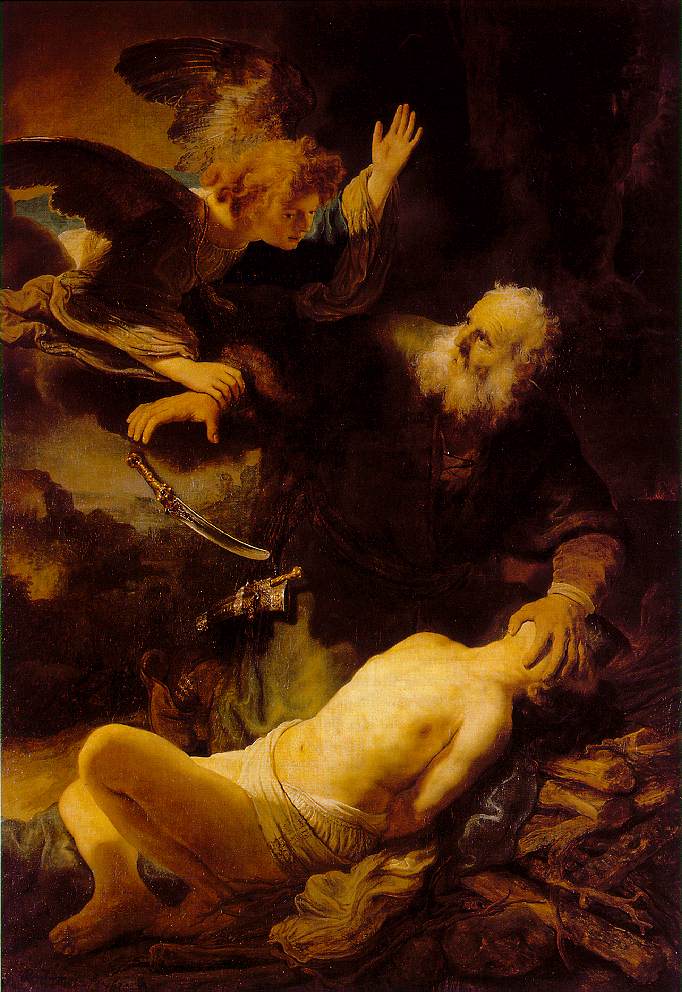
Back in Genesis, Abraham is tested by God as God asks Abraham to sacrifice his son, Isaac. It is a devastating task set before Abraham. But as he is faithful and obedient to God, Abraham learns more clearly just how perfect God’s provision is and God receives glory in providing a ram.

Difficult conditions and tests of life are still difficult for us, even if they do ultimately give glory to God. But this is one of the hard truths of faith that we are always trying to better accept and understand. We are not our own and our lives are to be like living sacrifices, pleasing to God (Rom 12).

It helps me to remember that what God doesn’t require from Abraham, God has done himself. God has given us his only Son. God has endured the greatest sacrifice for our sake. Therefore if my life can in some way bring glory to the one who has brought life for me, I hope and pray that I can do so joyfully.

If You Do Just One Thing Today

If you do only one thing today, make sure you are able to share with someone why Good Friday is Good.

For Jews demand signs and Greeks seek wisdom, but we preach Christ crucified, a stumbling block to Jews and folly to Gentiles, but to those who are called, both Jews and Greeks, Christ the power of God and the wisdom of God. For the foolishness of God is wiser than men, and the weakness of God is stronger than men.

1 Corinthians 1