
Vanity of Vanities! All is vanity!

Oddly, Ecclesiastes packs a punch even though it is talking about the listlessness of life. Life is vanity, we are a vapor, there is no point. If this were entirely true, then it is surprising that the author intends for you to keep reading more than one chapter.

There is meaning in life, and it comes through in Ecclesiastes, but much of the book is devoted to talk about what has no real worth.

I think this resonates with many in today’s world who have had the realization that they live a life with no purpose. Some leave jobs and lives behind to forge a new path searching for meaning. Others reject the values of wealth and power that society seeks to lift up hoping to live life according to a better principle or philosophy.

This creates a great opportunity to shine a light on what Christ offers. To those without, he gives direction. In Christ we all have a calling. We have a purpose as we seek to be his disciples, loving God and loving others. Participating in his kingdom work is of great worth and eternal value. The world offers goals like get a bigger house, have more cable channels on your bigger TV, and gain fame. But these are vanity and are nothing in comparison to the revolutionary purpose of living for Jesus.

Absurdity of Idolatry

There is a great little section in chapter 44 of Isaiah that in describing the making of an idol in such a mundane way, shows the whole endeavor to be a bit absurd.

Isaiah describes the whole process, start to finish. You plant a tree and let it grow. Then you cut it down for its parts. You use some for a fire. The fire warms you, and then while you’re at it, you throw on some dough and make some bread. You’ve got some wood leftover? Let’s make a god. And then we may as well worship this piece of wood that we just grew, cut down, burnt, and used to carve into some likeness.

How can we think something that we just used for the simple needs of warmth and for cooking can then also give birth to a statue worthy of worship? Verse 17 says, "the rest he makes into a god, his idol, and falls down to it and worships it. He prays to it and says, "Deliver me, for you are my god!""

Sounds crazy, right? Do we condemn such an action, or just pity the person?

It’d be easier to judge if we weren’t susceptible to idolatry in our own ways. But regardless of the idol–a wooden totem or the idol of power of money–not one of them can answer when we cry out "deliver me!" God alone is savior and only he hears our cries.

Recommendation for Lent on Ash Wednesday

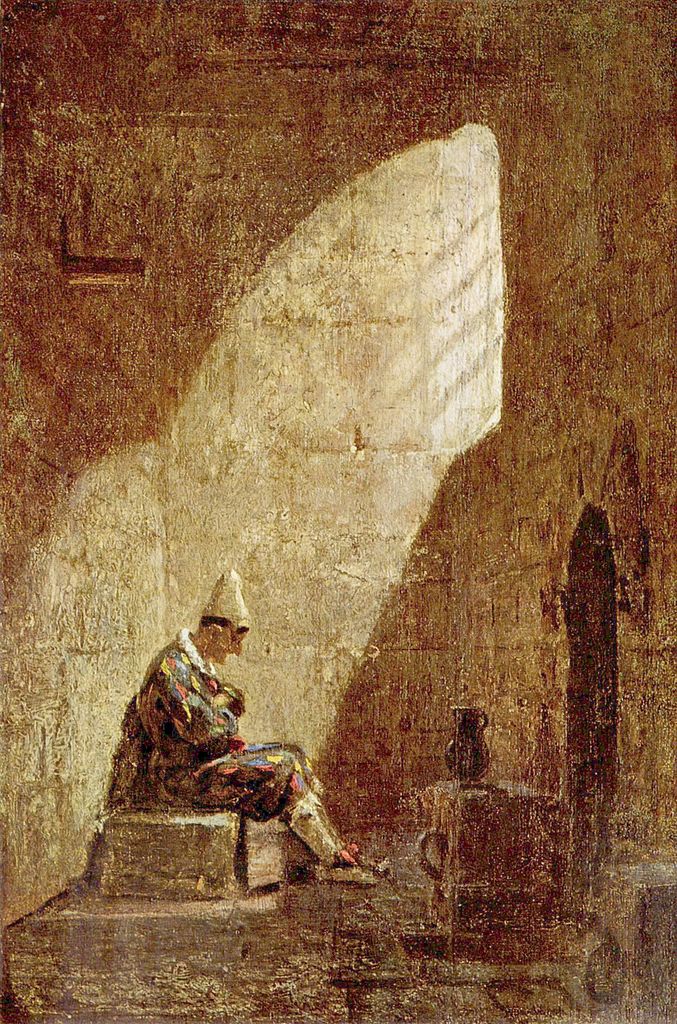
Ash Wednesday - Carl Spitzweg, c.1855
Ash Wednesday – Carl Spitzweg, c.1855

People are often giving things up for Lent like chocolate or other foods. While this may not be a bad decision, Lent is to prepare us for Easter, and simply removing something like a candy bar may not get us to that goal. Instead of just taking something out and leaving that hole empty, fill it with something good. Give up something and then seek out a new habit to build up in these forty days.

For example, if you give up TV of Facebook, it doesn’t do you any good to sit around for an hour staring at the wall instead. Take that time to read the Word. If you’ve already been reading all of our reading plan for Year in the Bible, keep going. If not, join in. Join in today.

Since the week is half over, just read 1 Thessalonians. You could keep with the New Testament readings if you want to start slower. That’ll have you read 1 & 2 Thessalonians and finish with Revelation. That may not sound like a normal Lenten reading, but in Revelation we do see signs of the victory won by Jesus–a victory that he won on the cross. We finish the Bible on March 24th, which is a little bit before Easter, so you can use that last week to reread a gospel and focus your attention on the life, death, and resurrection of Jesus Christ.

In summary: give up something, and fill it with Christ. May Lent be a great time of preparation for you. I hope it is a time when you carve out new space for Christ in your life.

PS – If you’re coming to our service tonight and have to errands to run today, think about putting them off until after the service. That way you can go out to the grocery store having been marked with ashes, as a sign of the season for others to see.

“The Waiting is the Hardest Part”

When we think of the word “wait”, what does that look like? If someone is waiting for someone or something, what are they actually doing? It is easy to think of waiting as doing nothing. Waiting can seem like inaction, waiting for a later time when you will act. But read the first chapter of 1 Thessalonians. Read it all but the last verse.

Paul writes of their “work of faith and labor of love and steadfastness of hope in our Lord Jesus Christ,” they are imitators of Paul–who was no slouch, and they did this in affliction. The church has been an example all around Achaia and Macedonia, and beyond that, the word of the Lord has sounded forth from them everywhere. They welcomed Paul and his colleagues and they turned from idols to worship the living and true God. Does that sound like they’re doing nothing? This is how they wait, waiting for the the Son from heaven.

Waiting for Jesus’ return is not sitting on our hands. Later in his letter Paul explicitly tells them to admonish the idle. To wait upon Jesus is a vigilant life. It is active, for he did not leave us here to do nothing. We have a purpose and he has given us his Spirit! Why would we be blessed with the Holy Spirit if all we’re expected to do is nothing? Let’s wait, but do so in a way outline here in 1 Thessalonians.

Selections on Trust from Isaiah

Whenever we have a book that is especially long, like Isaiah, it is easy to hustle through it just to get it done. Was it easier to read James and read it in a way that gave you time to study and learn from than this week’s readings in Isaiah? But for how much more difficult it can be, don’t miss out. Even if you’re just highlighting some meaningful nuggets from Isaiah.

There were some great passages on trust this past week, like Isaiah 26:3:

Trust in the LORD forever,
For the LORD, the LORD, is the rock eternal.

The in chapter 30 we read:

In repentance and rest is your salvation,
In quietness and trust is your strength…

Great reminders of the simplicity of the faith. We are to trust in the one who can provide, and lean on God. Sadly the last passage goes on to say, "but you would have none of it." Isaiah spends much time on the theme of bringing low the proud, and raising up the humble. The people trusted in themselves, built up their own power, and looked to other gods. They would have none of this repentance and trust in God.

When we have times of great clarity, when we know how much we absolutely need and depend on God, it seems crazy to turn to anyone else. Who wouldn’t want quietness and rest? But we need to hear Isaiah as warning for it is easy to turn from that and forget who God is and what he has done for us. It is tempting to rely on ourselves. Isaiah holds out hope for us all, for all who wold repent and then find ourselves trusting in God.

Quick to Listen, Slow to Speak

I’m not sure how many times I’d repeated in my head (or deserved to have someone say to me), “quick to listen, slow to speak.” This of course is part of James 1:19 and is a simple directive, b it sure is hard. We all want to be heard. We’re tempted to think ourselves much smarter than we truly are and we want to give our two cents. But we don’t stop there, adding additional cents and finding ourselves in debt in the conversation. Having given so much speech, we owe the other person some time of listening.

Tell me if these situations are familiar to you–either as the victim or perpetrator:

  • One person in a conversation does not seem to be really listening, probably because he uses the time when the other person is talking only to think about what he’ll say next.
  • A person uses the story of another merely as a platform to tell another story that she thinks is much greater than the first.
  • Someone cuts you off to either agree, disagree, or correct the opinion that he actually did not hear since he interrupted you in the first place.
  • You have a friend who loves to tell you all about what is going on in her life, but has no time to listen to you.
  • You put your foot in your mouth because you jumped to conclusions without waiting for all the facts or because you didn’t wait for someone to finish.

It is so easy for us to fall into these traps. Embarrassingly, it is easy to complain when someone else does it, but then go off and do those very same things. But we need to evaluate ourselves, be humble in our relationships and conversations, and follow this command. The text goes on to say we should be “slow to anger” and being a person with patience who is slow to speak is key. I find it hard to imagine a hothead–someone quick to anger–as also someone who is a great listener and very humble.

On the flip side, don’t you find yourself drawn to people who listen to you? Who are patient as you speak and ask you questions? This can be a great witness for Christians to their neighbors, especially in a frantic world that is hurried and where we’re having more online relationships or transactional relationships. If you are one who listens, you’ll be taking a step to show the love and care God has for us to someone who may really need it.

This is also a lesson we need to make sure to apply to those God has placed close to us, those about whom we care most. That group is often one that sadly gets our worst, along with our best, since we see them so much. We can be so sure we already know them well enough, so we jump to conclusions, cut them off, or tune out. But we need to slow down.

If you need to be quick, be quick to listen. Give yourself time to really hear people. Take time to think. Then be slow to respond.

A Delight of Reading the Whole Bible in a Year

I have not had as much chance to post this past week as I have been way at a conference. Several of the speakers delivered fantastic sermons, which is always a benefit of these events. But I had a special delight this year as I heard from books like Daniel, Ezra, Ephesians, and Timothy. As the preachers delivered the messages I was so much more familiar with the scriptures that they were using.

But that isn’t to say that I now know enough. In reading though the Bible this past year I am instead primed to learn more and learn better. I loved knowing the context of the stories, remembering conversations had or posts written about those passages, and being challenged in new ways on what I thought I knew.

When they stepped back to give context, I was right there with them. The texts were still fresh in my mind, much closer to the surface, and much more accessible for the Spirit to use in my hearing and responding to the Word. It wasn’t like I was having to watch the same movie over again. It wasn’t at all tired or boring. The Bible is a living Word and I could see that as I had the chance to sit and receive it.

I pray you find that same delight as you grow more familiar with it and continue to read and re-read and read again God’s Word.

A Mix of Boldness and Gentleness

Remind them to be submissive to rulers and authorities, to be obedient, to be ready for every good work, to speak evil of no one, to avoid quarreling, to be gentle, and to show perfect courtesy toward all people. For we ourselves were once foolish, disobedient, led astray, slaves to various passions and pleasures, passing our days in malice and envy, hated by others and hating one another. But when the goodness and loving kindness of God our Savior appeared, he saved us, not because of works done by us in righteousness, butaccording to his own mercy, by the washing of regeneration and renewal of the Holy Spirit,whom he poured out on us richly through Jesus Christ our Savior, so that being justified by his grace we might become heirs according to the hope of eternal life.

Titus 3:1-7

Paul urges gentleness for the believers in these churches. He does not want the Christians to be quarrelsome but rather courteous to others. By the early churches example of such humble love and service, many were impressed with the new movement of Christians.

It didn’t mean they were pushovers. Just before this section Paul exhorts them to be bold in the truth, not letting anyone disregard them. They are to teach and rebuke with authority.

In today’s church, especially as it acts more publicly, do we find such a balance? Is it courteous and nice to the extent that we disregard ourselves and our own teachings, not wanting to offend anyone? Or are we so bold about the truth that we lose all humility and kindness?

Paul wants them to be both, and the humility I think is key. He reminds Titus, “For we ourselves were once foolish, disobedient, led astray, slaves to various passions and pleasures, passing our days in malice and envy, hated by others and hating one another.” How can we treat those who do not know Jesus Christ and his gospel when we are no better ourselves, save for the mercy of God? We should treat others well in hopes of impressing the love of Christ upon them, rather than condemn them as though we were in a position to be the judge ourselves. We all need the mercy of God, and that should be central to the message we carry to others, and to each other in the church.