Road to Emmaus

And beginning with Moses and all the Prophets, he interpreted to them in all the Scriptures the things concerning himself.

Luke 24:27

An approach that I take when reading Scripture rests on verses like this one. Yes, there is an Old and New Testament, but there is one Bible. One Bible that reveals to us who God is, and that revelation is seen most clearly in Jesus Christ. It is not only permissible for us to read sections of the Bible that are not explicitly about Jesus and to see him there, but it is necessary to fully understanding Scripture.

In Luke 24, Jesus is on the road with two men who do not understand that Jesus had to die to fulfill God’s Word. They say, “We had hoped that he was the one to redeem Israel.” They had hoped. But because they did not understand Scripture they in turn do not understand Jesus and what he came to do. Jesus says they are foolish and are slow to believe all the prophets spoke because the prophets spoke of himself.

Jesus Christ is the center of our faith and he is revealed throughout all of Scripture.

A Closer Look at the Israelite Camp and How it Looks Ahead to the Work of Christ

Here is a video that both describes and shows what the encampment of Israel may have looked like. It continues on into more detail about the tabernacle and the inner rooms. Then it jumps ahead to Jesus day and the temple. We read this week in Luke 23 that at the death of Jesus the great curtain that divides the holy of holies from the rest of the temple was torn in two, exposing that sacred space. This signifies the work of Jesus on the cross as removing such a barrier. We now have access because our sin has been paid for by Christ and we all can enter the presence of God’s holiness.

Spending “One Pomodoro” in the Word

There are so many productivity methods and time management techniques out there and somehow they are all the key to unlocking a better you. I am more of the camp that you may work differently than I work, so for each technique, results may vary.

I came across one recently called the Pomodoro Technique, which takes its name from the Italian for tomato and is centered on using a little tomato kitchen timer. I am not about to turn this site into a guide on how to “get things done” so I won’t go into great detail, but this technique got me thinking about our time spent reading God’s Word.

In this system a pomodoro is a unit of time, 25 minutes. Simply put, you break down tasks in measures of pomodoros, and you take breaks between each one. You have a task, you set your timer, and you work on it for 25 minutes.

In our culture of non-stop multitasking, how often do we focus on one task for 25 minutes without interruption? Can you watch a half hour TV show without doing something else at the same time? Even just in writing this, I hear the dings of an email that I want to turn my attention toward. I trick myself into thinking everything must be done in the immediate, all at once, but the truth is: it can wait.

Is that your experience as you sit down to read, study, and pray? How often do you begin reading the Word and something interrupts? How long does it take? Ten minutes? Five? Does even one minute go by before something else seeks to take your attention? Our attention is one of the most valuable things we have, and who or what we give it to is a very important decision. And sometimes that decision isn’t only to what do we give attention, but what do we ignore? We can’t give our attention to everything all the time.

Try at least once this week to carve out 25 minutes, if only just to show that you can. I think we’ll be amazed at what we can do with “one pomodoro” of uninterrupted time spent before God, reading the Bible.

Sweet Potato Review with Pictures

Everyone joined in on the fun

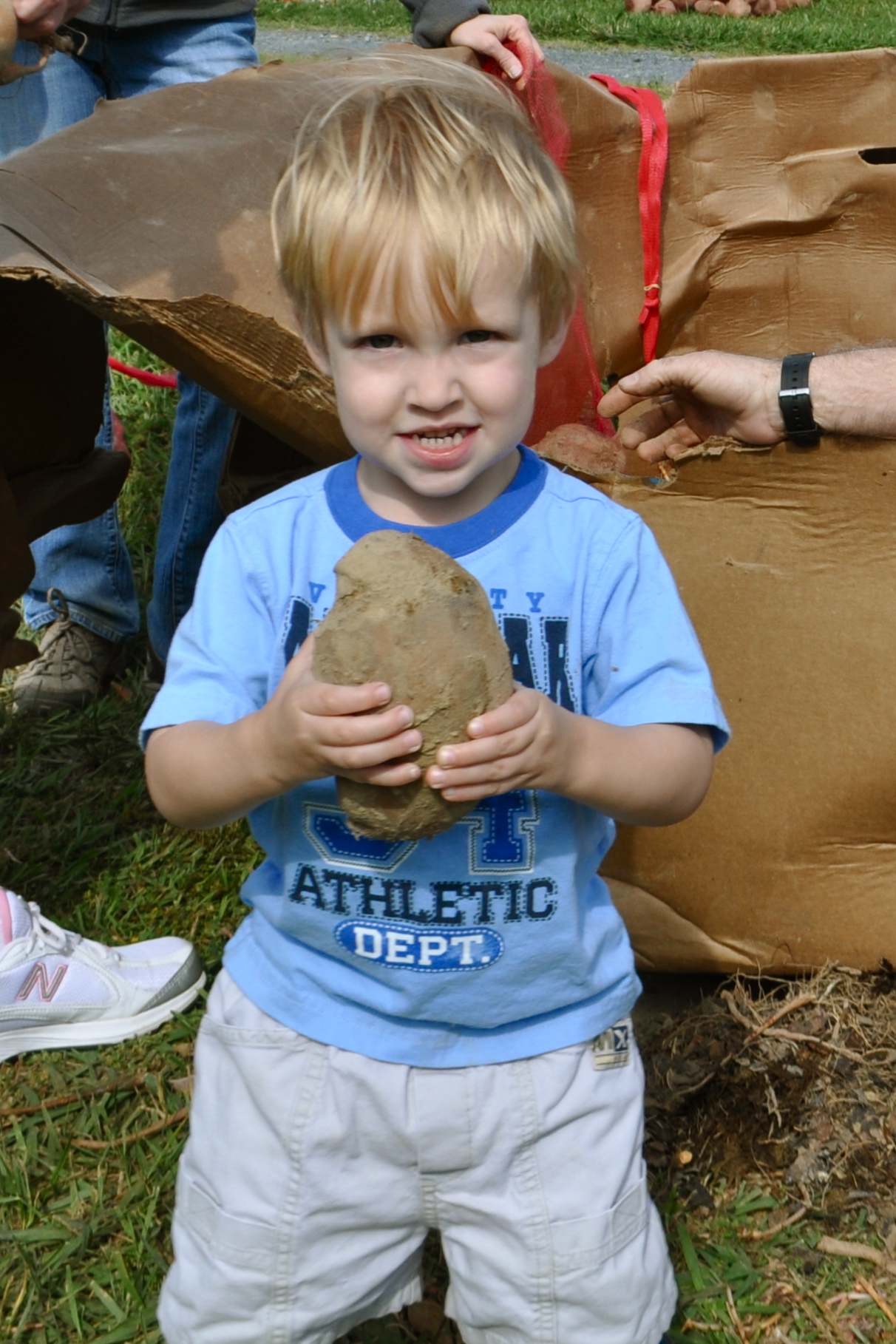
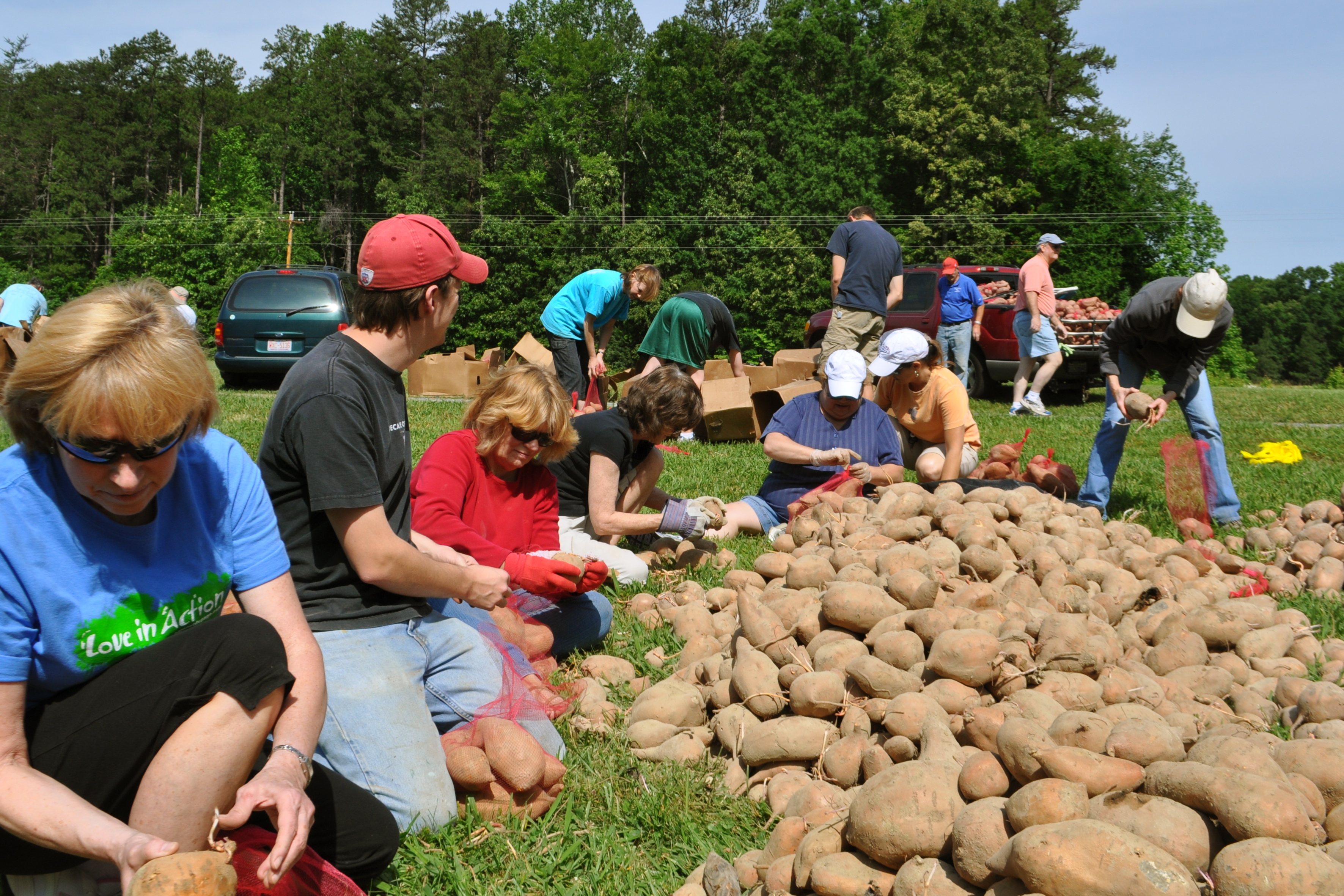
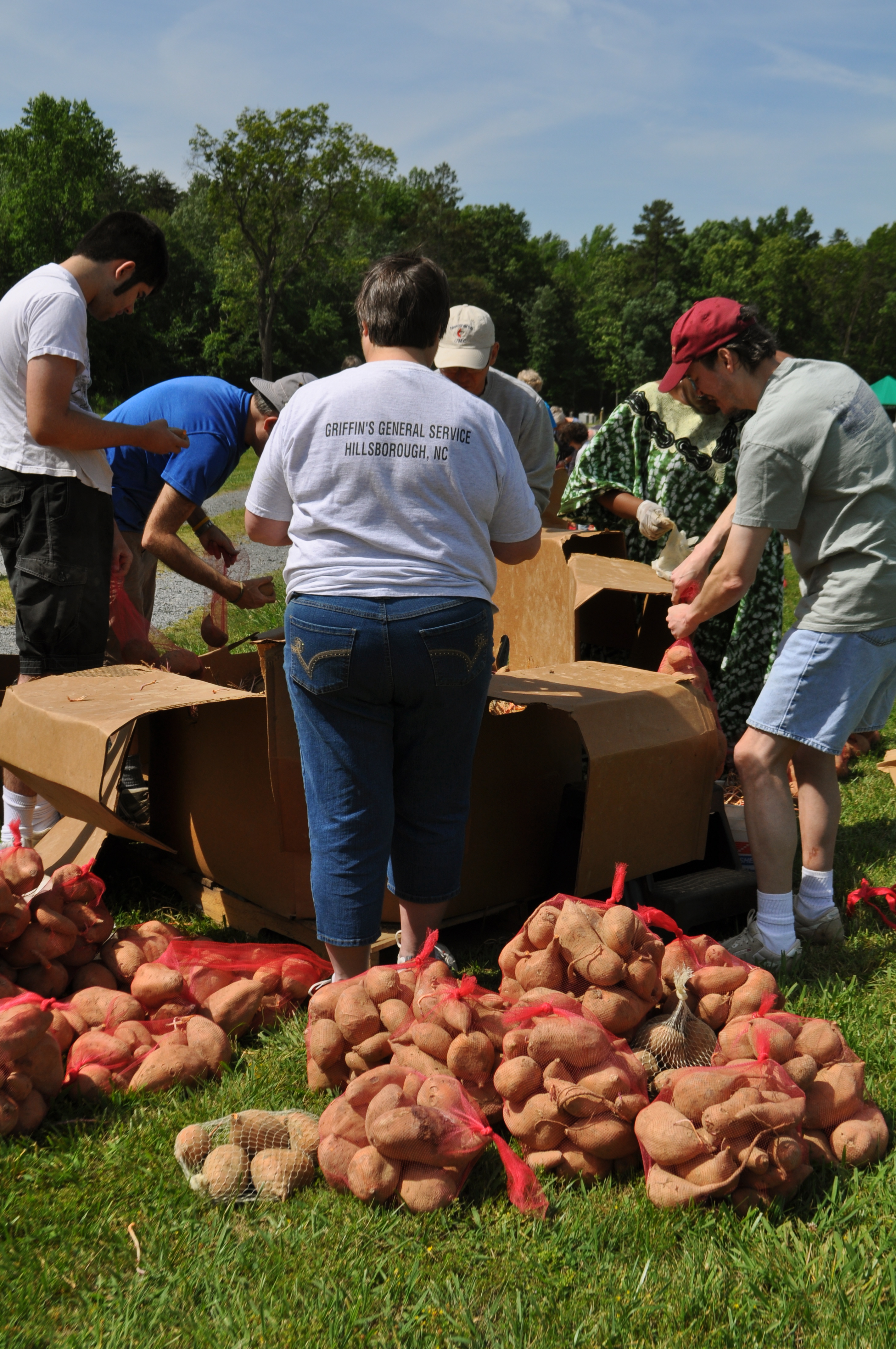
Last Saturday a good number of folks went out to help bag sweet potatoes in Hillsborough. A produce company had a distribution deal fall through so they donated the sweet potatoes to a number of organizations, including the Society of St. Andrew.

I found out about it from their website and it was just perfect timing for Year in the Bible as we had been going over Leviticus, which talks about gleaning and leaving food for the poor and the sojourner (and Exodus, too, talks about such practices). It was wonderful to get out on a beautiful Saturday morning and discover what 80,000 lbs. of sweet potatoes look like.

Personally, I do not fear where my next meal will come from as my family is well fed, often to excess in the area of baked goods. But that is not the experience everyone in our country has, and because of this donation, many will have good food to eat. Our church has worked with Durham Rescue Mission before and it was a blessing to see men from that organization arrive and take 350 lbs. of potatoes that I know will be well prepared for people in need.

And to think, the work we did to help in the distribution was fun. It is great to see the fellowship that develops as people get together with a common purpose to serve others, as encouraged by God’s Word. I hope this is something that continues throughout this year. So, if you see an opportunity or have an idea of what we can do to connect what we read with what we do, please let me know. Maybe we can work out a way to make it happen.

Here are some pictures from Saturday to understand a bit more of what happened:


Week 9

A Plague Inflicted on Israel While Eating the Quails; as in Numbers 11:31-34; illustration from the 1728 Figures de la Bible; image courtesy Bizzell Bible Collection, University of Oklahoma Libraries (from Wikipedia)

The Old Testament begins with book names that can sometimes obscure what they’re about. But it is pretty simple so far. Genesis was the beginning. It was the beginning of creation, of God’s story of dealing with that creation, and the beginning of his very own people. Exodus was Israel leaving slavery in Egypt. Leviticus is the law for the levites, continuing the law given to the people in Exodus. Now we come to Numbers. What’s that about? Want a hint?

Numbers 1:2, “Take a census of all the congregation of the people of Israel…”

That’s right there in the beginning of the book as God commands Moses to take a census, to number the people. It is a continuation of the story from Exodus, which began with their delivery from slavery, as God now numbers his people and prepares them to journey into the promised land.

Meanwhile in the New Testament…

Luke finishes this week and offers another opportunity, after already having read through John, to contemplate the surprising ending to the gospel story. It may not surprise us now, as we have heard it and read it before. But the people surrounding Jesus did not expect him to go to the cross. Who would expect a messiah, God incarnate, one who had such power, to be crucified like a criminal? Read it slowly with a renewed appreciation for the great humility of God to submit himself to such punishment to save the very people who deny him and yell, “crucify him!”

Also, keep in mind that what follows next week is the book of Acts, written by the same person. Try to keep Luke in mind once we begin Acts to see how they connect.

Story So Far, Week 8

If you go back and read through Leviticus 14 you’ll see the lengths the priests had to go to make clean those afflicted with leprosy. The priest required the sacrifice of birds, hyssop, scarlet yarn, and cedarwood, and the process involved sprinkling of blood, shaving off hair, and washing. And that was only the beginning.

Compare that to the power and authority that Jesus has in Luke 17. Jesus meets not one, but ten lepers on his travels. They cry out to him, “Jesus, Master, have mercy on us.” He tells them to do what seems to follow the order of Leviticus, “Go and show yourself to the priests.” But what should amaze the reader is that they are not cleansed after the priest heal them. Luke says, “as they went they were cleansed.” Their faith in Jesus’ words and their obedience was enough and they were clean. They did not need a week of sacrifices and ritual. Christ has greater power.

Sadly only one of the ten, upon finding out he was healed, turned right around to fall at Jesus’ feet and give thanks. If this Samaritan did not fully understand it before, Jesus then makes it explicit, “Rise and go your way; your faith has made you well.”

In Jesus Christ, God has done so much to make us well, and because Christ has lived the righteous life for us, we need only to place our trust in him to be clean.

Having now finished Leviticus, and knowing that Christ has come to fulfill the whole law (Matt 5), not abolish it, isn’t it amazing that he could do so? All of Leviticus deals with the laws for the priests and much of Exodus directs people how to live in accord with God’s law. Jesus Christ came and perfectly fulfilled it. All that the law could not do, Christ did for us. What the law could never be for us, Christ is. He has fulfilled it and he has made us clean before God.

I hope by reading through these books of law you gain greater appreciation for the perfect work of Christ that he accomplished for us. He fulfilled the law and went beyond what it could ever offer us. “For if righteousness were through the law, then Christ died for no purpose” (Gal 2:21b). By his death we are saved and made righteous, and we can take no credit for such a gracious act.


Reinforce What You Read

So this Sweet Potato event is almost upon us. We’ve had a handful of folks who plan to get their hands dirty bagging some produce, and just so you know, it’s not too late. You can still register yourself and meet us out there.

But I bring this up as another reading tip for you. Whatever you can do to add action to reading will add depth to the reading. Whether that is a Sweet Potato Double Drop or taking notes in a journal as you read. We are to be doers of the word and if you read through the entire Bible twice, but do not allow it to move through your eyes, into your brain, and down and out your arms and legs, you’re missing out.

If you can’t come tomorrow, no worries. There are countless ways to serve that come up in our church and beyond our church. But make it a priority to ask yourself how you can live out the faith we learn of in our readings. Doing so will help us to learn and keep within us God’s Word. We have a great God worthy of love, and we should seek to be holy as he is holy and to love him by doing what he commands.

Habits of Highly Ineffectual Bible Study

It’s been a little while since I’ve posted some Bible study tips for you, so I thought I’d share this article I came across from The Gospel Coalition by Jen Wilkin. It warns against some of the misguided ways in which we approach God’s Word, such as the “Magic 8 Ball Approach”:

You remember the Magic 8 Ball—it answered your most difficult questions as a child. But you’re an adult now and wondering if you should marry Bob, get a new job, or change your hair color. You give your Bible a vigorous shake and open it to a random page. Placing your finger blindly on a verse, you then read it to see if “signs point to yes.

I’d recommend giving it all a read. She has some great points, and the only caveat I’d add is that I wouldn’t phrase the ending the same way. It is easy to break issues into false dichotomies or react against one problem by pushing too far in the other direction. She defines a disciple as “primarily” a learner, which I think is jut as problematic as “primarily” a doer. We are followers of Jesus, and that consists of learning at his feet AND doing as he commanded.