Contest Extension

I’m giving y’all a bit more time to win the Prodigal God book by submitting any artistic representation of the Prodigal Son. Maybe today’s sermon inspired you, so make a doodle and send it in.

Here’s an example to get you going. It’s the younger son getting jealous of the pig’s food.

20120513-153314.jpg

Story So Far, Week 7

We’ve made it to the last day of week seven, so give yourself the customary pat on the back for getting this far. We’re now half way through Leviticus with only one week remaining and we’re getting toward the end of Luke.

I posted earlier this week an image about the most read books in the world, and the Bible tops that list. The question I asked was how many people have read the Bible–the whole Bible? It may be the most circulated book by a mile, but that isn’t the only thing that matters. I want the Bible in the hands of the people, but I want its bindings creased. I want you to open it and read it and love it. Having read half of Leviticus you’re probably in a small percentage of readers. Maybe in these last seven weeks you’ve read more pages of the Bible than you have in your life. Fantastic.

This isn’t to say that you’ve now earned some badge of honor. But God’s Word is a beautiful thing and it is of great value to have spent this time with it. Even if you’re not seeing God work through you in his Word yet, he will do so. He who has planted these seeds will continue to tend them.

So keep out carving time out for the Lord. Spend time with him in study and prayer. Learn at his feet and follow him. We’ve had many challenging words from Jesus to that point. I like his imagery about salt, and how it loses its value when it loses its saltiness. Let the Bible flavor you each day. Be salty.

If you want one piece of homework, one little activity, try going without salt for a few days. I’m not saying put your salt shaker away. Do that, but more than that I mean don’t any eat food that has salt as an ingredient. I suspect it wouldn’t take long to develop a better appreciation for salt and a better understanding of Jesus’ words. Salt preserves, but it also flavors. As disciples of Christ we are the salt of the earth, and what we are endeavoring to do in reading all of Scripture is great preparation for that seasoning process.

More Than Thou Shall Nots

Too often we reduce the moral imperatives of our faith into “thou shall NOT” statements. We shall not steal, kill, nor covet. And that list could go on and on. It is easy to think about what we are not supposed to do, but if we stop there we are left with a very shallow understanding. If we’re only called to not do certain things, then we are left with little idea of what we’re actually supposed to do. But the Christian life is not summed up by sitting on our hands. We are called to act.

We could look throughout Luke to see what Jesus calls us to in obedience to him. This obedience is a response of love, it is how we show love to him. But instead of quoting from Luke, read this example from Leviticus:

“‘If anyone sins because they do not speak up when they hear a public charge to testify regarding something they have seen or learned about, they will be held responsible.” (Leviticus 5:1 NIV)

The law was not concerned only with not bearing false witness, but in the people standing up to testify. It may seem mundane to you, and maybe it is because I watch too many crime shows, but this sounds bold to me. We don’t always want to speak up and stand out. Sometimes it is for our personal benefit to keep our mouths closed. But we have a responsibility to speak truth. Again, we can’t be content to understand the expectation of us to cease just at not bearing false witness. It goes beyond. Just as the golden rule isn’t: Do not do to others what you don’t want them to do to you. Rather we have the difficult, challenging call to do for others as we want done to us.

No More Sacrifices?

You see a lot about the sacrifices as we read Leviticus. It’s practically a manual for how to perform them. But you may ask yourself, do Jews still sacrifice today? Christians see a radical change when God came to earth in Jesus Christ. That event changed the world. But for the Jews who don’t accept him, should they continue in Old Testament practice? If they don’t sacrifice, why not?

I found this article to be helpful. It’s written from a Jewish perspective and is a bit technical, but if you stick with it, it may shed some light on the situation. I have a different perspective on some issues, like the Old Testament system being a precursor to Christ, but that’s to be expected.

Here is sample:

The last place appointed by G-d for this purpose was the Temple in Jerusalem, but the Temple has been destroyed and a mosque has been erected in the place where it stood. Until G-d provides us with another place, we cannot offer sacrifices. There was at one time an opinion that in the absence of an assigned place, we could offer sacrifices anywhere. Based on that opinion, certain communities made their own sacrificial places. However, the majority ultimately ruled against this practice, and all sacrifice ceased.

Thoughts on Old Testament Sacrifices

NT Wrights offers some thoughts about the sacrificial system of the Old Testament. He doesn’t give a definitive answer to a question, but leaves more questions to answer. But it is interesting.

Sights and Smells of Sacrifice


As I’ve been reading the beginning if Leviticus the last few days what has stood out to me is how big of a deal sin is. Contemporary culture doesn’t talk about sin much, or any sort of weakness or evil in us. Instead we all are good, everyone is right, I’m OK you’re OK.

But you can’t understand sin as no big deal and make sense of Leviticus. Sin is a very big deal and God’s people went through a lot to deal with it.

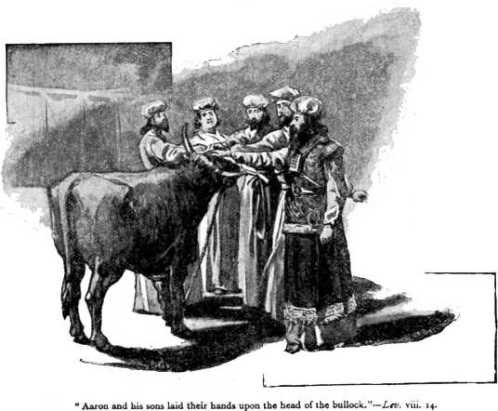
With all these regulations and sacrifices, sin was an unavoidable topic. Think about the constant reminder in the sights, sounds, and smells of the tabernacle. Seeing smoke rise up as a sacrifice for your sin, smelling the burnt fat, seeing others giving over first fruits and goats without blemish.

But as often as you’d be reminded of sin, you’d be reminded of the confidence the people had in knowing those sins were forgiven. The smoke rises up to heaven and it vanishes in the winds just as our sins when confessed are raised to God, forgiven, and then cast far from us, as far as the east is from the west.

Sin is not a fashionable subject, but it was a big deal then and it is a big deal now. It was so big that to save us from our sin God sent his Son to set us free. It makes no sense to speak at length on salvation and forgiveness and neglect what we are forgiven for and saved from. Sin is a problem that thankfully our God has overcome. Let’s not overlook our sin and in so doing diminish how great God’s forgiveness is.


Humility and the Wedding Feast

Luke 14 includes a parable about a wedding feast where Jesus teaches us to not seek out a place of honor for ourself, instead seek a humble position. The judgment on the proud is that they will be brought down, and the humble will be raised up. Jesus says, “For everyone who exalts himself will be humbled, and he who humbles himself will be exalted.”

Christians are called to be humble, just like Christ who humbled himself. We hear that lesson often, but how do we do it? Have you faced a time at work when you felt like you had to exalt yourself to gain the attention of superiors? Do you worry that if you don’t seek credit and put yourself out there to be noticed someone else will? How do we manage that cultural influence along with Jesus’ words?

Do we have the radical trust in God that he will lift us up and that his exaltation is far more important than any promotion? Is our goal in life to climb the ladder or to be a witness for Jesus and to serve others humbly at the station we are at currently?

Humility is not self-deprecation, but it is certainly not boasting. But it does have to do with moving the self out of the center and making that a place for Christ, and boasting in him. When we do so humility doesn’t become timidity, rather it gives great confidence because we find ourselves firmly fixed on Christ, caring more for his name receiving glory than our own.

Welcome to Week 7 and Leviticus

Well done for making it so far. Or if you’re just joining Year in the Bible, welcome along. In the New Testament we continue in Luke and we’ll keep reading psalms most weeks. But things are shifting in the Old Testament. We’ve finished Genesis and Exodus and that brings us to Leviticus.

Maybe you’ve planned your vacation to coincide with this week because the thought of reading through Leviticus is too much to bear. But I want to slow you down at jumping to such conclusions. (And worst case scenario, if it is that tough, it’ll be done in two weeks!)

I found an article at bible.org that I think is helpful and it addresses directly some of our objections to reading Leviticus. Ever thought that Leviticus is too hard to understand, that it is too dull, or that is has nothing to do with the world after Christ? If so, then read the article.

He makes some challenging points, such as in response to feelings that Leviticus is too boring, he says “our culture has concluded that anything which is not entertaining is not worth listening to.” Leviticus may not jump off the page like some of the passages from Genesis and Exodus, which are full of action, but that does not mean it is irrelevant for us now or that we shouldn’t study it. Speaking of relevance he makes a good point that we’re too interested in what is pragmatic for us in the immediate, lacking the patience to read in obedience to God’s invitation and trust that God has value in every word–even if it is not practical in the here and now.

Read this week with patience and perseverance, and I hope you can approach with renewed interest a book that is too often overlooked.