
Sights and Smells of Sacrifice


As I’ve been reading the beginning if Leviticus the last few days what has stood out to me is how big of a deal sin is. Contemporary culture doesn’t talk about sin much, or any sort of weakness or evil in us. Instead we all are good, everyone is right, I’m OK you’re OK.

But you can’t understand sin as no big deal and make sense of Leviticus. Sin is a very big deal and God’s people went through a lot to deal with it.

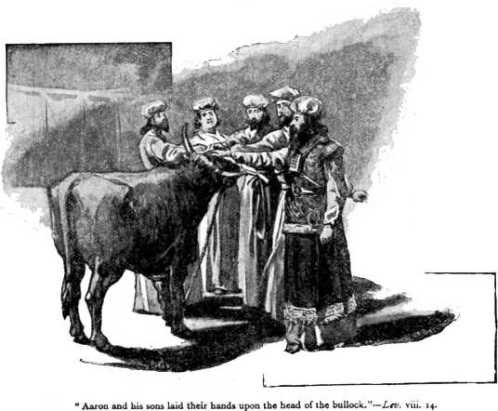
With all these regulations and sacrifices, sin was an unavoidable topic. Think about the constant reminder in the sights, sounds, and smells of the tabernacle. Seeing smoke rise up as a sacrifice for your sin, smelling the burnt fat, seeing others giving over first fruits and goats without blemish.

But as often as you’d be reminded of sin, you’d be reminded of the confidence the people had in knowing those sins were forgiven. The smoke rises up to heaven and it vanishes in the winds just as our sins when confessed are raised to God, forgiven, and then cast far from us, as far as the east is from the west.

Sin is not a fashionable subject, but it was a big deal then and it is a big deal now. It was so big that to save us from our sin God sent his Son to set us free. It makes no sense to speak at length on salvation and forgiveness and neglect what we are forgiven for and saved from. Sin is a problem that thankfully our God has overcome. Let’s not overlook our sin and in so doing diminish how great God’s forgiveness is.
Humility and the Wedding Feast

Luke 14 includes a parable about a wedding feast where Jesus teaches us to not seek out a place of honor for ourself, instead seek a humble position. The judgment on the proud is that they will be brought down, and the humble will be raised up. Jesus says, “For everyone who exalts himself will be humbled, and he who humbles himself will be exalted.”

Christians are called to be humble, just like Christ who humbled himself. We hear that lesson often, but how do we do it? Have you faced a time at work when you felt like you had to exalt yourself to gain the attention of superiors? Do you worry that if you don’t seek credit and put yourself out there to be noticed someone else will? How do we manage that cultural influence along with Jesus’ words?

Do we have the radical trust in God that he will lift us up and that his exaltation is far more important than any promotion? Is our goal in life to climb the ladder or to be a witness for Jesus and to serve others humbly at the station we are at currently?

Humility is not self-deprecation, but it is certainly not boasting. But it does have to do with moving the self out of the center and making that a place for Christ, and boasting in him. When we do so humility doesn’t become timidity, rather it gives great confidence because we find ourselves firmly fixed on Christ, caring more for his name receiving glory than our own.

Most Read Books

20120507-133053.jpg

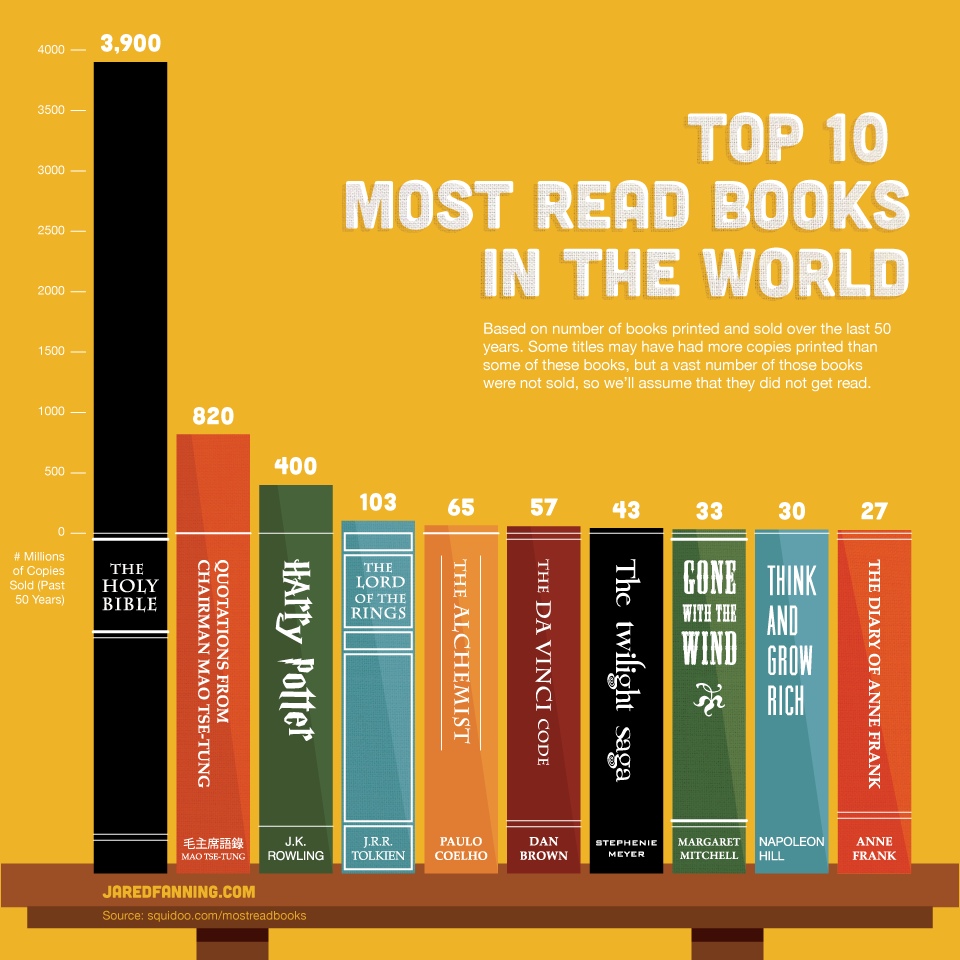
Thought this was a little interesting. It shows the projected most read books of the last 50 years. You’ll see that we are in good company in reading the Bible. But the challenging question is have more people finished books from this list like Harry Potter or Lord of the Rings than have read the whole Bible?

The graphic is misleading since the books are not to scale (do you see the millions more f Harry Potter than Anne frank?). But even with the staggering lead that the Bible has, how many have read Leviticus? Let that be a challenge to press on.

Welcome to Week 7 and Leviticus

Well done for making it so far. Or if you’re just joining Year in the Bible, welcome along. In the New Testament we continue in Luke and we’ll keep reading psalms most weeks. But things are shifting in the Old Testament. We’ve finished Genesis and Exodus and that brings us to Leviticus.

Maybe you’ve planned your vacation to coincide with this week because the thought of reading through Leviticus is too much to bear. But I want to slow you down at jumping to such conclusions. (And worst case scenario, if it is that tough, it’ll be done in two weeks!)

I found an article at bible.org that I think is helpful and it addresses directly some of our objections to reading Leviticus. Ever thought that Leviticus is too hard to understand, that it is too dull, or that is has nothing to do with the world after Christ? If so, then read the article.

He makes some challenging points, such as in response to feelings that Leviticus is too boring, he says “our culture has concluded that anything which is not entertaining is not worth listening to.” Leviticus may not jump off the page like some of the passages from Genesis and Exodus, which are full of action, but that does not mean it is irrelevant for us now or that we shouldn’t study it. Speaking of relevance he makes a good point that we’re too interested in what is pragmatic for us in the immediate, lacking the patience to read in obedience to God’s invitation and trust that God has value in every word–even if it is not practical in the here and now.

Read this week with patience and perseverance, and I hope you can approach with renewed interest a book that is too often overlooked.

Story So Far, Week 6

I’ve read Luke 9:62 many times before. There Jesus says, “No one who puts his hand to the plow and looks back is fit for the kingdom of God.” I had often thought of Lot’s wife who turns back to her home and is turned into a pillar of salt. She was being delivered from judgment and all she could do was look back to her home.

But as we’ve finished the book of Exodus this week, I couldn’t help but read this verse in Luke and think of the Israelites as a whole. They were delivered from slavery and almost immediately they turn their hearts back to Egypt and to other gods. God is angered by these actions. We read this week in Exodus 34 that our God is a jealous God. He wants us for himself alone. God wants us to only worship him. Yet we look back again and again. We look back to false gods and idols. We look back imagining that an old life was better than it truly was. We rewrite history like the Israelites who wished they could return to Egypt where they felt life was better.

In Luke, Jesus pushes his disciples to not turn back from following him. There is a radical break in the way the disciples and Jesus relate to possessions and treasure–don’t look back to those. Do not return to seeing the world the way the culture does and they way you used to. To follow Jesus in many ways is to leave behind the things of the world.

As always, Jesus never pushes us and challenges us to do what he will not do himself. Earlier in chapter nine it says of Jesus, “When the days drew near for him to be taken up, he set his face to go to Jerusalem.” Jesus knew what waited for him there. Jesus set his face to the city where he would be crucified, and he didn’t look back. Repeatedly Jesus says to his disciples that he came for that very purpose. Jesus did not look back even though his purpose was to die for those who hated him.

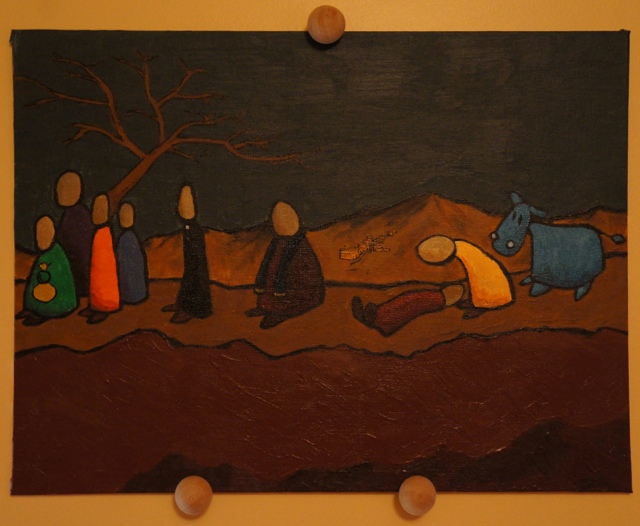
This Jesus is the one who tells us, “If anyone would come after me, let him deny himself and take up his cross daily and follow me. For whoever would save his life will lose it, but whoever loses his life for my sake will save it.” He calls us to come and follow him. We are to firmly fix our eyes on Jesus, and let the things of earth fade away, never looking back.

This is a hard task, greater than our efforts could accomplish, but thanks be to God that he gives us the strength and works in us, both to will and to work for his good pleasure (Phil 2:13).

Abundant Life is Not Abundant Possessions

The section we read this week from Luke dealt with possessions in a few different ways. Jesus asks his twelve to go out to proclaim the kingdom of God and tells them to leave behind your possessions–no staff, no bag, no money. When later in chapter ten Jesus sends out seventy-two, his instructions are very similar. He sends them out carrying no stuff.

The Rich Fool thinks swimming in solid gold is a pleasurable experience.

Chapter twelve has the parable of the rich fool, who puts so much stock in what he has today, but forgets that he has no guarantee of his future. The fool puts his present day in order neglecting the eternal and is called out as God says, “Fool! This night your soul is required of you, and the things you have prepared, whose will they be?”

This goes along with the sentiment, “you can’t take it with you.” Why invest so much in what cannot last? Why worry yourselves about things that will perish, while all the while neglecting what will last forever?

The warning is against those who lay up treasure for themselves and are not rich toward God. Being rich toward God matters far more than any other so-called riches, for as it says earlier in the chapter, “one’s life does not consist in the abundance of his possessions.” Instead we have life and abundance in Jesus Christ. He says in John 10, “I came that they may have life and have it abundantly.”

If abundant life is what we seek, we are better to look beyond our stuff. We should look to Christ and set our minds on things that are above, where Christ is, and not to things on earth (Col 3:1-2). Only in that relationship will we be satisfied. That relationship is what lasts and is of eternal value.

Christian Character and Reading Through the Bible

I have my wife to thank for providing me with this lengthy quote, taken from the book After You Believe: Why Christian Character Matters, by NT Wright.

“The practice of reading scripture, studying scripture, acting scripture, singing scripture–generally soaking oneself in scripture as an individual and a community–has been seen from the earliest days of Christianity as central to the formation of Christian character.

It is important to stress at this point (lest the whole scheme collapse into triviality) that this has only secondarily to do with the fact that scripture gives particular instructions on particular topics. That is important, of course; but it is far more important that the sheer activity of reading scripture, in the conscious desire to be shaped and formed within the purposes of God, is itself an act of faith, hope and love, an act of humility and patience. It is a way of saying that we need to hear a fresh word, a word of grace, perhaps even a word of judgment as well as healing, warning as well as welcome. To open the Bible is to open a window toward Jerusalem, as Daniel did (6.10), no matter where our exile may have taken us.

…the point is that reading the Bible is habit-forming; not just in the sense that the more you do it the more you are likely to want to do it, but also in the sense that the more you do it the more it will form the habits of mind and heart, of soul and body, which will slowly but surely form your character into the likeness of Jesus Christ. And the “your” here is primarily plural, however important the singular is as well.

This isn’t to say there aren’t hard bits in the Bible–both passages that are difficult to understand and passages that we understand only too well but find shocking or disturbing (for example, celebrating the killing of Edomite babies at the end of Psalm 137). Avoid the easy solutions to these: that these bits weren’t “inspired,” or that the whole Bile is wicked nonsense, or that Jesus simply abolished the bits we disapprove of. Live with the tensions. Goodness knows there are plenty of similar tensions in our own lives, our own world. Let the troubling words jangle against one another. Take the opportunity to practice some patience (there may yet be more meaning here than I can see at the moment) and humility (God may well have things to say through this for which I’m not yet ready). In fact, humility is one of the key lessons which comes through reading the Bible over many years; there are some bits we find easy and other bits we find hard, but not everybody agrees as to which is which.

… perhaps it’s another sign of maturity when our sense that scripture is made up of some bits we know and love, and other bits we tolerate while waiting for our favorites to come around once more, is suddenly overtaken by a sense of the whole thing— wide, multicolored and unspeakably powerful. We had, perhaps, been wandering around in light mist, visiting favorite villages and hamlets, and then, as the mist gradually cleared, we discovered that everything we had loved was enhanced as it was glimpsed within a massive landscape, previously unsuspected, full of hills and valleys and unimagined glory.”

N.T. Wright, After you Believe, 261-264