Take Time to Review the First Two Weeks

We are now in our third week of The Bible in 10 Weeks reading plan. We have had our “Introductions” and a week on “The Promise of God” and are now at the Exodus.

My goal is that in these ten weeks we begin to see more clearly the big picture of the Bible, and that can’t happen if we read each week and forget about what came before. So take some time, especially since this week is a bit shorter than last, and ask yourself some good questions and do some review:

  • How would you describe creation?
  • What did Adam and Eve do?
  • What was God’s response?
  • Did God abandon them?
  • What plans does God have now?
  • To whom did God make his promise?
  • What was the promise?
  • Where did the promise take the people?
  • How did God begin to move his people into a foreign land?
  • How has God been at work in his people and accomplishing his plan?

This week we’ll pick up in Egypt and read what I believe will be both familiar and unfamiliar passages about Moses, the Exodus, and God’s ongoing interactions with his people.

Children of the Promise and Vehicles for God’s Blessing

We’ve had several reasons to reflect on history this week. I already mentioned the anniversary of the protests at Tiananmen Square and today is the 70th anniversary of the invasion at Normandy.

We’ve read through a great history of people like Abraham and Joseph, and one emphasis this week was to recognize that the history we read in Genesis is our history. We are children of Abraham because we are children of the promise by faith. So when we read of God’s promises to Israel, we stand under those promises, too.

But remember the promise God makes to Abraham. It is a promise for blessing, but God also notes that through Abraham’s family will all the families of the earth be blessed. If we are children of Abraham, we cannot merely celebrate that blessed status. We need to remember both that we receive a blessing as part of the promise, and we are to also be a blessing for all the world.

A Call to Preserve Our Own History on the 25th Anniversary of Tiananmen Square

Tiananmen

Coming back into work today I heard a story on NPR about the 25th anniversary of the events surrounding Tiananmen Square. The host was interviewing a journalist in China who was showing the famous photo from the protests to students and it seemed that more had never seen the photo than those who had. The way it was worded during the radio segment was that in China, “amnesia is a state sponsored sport.”

China has not wanted people to know parts of its past and so it has worked hard to conceal and erase history. What is amazing is that this isn’t an event from centuries ago. It isn’t a matter of destroying the records. People are alive now who were alive then. But the past is still allowed to slip away.

While we weren’t alive when the events described in the Bible took place, they are still of the utmost importance to us. God has gone to great lengths to have it recorded, preserved, and passed on through generations so that we would receive the book we have today. It is our history and it is our story. He has given us the Bible for a reason. We can’t let it slip away. We need to commit ourselves to knowing the story God has given us and make sure we remain vigilant in continuing our lives that are now, amazingly, also a part of that story.

God is not done yet for he is still active. But it helps to know where we’ve been in order to know where we’re going.

The Waiting is the Hardest Part

When God makes promises the timing is not always what we’d want. Abraham is promised that he will have descendants whose number will be like the stars in the sky. But then Abraham waits. He waits for a long time. And still he has no children. The promise of God was not for the next day–it was years later. It was to be fulfilled in old age, when he thought it was impossible. In the meantime Abraham took matters into his own hands and deviates from the will of God.

It seems that the trust is not always the hardest part. It is the trust carried out over time. It is the patience. Can we trust God for more than a moment? Can we trust when something promised is on the horizon or out of sight? Faith requires that we place our trust in God and then have the patience to endure.

What can help is knowing that God alone is the one who can really keep his promise. Only he is in complete control of all circumstances. So when he makes us a promise, he is always faithful. He is faithful to Abraham, and now we the descendants of Abraham can trust that he will be faithful to us.

Patience is hard, so we all probably need to pray for patience. (Although I hear that when we pray for patience, God doesn’t just make it appear. What does he do? He gives us practice. So be warned!)


I can’t help but link to this video. When I think of patience I think of the Tom Petty song, The Waiting, from which I took the title of this post. And when I think of that song, I think of this scene from The Simpsons. It’s not the best clip and leaves off the final punchline at the end–but it still gives me a chuckle.

Promises Made to Abram that Will Carry On Throughout the Bible

Last week we saw how Adam and Eve sinned and were cast out of the garden. But this was not the end of hope. Humans were not then left to fend for themselves never to enjoy fellowship with God again. We saw in Ephesians 1 that God has always had a plan and eating the fruit of the tree did not thwart God.

As we continue in Genesis we see the revealing of God’s plan as he chooses Abram (later Abraham) in chapter 12 and makes promises to him. It is not a promise for Abram alone, but the great blessings that God will provide will be blessings for the whole world through Abram’s line.

Now the Lord said to Abram, “Go from your country and your kindred and your father’s house to the land that I will show you. And I will make of you a great nation, and I will bless you and make your name great, so that you will be a blessing. I will bless those who bless you, and him who dishonors you I will curse, and in you all the families of the earth shall be blessed.”

Genesis 12:1–3

Too often the Bible is read simply as a reference book. You pick it up, look up a topic in the concordance in the back of the book (if your version has one), and then go off and read on that subject. Or maybe we’re intimidated by the Old Testament because of its foreign places, unknown people, and strange religious practices and go straight for the New Testament. I’m not saying you need to read the Bible as if it were a novel, start to finish. This 10 week plan doesn’t even do that. But we miss out on the plan of God, a plan based in God’s promise, if we only read piecemeal. There is a continuing story that develops and all the promises of God to Abram will carry on throughout the marvelous book that is the Bible.

Several Introductions to the Bible

This week’s reading is titled “Introductions.” We had our introductions to what the Bible is with brief readings from Hebrews and 2 Timothy.

When you read the passage in Luke you get an introduction to a way in which we can read the Bible. Jesus himself shows us that throughout all of Scripture we see him. He instructs disciples soon after the resurrection using the Old Testament and reveals all that those books say about him. Jesus didn’t come into the picture of God’s great plan late in the game. Jesus Christ was always the plan–before this world was even made we were chosen in him, as it says in Ephesians 1.

Then we turn to Genesis and are introduced to creation. Genesis has two accounts of the creation with the second one coming in chapters two and three. There we are introduced to the greatest of God’s creations, human beings, but then quickly we see how far we fall.

God made us and gave Adam clear instructions for how to live in the garden alongside God. But temptation comes when the serpent questions God’s word. “Did God really say that?… Oh, you won’t really die if you do that.” Adam and Eve do not believe the truth of God and believe the tempter. They exchange truth for a lie. The serpent wasn’t even holding something out that was an obvious treachery. The promise was for something akin to wisdom; it was to be like God. But in their pursuit of something good in the wrong way, they sin. And with sin there is consequence. There is shame, there is alienation, and there is curse.

Although God is the one who is wronged, he still seeks to provide even in the midst of passing out judgment. God is the one who clothes his children and he then in chapter three of Genesis promises one who will come for the serpent. Many see Christ as the offspring who will bruise the serpent from Genesis 3:15.

East of Eden

At the end of this introduction Adam and Eve are cast east of Eden, out of the garden and its gates are shut to them, with angels guarding the tree of life. What is next for them? Has God rejected the pinnacle of his creation, leaving humans on their own on earth? The good news that we know is that God does anything but leave us. God would one day come and be among us and there would be another tree of life. And on that tree Jesus Christ would die for us, giving us his very own life–a life abundant and eternal.

Confirmation Bias and Why We Need the Bible to Challenge Us

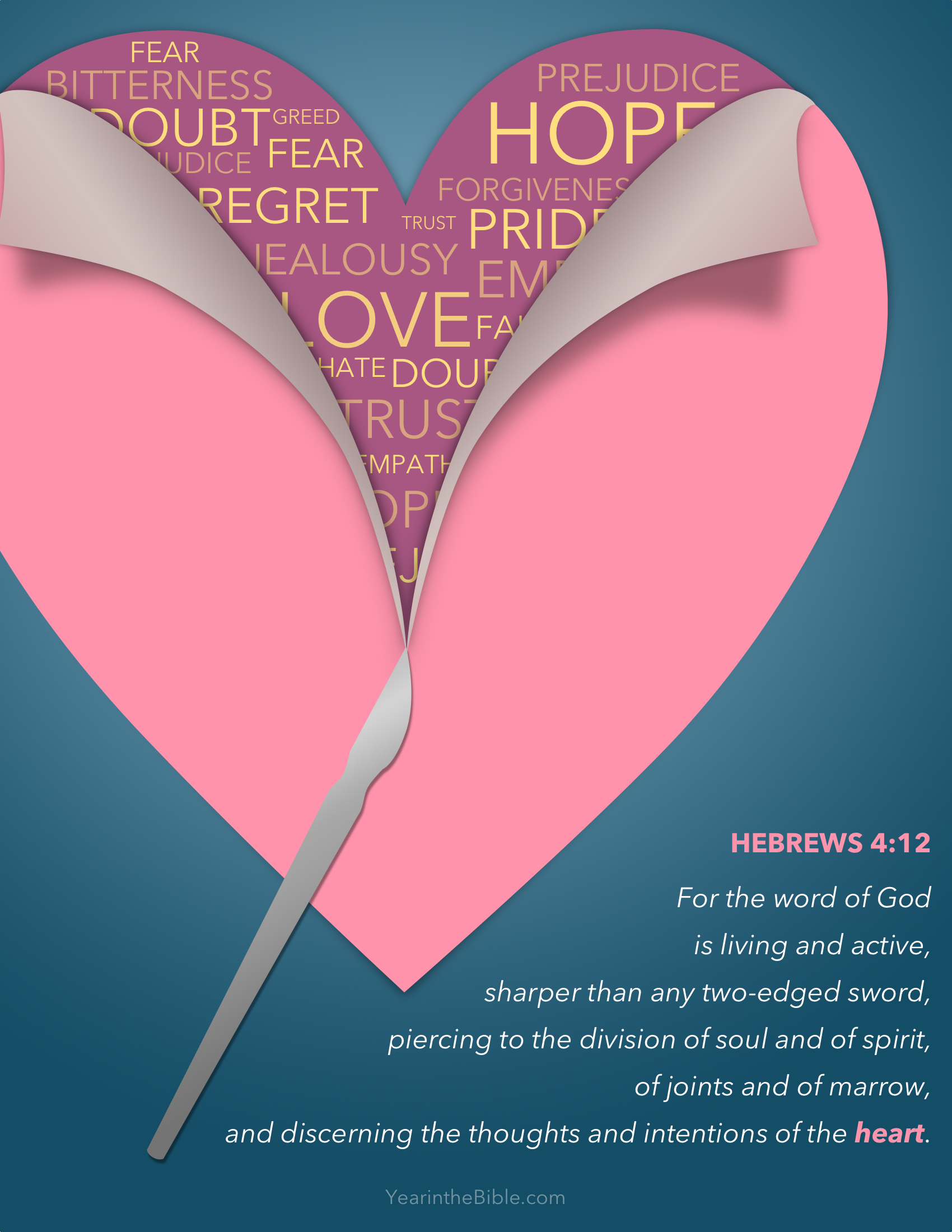
With two of this week’s passages we are reminded that the Bible is God’s word, and that idea carries great significance.[1] What God has to say to us, in its entirety, isn’t always something we want to hear. But it is what we need.

If we’re familiar with Scripture we may turn to passages that we already know and like in order to find some word of encouragement. We may want to hear how God blesses his people and then turn to see what great blessing Solomon received or see how Jesus heals the sick. But how often do we want to read how those who were so close to Jesus, his disciples, didn’t always receive the sort of blessings we want and instead had lives of pain and suffering?[2]

It seems we have a tendency to seek out what we already believe. We aren’t always in search of truth, but we are in search of confirmation–confirmation of what we already think we know.

You can turn on the TV or visit websites that you know will spin the news and report events in the way you like. It can be as innocuous as preferring to listen to your own local commentators while watching a sports game. I know I’d prefer to hear people who get at least a little bit more excited when my team scores. But it can also cause us to stick our heads in the sand. When all we hear and read is a carefully selected to never push us or confront our views, then we get very comfortable and also prideful. We make ourselves the judge of what is right.

When we are so selective in the way we take in information it leads to confirmation bias. With confirmation bias all we do, in the Bible and elsewhere, is look to reaffirm our ideas–which is to say, we try to reaffirm ourselves. But as Christians we must know we are sinners. We make mistakes and get things wrong. We can’t assume we know everything and have it all figured out.

At times God will confront us. He will challenge what we believe. And that’s good. God is God, and we are not. His ways and his thoughts are not like ours. There should be times when we are pushed and have to change our views and actions in order to align with what we read. 2 Timothy 3:16 doesn’t say “all Scripture is profitable to comfort us in down times.” God’s word may do that. But it is profitable for the hard things, too, like reproof, correction, and training.

We just need to be bold enough to first open the Bible and humble enough to listen for the Spirit to continue to speak to us through it and work upon our lives–even when that means we are convicted and challenged.


  1. Those readings from this week: Hebrews 4:12 and 2 Timothy 3:10–17  ↩

  2. We see this even in this week’s reading and not only in a book like Acts. Paul writes in 2 Tim 3:12, “Indeed, all who desire to live a godly life in Christ Jesus will be persecuted.” How often do we hear 2 Tim 3:16 and never hear a verse just a few lines up?  ↩