Christ’s Sacrifice Frees Us From Sin, Not For Sin

When Paul mentions the Passover he is calling to mind one of the defining events for the Jewish people. The final plague of Exodus was to be the death of the firstborns in Egypt, but God’s people are spared because he has made a provision for them. The blood of the firstborns is replaced by the blood of a lamb. Its blood is smeared on the doors of the homes and death passes over God’s people. Paul now says to the church that Christ is this Passover lamb.
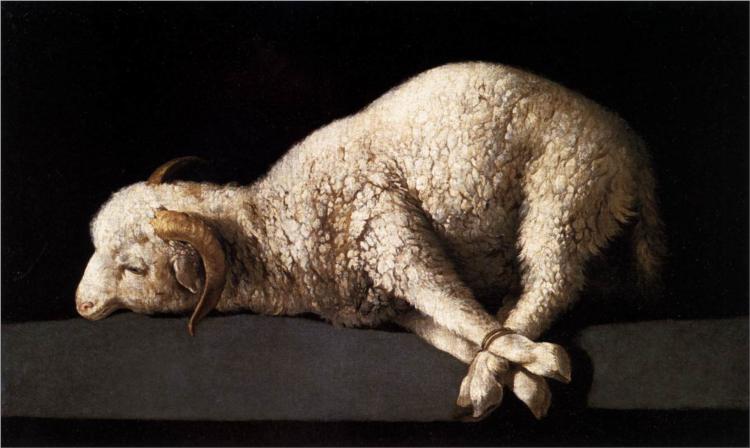
Agnus Dei (Lamb of God) - Francisco de Zurbaran
Agnus Dei (Lamb of God) – Francisco de Zurbaran

But the Passover calls to mind not only the passing over, but also the final deliverance from Egypt. The people were to prepare themselves for on the same night that Israel is passed over and death comes upon many in that land, there were to leave. They need to be ready to go and go quickly. Exodus 12:11 says this:

In this manner you shall eat it: with your belt fastened, your sandals on your feet, and your staff in your hand. And you shall eat it in haste. It is the Lord’s Passover.

Having your belt fastened is what is at times translated, “gird up your loins.” The idea behind it is be ready for travel. Don’t let your robes hang low and trip you up as you make your escape. Don’t just have your shoes by the door, put them on. Fasten your belt, tie your shoes laces–in double knots, have your car keys in hand and not on the table. Be ready to go immediately.

This hurry is why they eat the unleavened bread. Israel would have no time for their dough to rise. They needed to make haste.

Then as God had told them, it all comes to pass. Cries went up in the night “for there was not a house where someone was not dead.” Pharaoh summons Moses and Aaron in the night and commands them to go. He says, ““Up, go out from among my people, both you and the people of Israel; and go, serve the Lord, as you have said. Take your flocks and your herds, as you have said, and be gone, and bless me also!”

There is a great urgency for Egypt to rid itself of such a people that have brought God’s judgment upon them. They fear what may come next. So with such urgency in the land, it was in God’s wisdom that he prepared Israel to make haste. This great exodus was no small undertaking and it would have taken much preparation, and God had guided them through it. Here is what happened, beginning in verse 34 of Exodus 12:

So the people took their dough before it was leavened, their kneading bowls being bound up in their cloaks on their shoulders. The people of Israel had also done as Moses told them, for they had asked the Egyptians for silver and gold jewelry and for clothing. And the Lord had given the people favor in the sight of the Egyptians, so that they let them have what they asked. Thus they plundered the Egyptians.

And the people of Israel journeyed from Rameses to Succoth, about six hundred thousand men on foot, besides women and children. A mixed multitude also went up with them, and very much livestock, both flocks and herds. And they baked unleavened cakes of the dough that they had brought out of Egypt, for it was not leavened, because they were thrust out of Egypt and could not wait, nor had they prepared any provisions for themselves.

The book of Exodus then recounts the length of time that Israel had spent in Egypt, emphasizing the ending of that time and the beginning of a new day for Israel. Now they are freed. Generations of slavery have come to an end. So, when death pases over the people and Pharaoh finally tells Moses and his people, “Go!”, the only proper response is to leave. God did not bring about such a miraculous deliverance for his own people from the great worldly power of Egypt for them to remain in captivity. Israel’s response to God’s work and Pharaoh’s charge cannot be to linger. When Pharaoh says to leave, they shouldn’t say, “Give me a minute.” They can’t stay a moment longer. They can’t remain in slavery. God makes this point when he tells them to prepare themselves and dress appropriately for they won’t even have time for bread to rise. When God makes the way for his people, they must go. He desires to free them from Egypt and deliver them into a land that had been promised to them.

Paul is calling upon this theme of deliverance in 1 Corinthians. When he mentions that Christ is our Passover lamb he wants you to remember the Passover. The Passover is not only the sparing of Israel, it is the catalyst of their freedom. Likewise, Jesus is our sacrifice, sparing us from the consequence of our sin. He has taken the judgment on himself. But this Passover lamb was not sacrificed so that we can now linger in slavery. The church in Corinth is making a mockery of the sacrifice and is misunderstanding freedom in Christ. The arrogant sinning that is going on is nothing but a return to slavery. Paul wants them to understand and then live into a true freedom in Christ. His sacrifice is what brings us freedom to flee from captivity, leaving behind the chains of sin and the dominion of death.

Knowing that Jesus is our Passover, we ought to make haste to flee from sin and rush into his arms. We experience true freedom in him. We know the life we are intended to live when we are in Christ.

Lamb of God Stained Glass

Using our freedom in Christ to return to sin is a return to slavery. Rather, just as Israel prepared itself to march out of Egypt into God’s guidance, we too must prepare ourselves. We are called to rid ourselves of such bondage, casting aside whatever weighs us down and entangles us because we have a race before us that we must run (Hebrews 12:1-2). We must be ready for a march into God’s promised land. We have a kingdom to be stewards of in this fallen world. We have a life of freedom that leads not to death, but to newness of life and life everlasting. So in our continuing work to leave the captivity of sin and live the life of a freed people, captive only to the righteousness of God, let us prepare ourselves as we are instructed in Ephesians 6, keeping in mind the way the Israelites were to prepare themselves on the night of their deliverance:

Therefore take up the whole armor of God, that you may be able to withstand in the evil day, and having done all, to stand firm. Stand therefore, having fastened on the belt of truth, and having put on the breastplate of righteousness, and, as shoes for your feet, having put on the readiness given by the gospel of peace. In all circumstances take up the shield of faith, with which you can extinguish all the flaming darts of the evil one; and take the helmet of salvation, and the sword of the Spirit, which is the word of God, praying at all times in the Spirit, with all prayer and supplication. To that end keep alert with all perseverance, making supplication for all the saints, and also for me, that words may be given to me in opening my mouth boldly to proclaim the mystery of the gospel, for which I am an ambassador in chains, that I may declare it boldly, as I ought to speak.

Why Does Paul Instruct the Church in Corinth to Expel the Sinner in Chapter 5?

When Paul says to cast the man out of the church who is sleeping with his father’s wife, it is important to remember everything that he says, lest we miss his point. He begins in verse four with:

Let him who has done this be removed from among you.

But that is not all. A couple verses later he adds:

When you are assembled in the name of the Lord Jesus and my spirit is present, with the power of our Lord Jesus, you are to deliver this man to Satan for the destruction of the flesh, so that his spirit may be saved in the day of the Lord.

This is not punishment for no purpose. Paul instructs the church in a way to enact discipline on this man for two reasons. What we see in the verse quoted above is “so that his spirit may be saved.” It is the difference between a strictly punitive action and a restorative one. Paul wants the church to, by their expulsion of him, restore his soul. If he wants to be part of the body again, he’ll have to turn from this sin. He can’t just go to the more open-minded church around the block in Corinth. This is his fellowship to which he would seek to restored.

Dough

The other purpose in casting out this man, a man who has sinned in such a way that even the extremely permissive Roman society would condemn him, is to guard the body of believers. His sin is not harmless. It is like a leaven that makes it way into the whole dough. Paul wants to protect this people who he cares greatly about. He’s already compared himself to a mother and a father in his relationship to them. He knows that if this influence remains it will affect the whole church.

So rather than recommend what may have been a Jewish judgment of incest, stoning, or delivering this man before Roman courts for the Roman law he has broken, Paul instructs the body to do something that may save the man’s spirit on the day of the Lord and will protect the life and witness of the church in Corinth.

How is Christ Our Passover Lamb?

Lamb

When Paul refers to Christ as our Passover Lamb, there is a wealth of Scripture that a Jewish audience would have flooding to mind. But the church, as it is now, is a place of great variety, and those who were familiar would have been expected to bring others along in their understanding. Here are two great passages to help make you more familiar with the Passover and further your understanding of how how Christ is our lamb.

Exodus 12

Here is where we learn of God’s instituting of the Passover. God’s people are in slavery in Egypt and God is in the process of bringing plagues upon the land as his means of deliverance. God then gives instructions for how to survive his final judgment on Egypt. It is a way for the Hebrews to be saved as death passes them over and this plague will be the catalyst for their deliverance from bondage.

1 The Lord said to Moses and Aaron in the land of Egypt, 2 “This month shall be for you the beginning of months. It shall be the first month of the year for you. 3 Tell all the congregation of Israel that on the tenth day of this month every man shall take a lamb according to their fathers’ houses, a lamb for a household. 4 And if the household is too small for a lamb, then he and his nearest neighbor shall take according to the number of persons; according to what each can eat you shall make your count for the lamb. 5 Your lamb shall be without blemish, a male a year old. You may take it from the sheep or from the goats, 6 and you shall keep it until the fourteenth day of this month, when the whole assembly of the congregation of Israel shall kill their lambs at twilight.

7 “Then they shall take some of the blood and put it on the two doorposts and the lintel of the houses in which they eat it. 8 They shall eat the flesh that night, roasted on the fire; with unleavened bread and bitter herbs they shall eat it. 9 Do not eat any of it raw or boiled in water, but roasted, its head with its legs and its inner parts. 10 And you shall let none of it remain until the morning; anything that remains until the morning you shall burn. 11 In this manner you shall eat it: with your belt fastened, your sandals on your feet, and your staff in your hand. And you shall eat it in haste. It is the Lord’s Passover. 12 For I will pass through the land of Egypt that night, and I will strike all the firstborn in the land of Egypt, both man and beast; and on all the gods of Egypt I will execute judgments: I am the Lord. 13 The blood shall be a sign for you, on the houses where you are. And when I see the blood, I will pass over you, and no plague will befall you to destroy you, when I strike the land of Egypt.

John 1

Here in the New Testament in John, John the Baptist is identifying Jesus with the Passover Lamb, proclaiming that Jesus has come to take away our sins.

29 The next day he saw Jesus coming toward him, and said, “Behold, the Lamb of God, who takes away the sin of the world! 30 This is he of whom I said, ‘After me comes a man who ranks before me, because he was before me.’ 31 I myself did not know him, but for this purpose I came baptizing with water, that he might be revealed to Israel.” 32 And John bore witness: “I saw the Spirit descend from heaven like a dove, and it remained on him. 33 I myself did not know him, but he who sent me to baptize with water said to me, ‘He on whom you see the Spirit descend and remain, this is he who baptizes with the Holy Spirit.’ 34 And I have seen and have borne witness that this is the Son of God.”

35 The next day again John was standing with two of his disciples, 36 and he looked at Jesus as he walked by and said, “Behold, the Lamb of God!” 37 The two disciples heard him say this, and they followed Jesus.

Take note that here in the very beginning of John’s gospel, Jesus’ ministry is already directed to the cross, where he will make the ultimate sacrifice.

Christ, Our Passover Lamb, Makes Us New

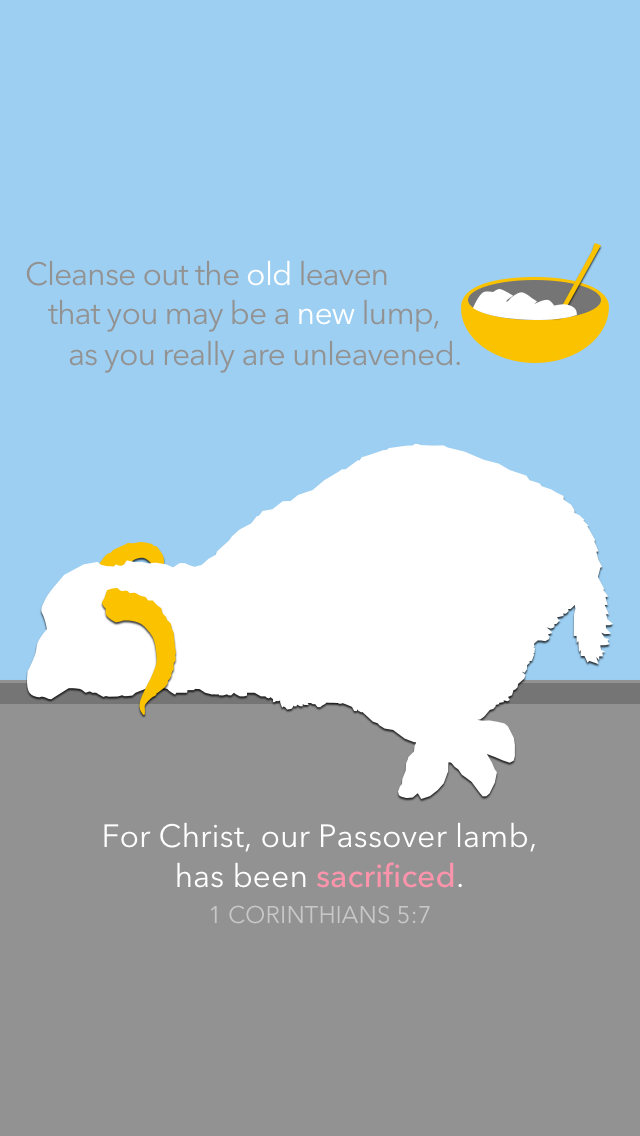
Memory Verse 1 Cor 5.7

If we want to have a new start, we can’t just do it on our own. We don’t flip a switch and wipe the slate clean. No, it is done for us. The leaven is cleaned out, the old is gone, and this has happened because of Christ Jesus. He has taken our sin away by sacrificing himself for us. We can be the new creation because Christ is our Passover Lamb.

Memory Verse for iPhone

Steward of the Mystery of God

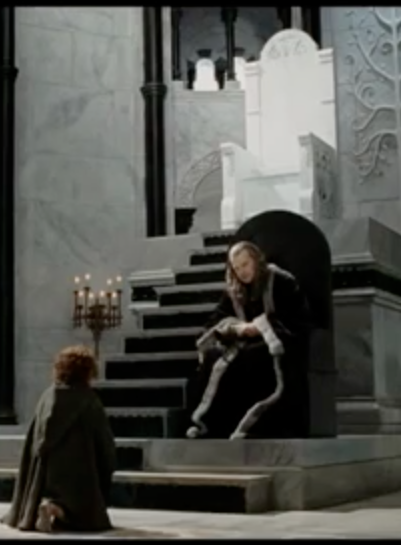
Whenever I think of the word steward I think of the Lord of the Rings. In Lord of the Rings there is a character whose position is the Steward of Gondor. His job is to be the caretaker of his city, Gondor, in the absence of the true king. What I love about the concept of steward is that it is both, at the same time, a position of great authority and great humility. Paul speaks about his role as a steward of God’s mysteries and as such he has authority among the churches. But his authority is completely foreign to him–it is not his own. He is not there to teach of his own wisdom. He preaches the cross. Paul doesn’t go to the churches as he sees fit, rather he goes where God has called him. So as a steward he has power, yet it is humble through and through, for it is the power of God that he is entrusted with.

This is why Paul goes on in this chapter to say that he isn’t accountable to the church. A steward must be found faithful, but it is a faithfulness to the one who has given the power. Paul is a steward of the mysteries of God, and he is then accountable to God. God is the one who judges faithfulness. The churches do not judge him, Paul himself won’t even judge.

He wanted what wasn't his to have -- the big throne.
He wanted what wasn’t his to have — the big throne.

Going back to Lord of the Rings for a moment, the character ends up getting into trouble because he is not respecting the position he has and seeks to claim more power than is due to him. He wants to go beyond the authority he has as steward and rule on his own. He wants to occupy the throne of the king. In doing this he is not found faithful.

This is just what Paul is seeking to avoid. In verse six as he writes, “I have applied all these things to myself and Apollos for your benefit, brothers, that you may learn by us not to go beyond what is written, that none of you may be puffed up in favor of one against another.” A steward that goes beyond what is written is going beyond the role of steward. It is dangerous territory of pride and ego. That is the downfall of the steward in the Lord of the Rings.

Paul’s intent should be ours, as well. We’ve been blessed with God’s word and what he has given us in it is sufficient. We veer toward sin when we step beyond Scripture and begin to speculate, innovate, or even delete. This quote from John Calvin from his commentary on the book of Romans says it well,

Let this then be our sacred rule, to seek to know nothing concerning it, except what Scripture teaches us: when the Lord closes his holy mouth, let us also stop the way, that we may not go farther.

God has entrusted us with much. He has given us his word but has also given each of us the life we live. To be found faithful we must seek to be good stewards, humbling acknowledging that all we have is truly God’s. We must also as stewards humbly accept what God has shown us and how he directs us, and make it our aim to trust his will, not looking to go beyond his perfect wisdom. After all, as we’ve learned in 1 Corinthians, our wisdom cannot compare to his own. God’s wisdom in the cross of Christ may seem foolish, but it is the power of God; it is our righteousness, sanctification, and redemption.

I Will Not Boast in Anything–No Gifts, No Powers, No Wisdom

I always enjoy posting music that fits our readings so enjoy this wonderful song describing our God’s great love for us. The following lines especially fit with our repeated theme of boasting, and not doing so about ourselves, but only in Jesus Christ.

From How Deep the Father’s Love for Us:

I will not boast in anything
No gifts, no power, no wisdom.
But I will boast in Jesus Christ,
His death and resurrection.

All We Have is Given by God

Bible Visualization for 1 Corinthians 4:7b

Before we get into more of the reflection of this great chapter in 1 Corinthians, I wanted to give you all the memory verse visualization. It’s already Wednesday so you may be getting a late start trying to study this one small part of the chapter. For future reference, if you are reading this on the website rather than getting these posts via email, the site has a handy sidebar that says: read, study, memorize. Under the study part you can click and get the Bible study and under the memorize heading is this visualization.

This week is a simple statement that fits well with what Paul has been arguing throughout. He stands firmly against boasting in ourselves, and makes his point in yet another way here in 1 Corinthians 4:7b.

Memory Verse for 1 Corinthians 4:7b for iPhone

Echoes of 1 Corinthians

I’ve been spending this weekend away on a retreat and have been blessed by some great teaching. But I am further blessed to know that the Holy Spirit is my teacher and I have been able to see the ways in which scripture has been called to mind. The teachers here have made several direct or indirect references to 1 Corinthians or topics contained in these last few weeks of reading and I love that given our study of that book, the references just pop out. When someone referred to 1 Corinthians 2 the one verse quoted had greater impact for I knew the whole chapter so much better now than I did months ago.

The retreat is almost done but I’ve already heard echoes of the following themes of 1 Corinthians (and I’m sure I’ve missed one, too):

  • Boasting
  • Eloquent speech
  • Wisdom
  • Receiving by the Spirit
  • Mind of Christ
  • Not about me, but pointing to Christ
  • Mysteries of God

Thanks to the Spirit for calling God’s Word to mind. How I look forward to having read all of this letter and having more for God to teach me!